

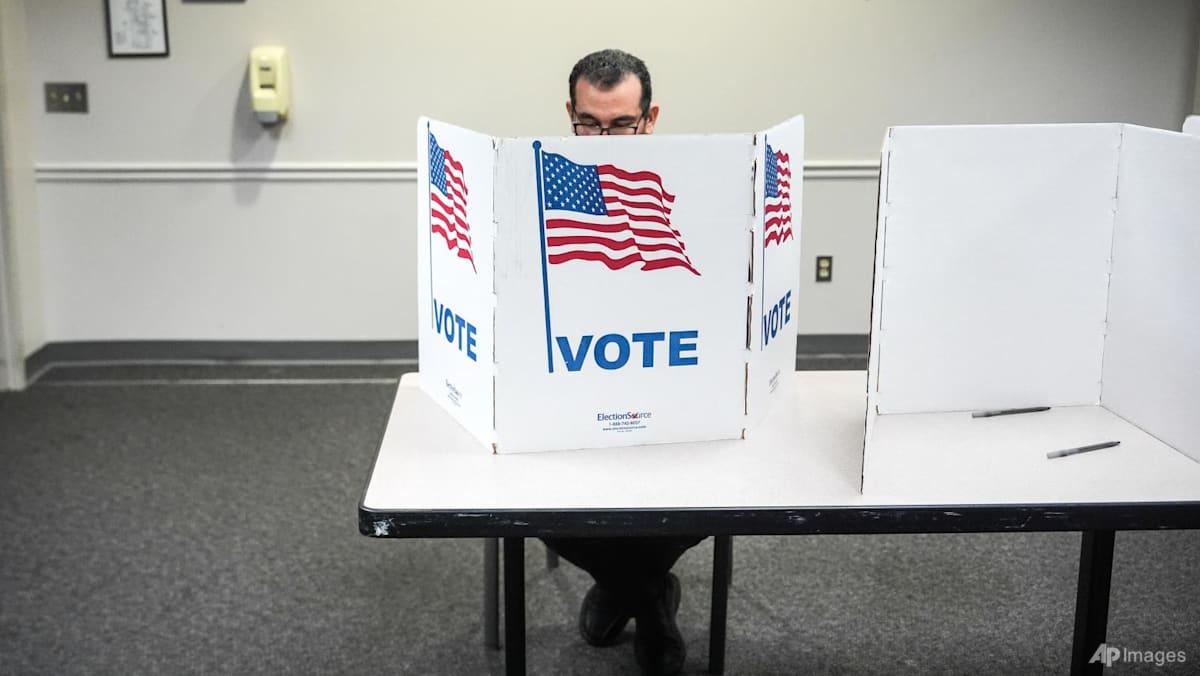
WASHINGTON: Virginians voted on Tuesday (Apr 21) to back a new electoral map that could hand Democrats four more seats in the US House of Representatives, turning President Donald Trump’s redistricting push into a potential liability for Republicans in upcoming midterm elections.
The battle over “gerrymandering” – the long-established but widely criticised US practice of drawing electoral boundaries to benefit one party – has become one of the defining fights of the campaign for November’s congressional contests.
The state voted in a referendum to let officials redraw the congressional map before the next scheduled nationwide redistricting in 2030, giving Democrats a strong advantage in 10 of the state’s 11 House districts, up from their previous 6-5 edge.
With control of the House on a knife’s edge, the vote makes it more likely that Trump will be forced to finish his term with a Democratic legislature empowered to block his agenda and investigate his administration, rather than the compliant Republican Congress he now enjoys.
It marked a stinging defeat for Trump, who joined a telephone rally Monday night with House Speaker Mike Johnson to urge a no-vote, warning Virginians: “The whole country is watching.”
Redistricting usually follows the national census every 10 years, but Trump last year urged Republican-led states to redraw maps mid-decade to protect the party’s fragile House majority.
That triggered a tit-for-tat contest as both parties raced to squeeze out an extra advantage before November.
Texas moved first, adopting a map that could add up to five Republican seats. California answered with a ballot measure designed to give Democrats five more of their own.
“Virginia voters have spoken, and tonight they approved a temporary measure to push back against a President who claims he is ‘entitled’ to more Republican seats in Congress,” Virginia Governor Abigail Spanberger, a Democrat, said in a statement after the referendum was called.
Democratic groups poured money into the state election, making the vote one of the most expensive redistricting fights in US history.
The main campaigns on both sides have raised nearly US$100 million, much of it from “dark money” groups – nonprofit organiastions that can spend heavily on politics without publicly disclosing their donors.