

CONCERNS OVER JOB LOSSES
Aberdeen’s Net Zero Technology Centre is trying to help the transition to renewables by developing and deploying the technology needed.
“We co-invest with industry, we identify technology challenges, particularly ones that the energy industry in the North Sea can contribute to,” said Martyn Tulloch, the centre’s director of energy transition.
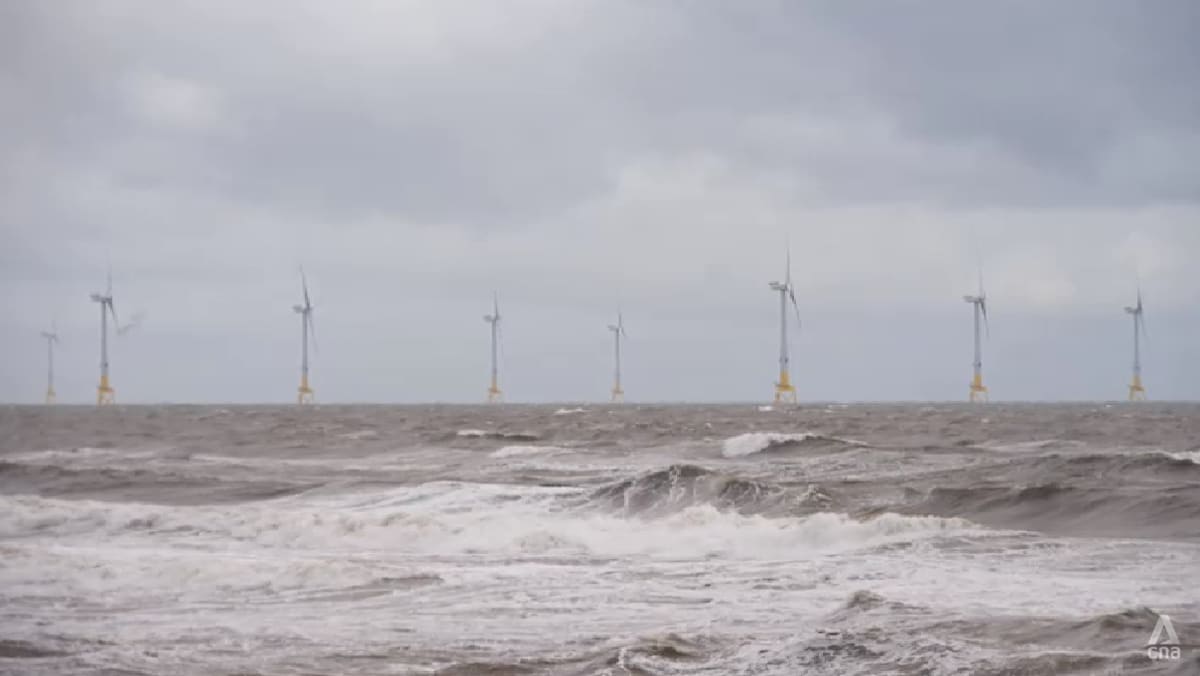
“So for example, things like deploying offshore wind which is going to be a core technology for helping Europe decarbonise – that’s a big focus. We look at transitioning skills, technology, know-how from the oil and gas sector in particular into these new and growing sectors.”
Offshore electrician Andy Shirreffs believes the road ahead is uncertain.
For the past four decades, he has flown in and out from Aberdeen Airport to oil rigs deep in the North Sea, where he can spend weeks at a time.
“They’re slaughtering or sacrificing the oil industry to move on to a green revolution,” said Shirreffs.
“The guys who are out here who have all the experience, the knowledge, the ability, the mental resilience to work offshore, to work on these new products – they’re just getting sidelined, pushed out of the way.”
The UK government says action is needed to meet its net-zero emissions targets, stressing that the shift to renewable energy will create new opportunities for these oil and gas workers.
It has pledged to deliver 400,000 skilled clean energy jobs by 2030.
Yet, the transition may be coming too late for an industry reportedly shedding about 1,000 jobs a month, with oil and gas employment declining faster than new green roles are being created.
Research shows that about 90 per cent of skills in oil and gas are transferable to low-carbon and green energy sectors. But studies also found that low carbon jobs are still hard to come by.