
Close Menu
    Trending
    • Rams’ Les Snead gives huge Aaron Donald update
    • The new rules of work: Multigenerational workplaces in the Gen Z era
    • Stonehenge’s altar stone probably wasn’t transported by a glacier
    • How Far Has New Jersey Fallen?
    • Tony Hinchcliffe Lands Netflix Special After Kevin Hart Roast
    • CNA Explains: What the US forced labour probe means for global trading partners
    • Ireland’s Black community opens up about racism after ‘George Floyd moment’ | Race Issues News
    • Nick Saban details how NIL spending resembles runaway vehicle
    Benjamin Franklin Institute
    Thursday, June 4
    • Home
    • Politics
    • Business
    • Science
    • Technology
    • Arts & Entertainment
    • International
    Benjamin Franklin Institute
    Home»Science»Stonehenge’s altar stone probably wasn’t transported by a glacier
    Science

    Stonehenge’s altar stone probably wasn’t transported by a glacier

    Team_Benjamin Franklin InstituteBy Team_Benjamin Franklin InstituteJune 4, 2026No Comments3 Mins Read
    Share Facebook Twitter Pinterest Copy Link LinkedIn Tumblr Email VKontakte Telegram
    Share
    Facebook Twitter Pinterest Email Copy Link


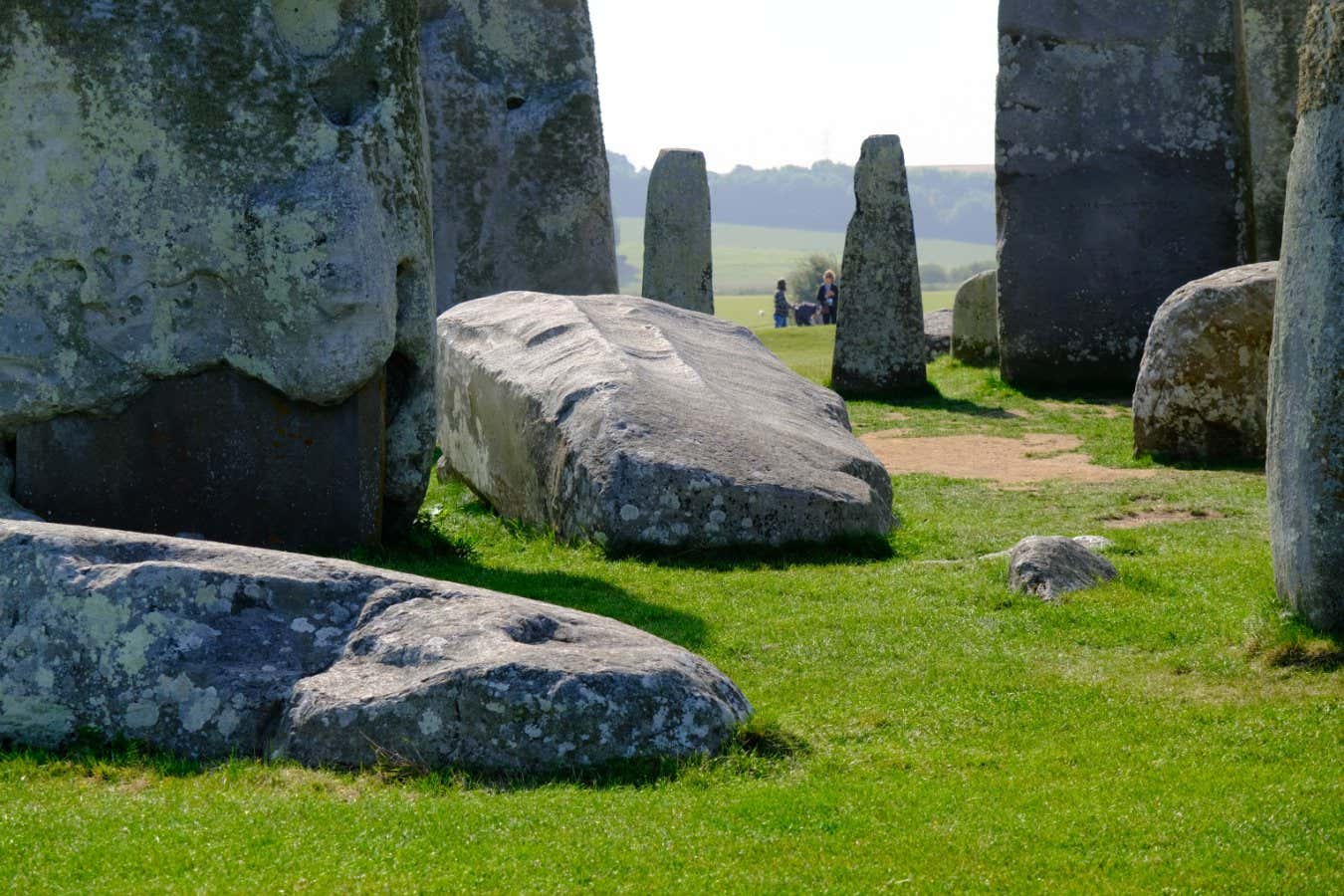
    The 5-metre-long altar stone lies mostly buried at the centre of Stonehenge

    Laurence Berger/Getty Images

    Researchers investigating the origins of Stonehenge’s enigmatic altar stone say it is possible that the 6-tonne rock was carried southwards from Scotland by a glacier – but this hypothesis relies on an unlikely series of events, making it more likely that humans transported it.

    The 5-metre-long monolith, which is partially buried and overlain by two other stones, has been in its present location, at the centre of Stonehenge’s ring of worked boulders, for around 4500 years.

    In 2024, researchers including Anthony Clarke at Curtin University in Perth, Australia, determined that the altar stone came from north-east Scotland, based on the chemistry of the rock.

    “The altar stone is a sandstone – you can imagine grains of sand at the beach that have been squished together,” says Clarke. “We can get an age and the chemical composition for each of those grains and build up a fingerprint, which we can then forensically compare to other rocks throughout the UK and Ireland.”

    The altar stone’s chemical fingerprint matched outcrops in the Orcadian basin, a geological feature that overlays parts of north-east Scotland. This meant the stone must have been transported 750 kilometres southwards to Stonehenge, in southern England.

    Clarke and his colleagues originally thought it was most likely that the stone had been transported by boat. But they also wondered whether it could have been moved by glaciers during the last glacial period, potentially reducing the distance humans would have had to carry it.

    In the new study, Clarke and his colleagues used geological analysis and ice flow modelling to reconstruct ancient glacial movements.

    They found that most ice flows from north-east Scotland went to the north, but some did head south and would have dumped their cargo of rock at Dogger Bank. During the last glacial period, Dogger Bank was part of a land bridge connecting Britain with mainland Europe, but it now lies under the North Sea, off England’s east coast.

    If a glacier had transported the altar stone to Dogger Bank, it would have shortened the distance humans would have needed to move the stone by several hundred kilometres.

    But Dogger Bank was inundated around 8000 years ago, and the construction of Stonehenge didn’t commence until around 5000 years ago. This means it requires an “increasingly elaborate set of circumstances” to envisage how glaciation could have moved the altar stone, says Clarke.

    Some of the other stones that make up Stonehenge, weighing 25 to 30 tonnes, were transported tens of kilometres by humans. This means that with enough time, they would have had the technology and the will to move the altar stone even further, says Clarke.

    “These people that erected Stonehenge weren’t in any rush. This could have been much like the pyramids, a multi-year endeavour, so it doesn’t need to happen on our modern timescales of months,” he says.

    The researchers hope that more sampling will enable them to pinpoint the exact outcrop or quarry where the altar stone came from. But we are unlikely to ever know why these people felt compelled to undertake such a massive task, says Clarke.

    “Why do we select marble from Italy for our kitchens?” he asks. “Why do we select certain gemstones to wear around our necks? Humans have always had a fascination with finding the right rock and, for whatever reason, they needed sandstone from north-east Scotland for their monument in England.”

    Topics:


    Source link

    Share. Facebook Twitter Pinterest LinkedIn Tumblr Email Telegram Copy Link

    Related Posts

    Science

    Ditch the niceties in AI prompts to save energy use, say researchers

    June 4, 2026
    Science

    How the electromagnetic spectrum opened our eyes to the universe

    June 4, 2026
    Science

    Earth has a mysterious triple symmetry that may influence its climate

    June 4, 2026
    Science

    The looming El Niño could be bad – but much worse is to come

    June 3, 2026
    Science

    CERN’s new chief on the gamble that could fix our picture of reality

    June 3, 2026
    Science

    Keto diet shows real promise for anorexia recovery

    June 3, 2026
    Editors Picks

    Australian festival apologises for cancelling Palestinian author

    January 15, 2026

    The 3 things you need to know about protein, according to an expert

    May 18, 2026

    World’s oldest cold virus found in 18th-century woman’s lungs

    February 14, 2026

    Starmer Takes Responsibility for Big Losses in Early U.K. Election Results

    May 8, 2026

    We Won?

    March 28, 2026
    About Us
    About Us

    Welcome to Benjamin Franklin Institute, your premier destination for insightful, engaging, and diverse Political News and Opinions.

    The Benjamin Franklin Institute supports free speech, the U.S. Constitution and political candidates and organizations that promote and protect both of these important features of the American Experiment.

    We are passionate about delivering high-quality, accurate, and engaging content that resonates with our readers. Sign up for our text alerts and email newsletter to stay informed.

    Latest Posts

    Rams’ Les Snead gives huge Aaron Donald update

    June 4, 2026

    The new rules of work: Multigenerational workplaces in the Gen Z era

    June 4, 2026

    Stonehenge’s altar stone probably wasn’t transported by a glacier

    June 4, 2026

    Subscribe for Updates

    Stay informed by signing up for our free news alerts.

    Paid for by the Benjamin Franklin Institute. Not authorized by any candidate or candidate’s committee.
    • Privacy Policy
    • About us
    • Contact us

    Type above and press Enter to search. Press Esc to cancel.