
Close Menu
    Trending
    • Cristiano Ronaldo, ‘The Bosnian Diamond’ headline the World Cup 40-and-over club
    • How housing market inventory is shifting across every state
    • What is a ‘normal’ memory slowdown, and when should I worry?
    • Ariana Grande And Ethan Slater Are ‘Still Friends’ Following Split
    • US says BYD, Baidu, Alibaba and other tech giants are aiding China’s military
    • Maine’s Platner faces test as four US states hold midterm primary votes | US Midterm Elections 2026 News
    • John Harbaugh, Giants urged to cut ties with former first-rounder
    • Why Repair Cafés are becoming more popular amid the anti-consumerism movement
    Benjamin Franklin Institute
    Tuesday, June 9
    • Home
    • Politics
    • Business
    • Science
    • Technology
    • Arts & Entertainment
    • International
    Benjamin Franklin Institute
    Home»Science»How to see six planets in the sky at once in rare celestial alignment
    Science

    How to see six planets in the sky at once in rare celestial alignment

    Team_Benjamin Franklin InstituteBy Team_Benjamin Franklin InstituteFebruary 26, 2026No Comments3 Mins Read
    Share Facebook Twitter Pinterest Copy Link LinkedIn Tumblr Email VKontakte Telegram
    Share
    Facebook Twitter Pinterest Email Copy Link


    Every few years, the planets appear in a line

    Getty Images

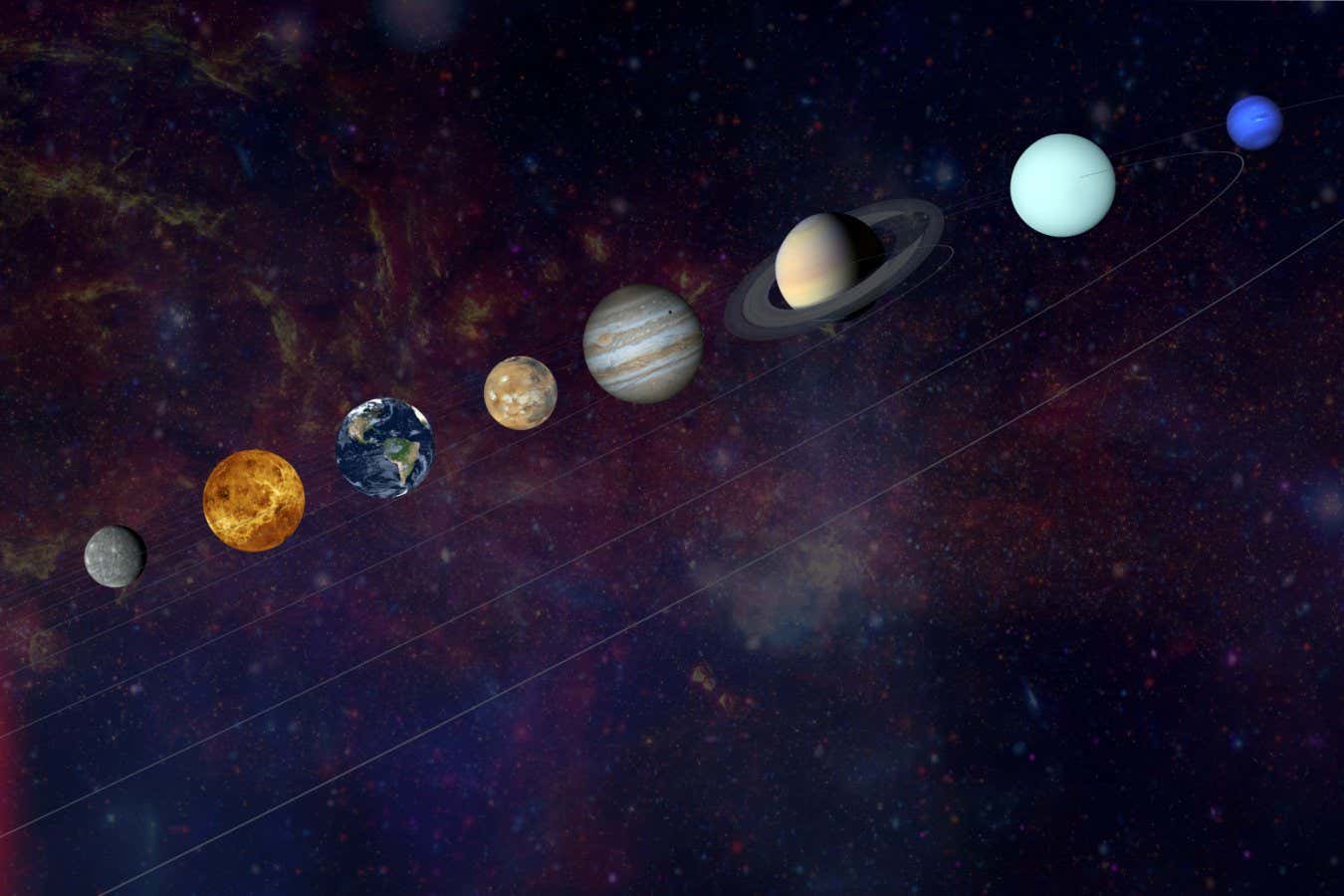
    Nearly all of the planets in the solar system are about to march through the night sky in a single-file line. This planetary alignment, sometimes called a planet parade, will include all of the solar system’s planets except Mars, as it is currently on the opposite side of the sun from Earth and therefore not visible.

    Alignments like this only occur every few years, when all the planets’ orbits happen to carry them to the same side of the sun at the same time. All of their orbits are different lengths – Mercury takes 88 Earth days to circle the sun while Neptune takes about 165 Earth years – so planetary alignments are a lucky coincidence of geometry and orbital dynamics.

    Sometimes they happen relatively close together – February 2025 saw a so-called “great alignment”, where all seven planets were visible at once – and sometimes years go by without a single one.

    During a planetary alignment, the planets trace a line across the sky along what’s called the ecliptic. This is the same line that the sun follows across the sky during the day, although the tilts of the planets’ orbits make it so that they don’t line up perfectly. From beyond the solar system, the planets would not appear in a line – that is an optical illusion due to the fact that all of the planets orbit in the same plane.

    The alignment will be visible across a range of dates depending on where you are in the world, but 28 February and 1 March will be the best days to see it in most places. Find a spot with a clear view of the western sky and as little light pollution as possible and look out for the parade.

    The best time to see the planet parade on 28 February will be less than an hour or so after sunset: Mercury’s orbit close to the sun means that it will sink below the horizon shortly after the sun does. Right after sunset, both Mercury and Venus will be visible low on the western horizon. Saturn and Neptune will be just above them, then Uranus, and finally Jupiter relatively close to the nearly-full moon.

    While Mercury, Venus, Saturn and Jupiter should be visible to the naked eye, binoculars will be necessary to spot Uranus, and a telescope to see Neptune, because they are so far away.

    Topics:


    Source link

    Share. Facebook Twitter Pinterest LinkedIn Tumblr Email Telegram Copy Link

    Related Posts

    Science

    What is a ‘normal’ memory slowdown, and when should I worry?

    June 9, 2026
    Science

    Wildlife thrives in solar farm built on restored peatland

    June 8, 2026
    Science

    You don’t need to worry about recursive-self-improving AI – yet

    June 8, 2026
    Science

    Understanding anorexia’s grip on the brain could unlock new therapies

    June 8, 2026
    Science

    Why GLP-1 drugs might reduce cancer risk

    June 8, 2026
    Science

    Landmark pancreatic cancer treatment paves way for targeting other tricky tumors

    June 8, 2026
    Editors Picks

    Kanye West refused entry to UK, Wireless Festival cancelled

    April 7, 2026

    What’s next for Live Nation? Jury reaches verdict in antitrust case over Ticketmaster fees

    April 16, 2026

    China warns Panama as Hong Kong firm contests ruling on canal ports | International Trade News

    February 4, 2026

    Andrei Vasilevskiy, Jeremy Swayman have rare goalie fight

    February 2, 2026

    The story of the first human tool: the humble container

    May 11, 2026
    About Us
    About Us

    Welcome to Benjamin Franklin Institute, your premier destination for insightful, engaging, and diverse Political News and Opinions.

    The Benjamin Franklin Institute supports free speech, the U.S. Constitution and political candidates and organizations that promote and protect both of these important features of the American Experiment.

    We are passionate about delivering high-quality, accurate, and engaging content that resonates with our readers. Sign up for our text alerts and email newsletter to stay informed.

    Latest Posts

    Cristiano Ronaldo, ‘The Bosnian Diamond’ headline the World Cup 40-and-over club

    June 9, 2026

    How housing market inventory is shifting across every state

    June 9, 2026

    What is a ‘normal’ memory slowdown, and when should I worry?

    June 9, 2026

    Subscribe for Updates

    Stay informed by signing up for our free news alerts.

    Paid for by the Benjamin Franklin Institute. Not authorized by any candidate or candidate’s committee.
    • Privacy Policy
    • About us
    • Contact us

    Type above and press Enter to search. Press Esc to cancel.