
Close Menu
    Trending
    • Timothée Chalamet’s Love Life Sparks Shock Fan Exit
    • UK boosts security for Jews after London stabbings
    • Press freedom worldwide falls to its lowest level in 25 years | Freedom of the Press News
    • Concerning update emerges on Broncos QB Bo Nix
    • The analog edge: 8 old-fashioned habits to stay sharp and fit at work
    • What happened after the fall of Rome? Ancient genomes offer new clues
    • South Korean Market Surges Past Britain’s
    • Gina Carano Breaks Silence On ‘Star Wars’ Costar Pedro Pascal
    Benjamin Franklin Institute
    Thursday, April 30
    • Home
    • Politics
    • Business
    • Science
    • Technology
    • Arts & Entertainment
    • International
    Benjamin Franklin Institute
    Home»Science»Crash clock says satellites in orbit are three days from disaster
    Science

    Crash clock says satellites in orbit are three days from disaster

    Team_Benjamin Franklin InstituteBy Team_Benjamin Franklin InstituteDecember 25, 2025No Comments3 Mins Read
    Share Facebook Twitter Pinterest Copy Link LinkedIn Tumblr Email VKontakte Telegram
    Share
    Facebook Twitter Pinterest Email Copy Link


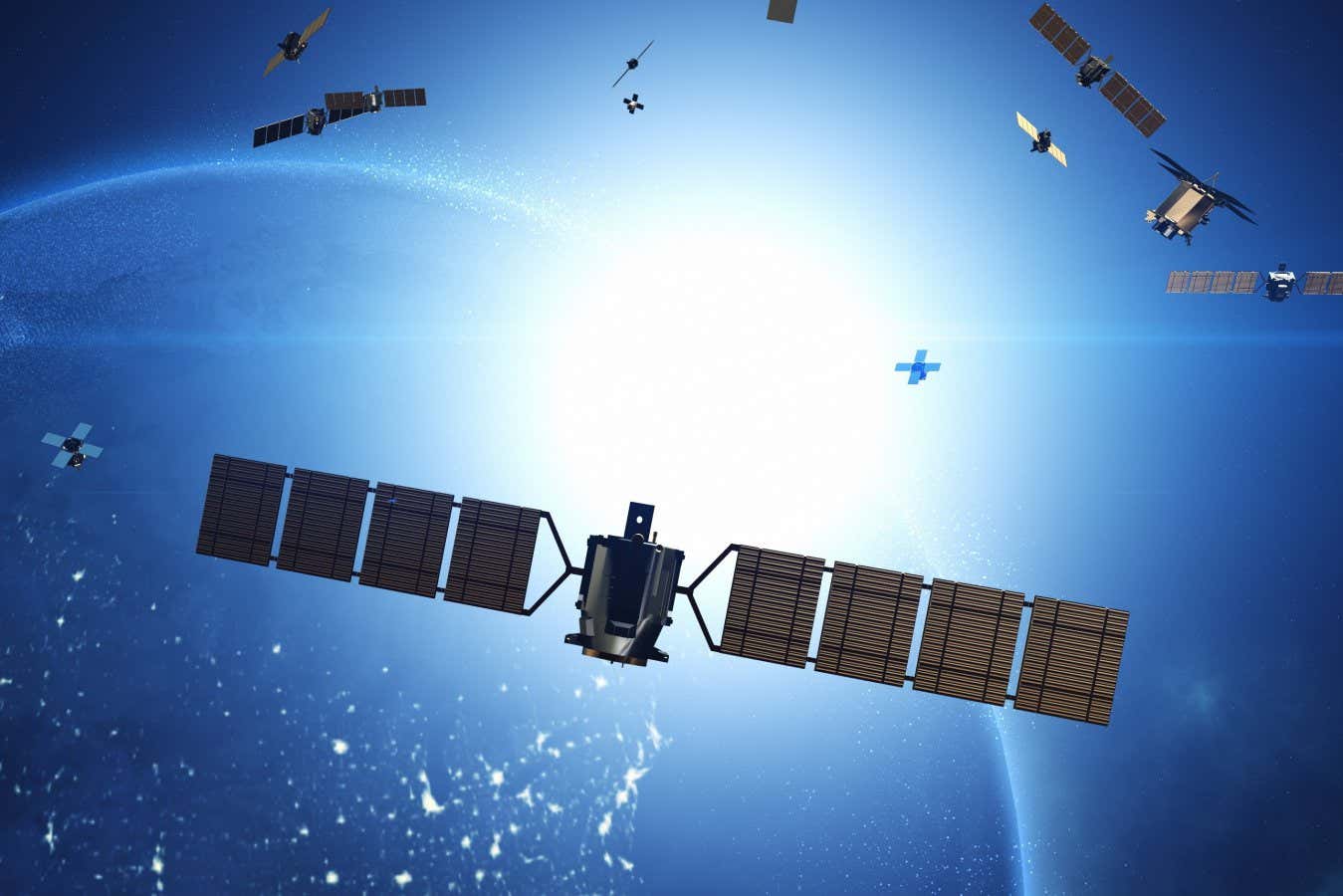
    An artist’s representation of satellites in orbit around Earth

    yucelyilmaz/Shutterstock

    A collision would occur in just 2.8 days if all satellites lost their ability to dodge each other, highlighting how crowded Earth’s orbit is becoming.

    In the past seven years, the number of satellites has more than tripled from 4000 to nearly 14,000. The main cause of this growth has been SpaceX’s Starlink constellation, which now numbers more than 9000 satellites in low Earth orbit between 340 and 550 kilometres above Earth.

    This large increase means satellites must constantly dodge out of the way of each other, known as a collision avoidance manoeuvre, to prevent crashes that would generate thousands of pieces of metal and potentially render parts of Earth’s orbit unusable.

    From 1 December 2024 to 31 May 2025, SpaceX performed 144,404 collision avoidance manoeuvres, equivalent to one every 1.8 minutes across its constellation, according to a report by the company. Only one collision between satellites in orbit has ever occurred. In 2009, an active satellite run by Iridium Communications hit a defunct Russian Kosmos satellite. Hundreds of pieces of debris from the event still orbit Earth.

    Sarah Thiele at Princeton University and her colleagues used public positional data of satellites to model how their increased number has affected the collision risk. They came up with a new metric, called the Collision Realization And Significant Harm (CRASH) Clock to quantify the risk. The name invites comparisons with the infamous Doomsday Clock that charts humanity’s threat of nuclear war. “We definitely talked about that a lot,” says Samantha Lawler at the University of Regina in Canada, another member of the team.

    They found that if all the satellites in orbit in 2018 – prior to SpaceX’s first Starlink launch in 2019 – had suddenly lost their ability to manoeuvre, there would have been a collision in 121 days. However, today the number is just 2.8 days because of the large number of satellites in orbit.

    “We were shocked it was that short,” says Thiele.

    The 2.8-day figure presumes that some event, such as a powerful solar storm, has rendered all satellites unable to change course. In May 2024, a strong solar storm caused some Starlink satellites to ripple in a giant wave in response to the event. A repeat of the most powerful solar storm on record – the Carrington Event of 1859 – could cause significant problems, although Wineed Vattapally at SES Satellites in Luxembourg says it probably wouldn’t render all satellites inoperable. “It’s unlikely to knock them all out at the same time,” he says.

    New Scientist. Science news and long reads from expert journalists, covering developments in science, technology, health and the environment on the website and the magazine.

    The world capital of astronomy: Chile

    Experience the astronomical highlights of Chile. Visit some of the world’s most technologically advanced observatories and stargaze beneath some of the clearest skies on earth.

    A metric like the CRASH Clock is useful to highlight how crowded Earth’s orbit is becoming, says Hugh Lewis at the University of Birmingham, UK. “Can we keep adding to that house of cards?” he says. “The more cards that get added, the bigger the collapse is when things go wrong.”

    Tens of thousands more satellites are set to be launched in the coming years by SpaceX, Amazon and several Chinese companies for their own mega constellations. That means it is likely that the CRASH Clock will decrease further, raising the potential for collisions. “It’s scary to think about,” says Thiele.

    Topics:


    Source link

    Share. Facebook Twitter Pinterest LinkedIn Tumblr Email Telegram Copy Link

    Related Posts

    Science

    What happened after the fall of Rome? Ancient genomes offer new clues

    April 30, 2026
    Science

    A giant hailstorm just killed an emu at a Missouri zoo

    April 30, 2026
    Science

    Measles outbreaks can end, but the danger of the disease doesn’t

    April 30, 2026
    Science

    Simple treatment tweak drastically reduces blood loss from severe cuts

    April 29, 2026
    Science

    The chips in your phone are probably broken – and that’s a good thing

    April 29, 2026
    Science

    Chanda Prescod-Weinstein connects physics, poetry and pop culture

    April 29, 2026
    Editors Picks

    Six biggest trade possibilities to watch before the NBA deadline

    December 17, 2025

    Justin Bieber’s Coachella Set Sparks Viral Fan Backlash

    April 12, 2026

    Georgia lands elite five-star 2027 RB Kemon Spell

    February 3, 2026

    Dinosaurs like Diplodocus may have been as colourful as birds

    December 10, 2025

    We urgently need to prepare for quantum computers breaking encryption

    April 18, 2026
    About Us
    About Us

    Welcome to Benjamin Franklin Institute, your premier destination for insightful, engaging, and diverse Political News and Opinions.

    The Benjamin Franklin Institute supports free speech, the U.S. Constitution and political candidates and organizations that promote and protect both of these important features of the American Experiment.

    We are passionate about delivering high-quality, accurate, and engaging content that resonates with our readers. Sign up for our text alerts and email newsletter to stay informed.

    Latest Posts

    Timothée Chalamet’s Love Life Sparks Shock Fan Exit

    April 30, 2026

    UK boosts security for Jews after London stabbings

    April 30, 2026

    Press freedom worldwide falls to its lowest level in 25 years | Freedom of the Press News

    April 30, 2026

    Subscribe for Updates

    Stay informed by signing up for our free news alerts.

    Paid for by the Benjamin Franklin Institute. Not authorized by any candidate or candidate’s committee.
    • Privacy Policy
    • About us
    • Contact us

    Type above and press Enter to search. Press Esc to cancel.