
Close Menu
    Trending
    • LeBron James finally opens up on Michael Jordan, GOAT debate
    • Opinion | Why Texas Is Winning the Housing War
    • Alphabet’s Q1 profit beats expectations with Google’s big AI bets paying off
    • Simple treatment tweak drastically reduces blood loss from severe cuts
    • Market Talk – April 29, 2026
    • Heather Rae El Moussa Announces ‘Selling Sunset’ Return In Style
    • Man charged with trying to kill Trump at dinner took photo with knife in hotel, investigators say
    • South Africa to deport Robert Mugabe’s son over firearm offence | Courts News
    Benjamin Franklin Institute
    Wednesday, April 29
    • Home
    • Politics
    • Business
    • Science
    • Technology
    • Arts & Entertainment
    • International
    Benjamin Franklin Institute
    Home»Science»Simple treatment tweak drastically reduces blood loss from severe cuts
    Science

    Simple treatment tweak drastically reduces blood loss from severe cuts

    Team_Benjamin Franklin InstituteBy Team_Benjamin Franklin InstituteApril 29, 2026No Comments3 Mins Read
    Share Facebook Twitter Pinterest Copy Link LinkedIn Tumblr Email VKontakte Telegram
    Share
    Facebook Twitter Pinterest Email Copy Link


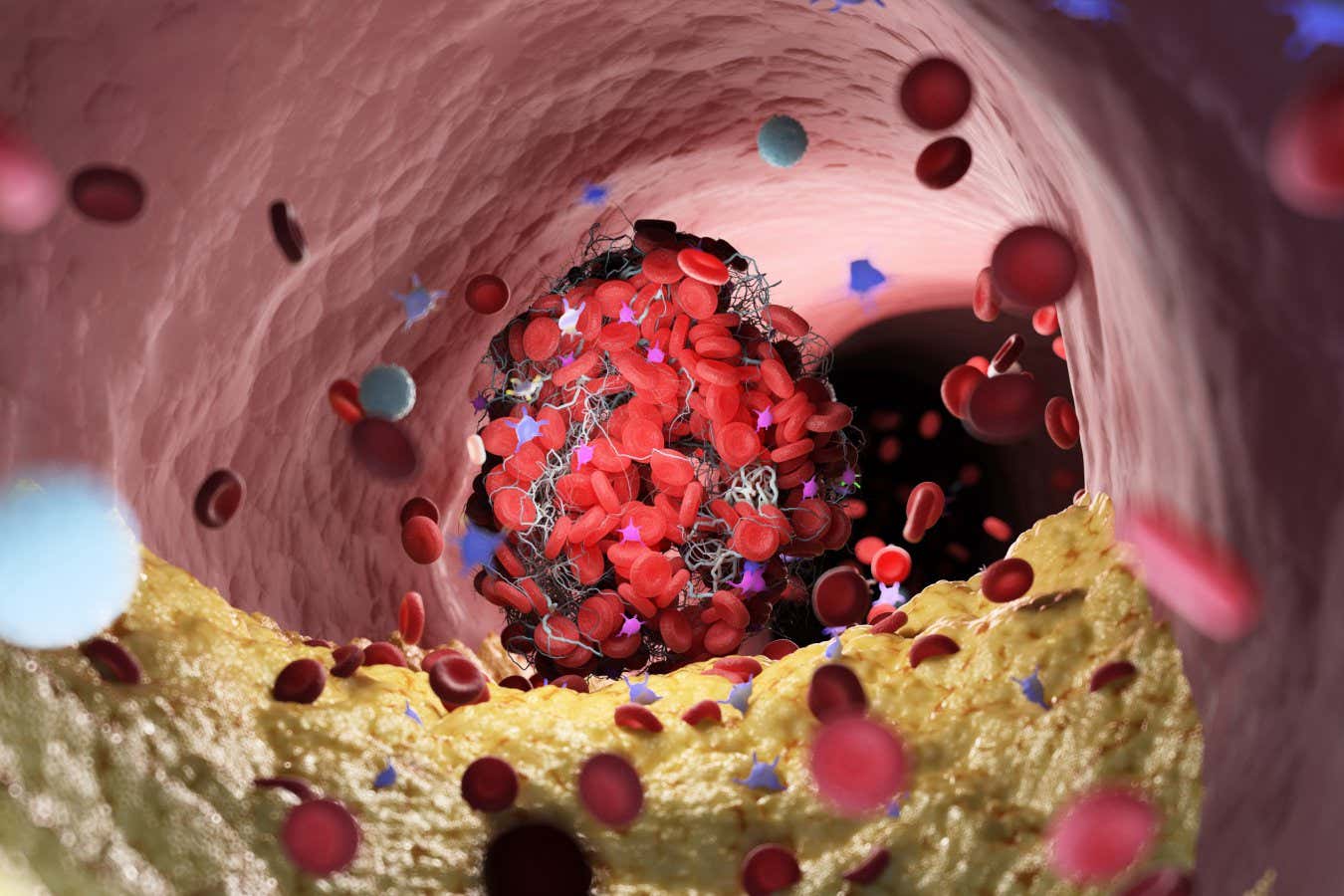
    Red blood cells can be manipulated to play a bigger role in wound healing

    3DMEDISPHERE/SCIENCE PHOTO LIBRARY

    A simple modification to the cells that carry oxygen around our body seems to stop severe bleeds almost immediately. When applied to serious wounds in the livers of rats, the animals formed clots in just 5 seconds and lost very little blood, raising hopes that the approach could one day help people undergoing planned or emergency surgery.

    Blood loss kills around 2 million people worldwide each year, with the risk rising with every minute that bleeding continues. In mild cases, blood clots normally form quickly, but more severe incidences can require costly transfusions that are hard to deliver quickly, or the use of bandages that sometimes trigger immune reactions or interfere with healing.

    Although red blood cells primarily carry oxygen around the body, they also combine with platelets — cell fragments that stop bleeding — to form a sticky mesh in response to injury, plugging the wound. Red blood cells make up the bulk of this plug, but are inherently fragile, which made Jianyu Li at McGill University in Montreal, Canada, and his colleagues wonder whether they could be made stronger. “We saw and used the elephant in the room,” he says.

    First, the researchers took blood from rats and separated out its various cellular components. They then added different chemicals that act like handles: one side randomly attaches to proteins on the surface of the red blood cells, while the other is free to join with a long-chain molecule that links cells together, which the researchers also added to the mix.

    Next, the modified cells were returned to the liquid part of the blood, called the plasma, which the team injected into severe liver wounds in rats. These started clotting in less than 5 seconds, compared with 265 seconds in untreated rats. The treated rats also lost just 24 milligrams of blood, compared with nearly 2000 milligrams in the untreated group.

    Unlike natural clots, which break down within days, these lasted one to two months, which Li says could give wound-healing molecules more time to act. The team also observed no safety concerns over this time.

    “It is exciting work that shows a new design method for cell-based biomaterials for surgical and regenerative applications,” says Hyunwoo Yuk, founder of SanaHeal, a company developing bioadhesive technologies in Boston, Massachusetts.

    In the future, the researchers hope that a small sample of a patient’s blood could be collected and modified in less than 30 minutes ahead of a planned surgical procedure. For emergencies, the treatment could be prepared in advance from blood-bank samples and refrigerated for at least a month. However, Jayachandran Kizhakkedathu at the University of British Columbia, Canada, says that existing treatments can be stored for longer. “One challenge could be the shorter shelf life of such cellular materials, unlike synthetic materials,” he says.

    Li says his team has applied for a patent and is planning further research.

    Topics:


    Source link

    Share. Facebook Twitter Pinterest LinkedIn Tumblr Email Telegram Copy Link

    Related Posts

    Science

    The chips in your phone are probably broken – and that’s a good thing

    April 29, 2026
    Science

    Chanda Prescod-Weinstein connects physics, poetry and pop culture

    April 29, 2026
    Science

    City birds appear more afraid of women than men, and scientists have no idea why

    April 29, 2026
    Science

    NASA chief Jared Isaacman hints at campaign to make Pluto a planet again

    April 29, 2026
    Science

    Cancer is increasing in young people and we still don’t know why

    April 29, 2026
    Science

    People are betting on measles outbreaks – and that might be useful

    April 29, 2026
    Editors Picks

    NASA’s Artemis II astronauts splash down on Earth after lunar mission | Science and Technology News

    April 11, 2026

    Israel warns Hamas to surrender or face ‘annihilation’

    September 8, 2025

    Humans are the only primates with a chin – now we finally know why

    February 16, 2026

    Everyone’s a queen: The ant species with no males or workers

    February 24, 2026

    French justice opens Epstein-linked probe against former culture minister

    February 7, 2026
    About Us
    About Us

    Welcome to Benjamin Franklin Institute, your premier destination for insightful, engaging, and diverse Political News and Opinions.

    The Benjamin Franklin Institute supports free speech, the U.S. Constitution and political candidates and organizations that promote and protect both of these important features of the American Experiment.

    We are passionate about delivering high-quality, accurate, and engaging content that resonates with our readers. Sign up for our text alerts and email newsletter to stay informed.

    Latest Posts

    LeBron James finally opens up on Michael Jordan, GOAT debate

    April 29, 2026

    Opinion | Why Texas Is Winning the Housing War

    April 29, 2026

    Alphabet’s Q1 profit beats expectations with Google’s big AI bets paying off

    April 29, 2026

    Subscribe for Updates

    Stay informed by signing up for our free news alerts.

    Paid for by the Benjamin Franklin Institute. Not authorized by any candidate or candidate’s committee.
    • Privacy Policy
    • About us
    • Contact us

    Type above and press Enter to search. Press Esc to cancel.