

What we learned from South Carolina’s measles outbreak
The recent measles outbreak in South Carolina sickened nearly 1,000 people before public health officials got it under control. Vaccination can effectively prevent further spread
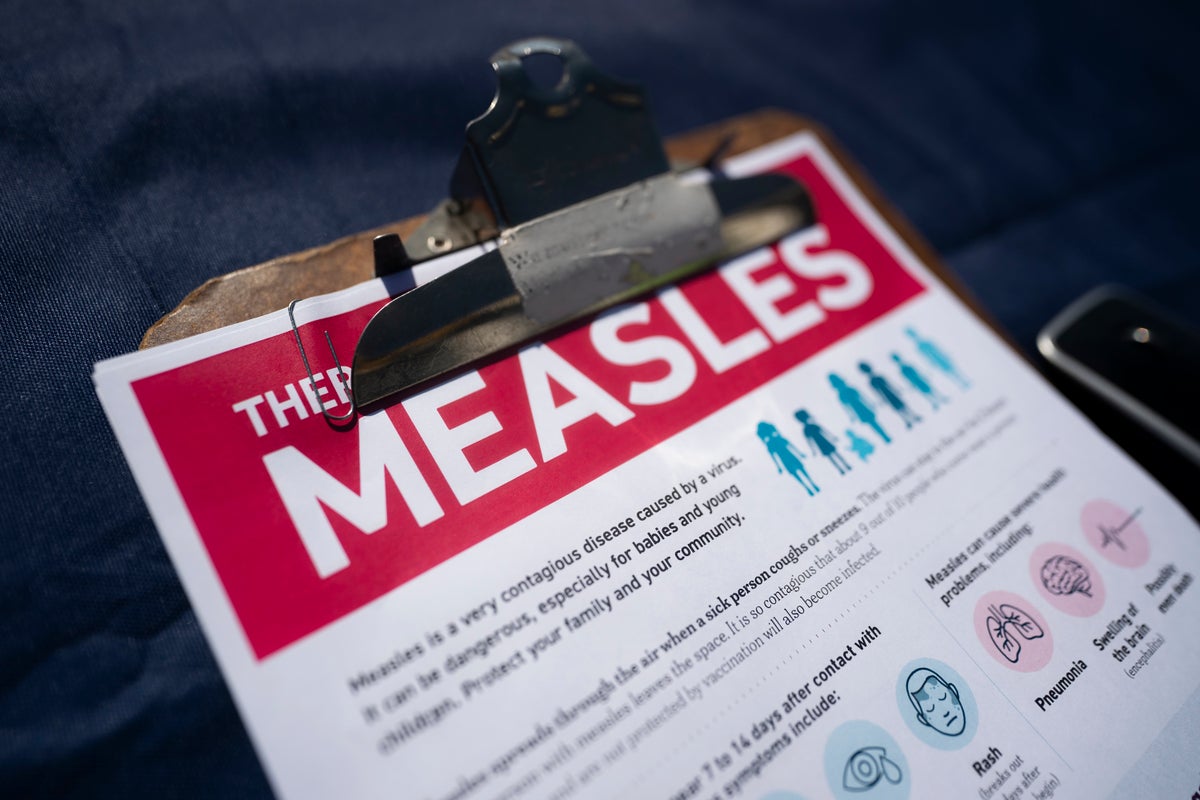
A fact sheet for measles sits on a table at a mobile clinic offering free vaccinations on February 6, 2026, in Spartanburg, S.C.
Sean Rayford/Stringer/Getty Images
South Carolina’s measles outbreak lasted about six months and sickened nearly 1,000 people in what was the U.S.’s worst flare-up of the disease since it was declared eliminated in the country in 2000. And while officials declared that the state’s outbreak was over on Sunday, the disease still poses a danger for the U.S.
South Carolina’s outbreak primarily affected unvaccinated children in an insular religious community in Spartanburg County. Experts applaud the public health response to the outbreak but say more measles cases could be on the horizon so long as vaccination rates remain low in pockets of the U.S.
“Being able to say this outbreak is over is certainly reassuring for the state of South Carolina,” says Stephen Thacker, an associate professor of pediatrics and an infectious disease specialist at the Medical University of South Carolina. “But it doesn’t mean that measles is necessarily behind us…. Measles anywhere is a risk everywhere.” And vaccination remains the best defense against outbreaks, he adds.
On supporting science journalism
If you’re enjoying this article, consider supporting our award-winning journalism by subscribing. By purchasing a subscription you are helping to ensure the future of impactful stories about the discoveries and ideas shaping our world today.
In the past two years, measles cases in the U.S. have skyrocketed, with outbreaks on a scale that had not been seen since the disease was deemed eliminated in the country a quarter-century ago. A major outbreak occurred last year in Texas, where 762 people were sickened and two children died; both were unvaccinated. The recent flare-ups—including currently active outbreaks in Utah and Florida—have come amid a steady decline in vaccination rates and rising hesitancy and antivaccine messaging from the highest levels of government. As a result, the U.S. has been on track to lose the disease’s elimination status; a meeting to determine that is scheduled for the fall.
The measles outbreak in Spartanburg was confirmed in October 2025. Infections spread rapidly through the undervaccinated community, especially among school- and daycare-aged children and their families. Twenty-one people were hospitalized with the disease, and some developed rare complications such as pneumonia and brain swelling; 874 students were quarantined and kept out of school for weeks.
The outbreak didn’t cause any deaths, but even people who have recovered from infection continue to face some risks. Measles resets the immune system, wiping out some of the immunity conferred by other vaccines. And in rare cases, the disease can cause a deadly form of brain inflammation called subacute sclerosing panencephalitis, which can develop up to 10 years after an infection. It causes progressive neurological dysfunction, coma and often death. It is “a really scary disease that, thankfully, is extremely rare. But it is something that I would never wish upon or want for anyone I know or love,” Thacker says.
Ultimately, public health workers got control of the outbreak through testing, contact tracing, isolating of sick and exposed individuals and vaccination. “That approach is really how you successfully change the tide of an outbreak,” Thacker says.
Vaccination is the most effective way to prevent and stop an outbreak. And it’s critical for protecting people who can’t get a vaccine, such as most children under the age of one or people who are immunocompromised.
Numerous studies have shown the measles, mumps and rubella (MMR) vaccine is extremely safe and effective. Two doses provide more than 97 percent protection against a measles infection, often for life. And there is no evidence the vaccine causes autism.
The measles vaccine has been the subject of a lot of misinformation and disinformation, says Martha Edwards, president of the South Carolina Chapter of the American Association of Pediatrics. “Parents have been fed this [idea that measles is] a routine childhood illness,” Edwards says. “And really none of the things we vaccinate for are routine—they’re really difficult, sometimes lethal illnesses.”
Edwards says the antivaccine views of Secretary of Health and Human Services Robert F. Kennedy, Jr., a longtime vaccine skeptic, have played a “huge role” in the recent spread of measles the U.S. “He’s been one of the people sowing this distrust in the vaccine for decades. Now he has a megaphone,” she says. Even when measles was spreading widely in Texas last year, Kennedy did not immediately tell people to get vaccinated, she says. The Department of Health and Human Services did not respond to a request for comment.
Thacker says that parents with questions about the safety of vaccines should talk to doctors. As a parent himself, he emphasizes the importance of open and transparent communication.
Despite the severity of the South Carolina outbreak, Edwards considers the public health response a success. It mostly contained the outbreak to one region of the state, primarily within a community of Ukrainian and Russian immigrants with low rates of vaccination. “It was a community that, for understandable reasons, is extremely either afraid or reluctant to do anything that’s recommended by the government, because they came from places where their government was extremely oppressive, and they were trying to escape that,” Edwards says. Many in the community had religious exemptions to the vaccine, she says, and their lack of immunity allowed the disease to spread.
“The end of the measles outbreak in South Carolina is a welcome break from the dangerous and costly harms that the spread of measles leaves in its wake,” says Jennifer Nuzzo, director of the Pandemic Center at the Brown University School of Public Health. “But I fear it may only be a temporary reprieve. Unless the state is able to increase its vaccination coverage in all communities, they should expect to face recurring measles outbreaks.”
As long as measles continues circulate anywhere in the world and immunity from vaccination remains low, there’s a risk of reestablishing disease transmission, Thacker says. “We are definitely not in the clear.”
It’s Time to Stand Up for Science
If you enjoyed this article, I’d like to ask for your support. Scientific American has served as an advocate for science and industry for 180 years, and right now may be the most critical moment in that two-century history.
I’ve been a Scientific American subscriber since I was 12 years old, and it helped shape the way I look at the world. SciAm always educates and delights me, and inspires a sense of awe for our vast, beautiful universe. I hope it does that for you, too.
If you subscribe to Scientific American, you help ensure that our coverage is centered on meaningful research and discovery; that we have the resources to report on the decisions that threaten labs across the U.S.; and that we support both budding and working scientists at a time when the value of science itself too often goes unrecognized.
In return, you get essential news, captivating podcasts, brilliant infographics, can’t-miss newsletters, must-watch videos, challenging games, and the science world’s best writing and reporting. You can even gift someone a subscription.
There has never been a more important time for us to stand up and show why science matters. I hope you’ll support us in that mission.