
Close Menu
    Trending
    • Yankees’ Brian Cashman gives worrisome Aaron Judge injury update
    • Why B2B Customer Experience Needs a New Playbook
    • Special relativity can warp chemical bonds – now we’ve seen it happen
    • When will Andy Burnham become Prime Minister?
    • Market Talk – July 9, 2026
    • Inside The Drunken Night That Sparked Row Among Spice Girls
    • US Senate candidate’s implosion forces Democratic reckoning
    • Is Syria stable enough to engage with the world? | Syria’s War News
    Benjamin Franklin Institute
    Thursday, July 9
    • Home
    • Politics
    • Business
    • Science
    • Technology
    • Arts & Entertainment
    • International
    Benjamin Franklin Institute
    Home»Science»Special relativity can warp chemical bonds – now we’ve seen it happen
    Science

    Special relativity can warp chemical bonds – now we’ve seen it happen

    Team_Benjamin Franklin InstituteBy Team_Benjamin Franklin InstituteJuly 9, 2026No Comments3 Mins Read
    Share Facebook Twitter Pinterest Copy Link LinkedIn Tumblr Email VKontakte Telegram
    Share
    Facebook Twitter Pinterest Email Copy Link


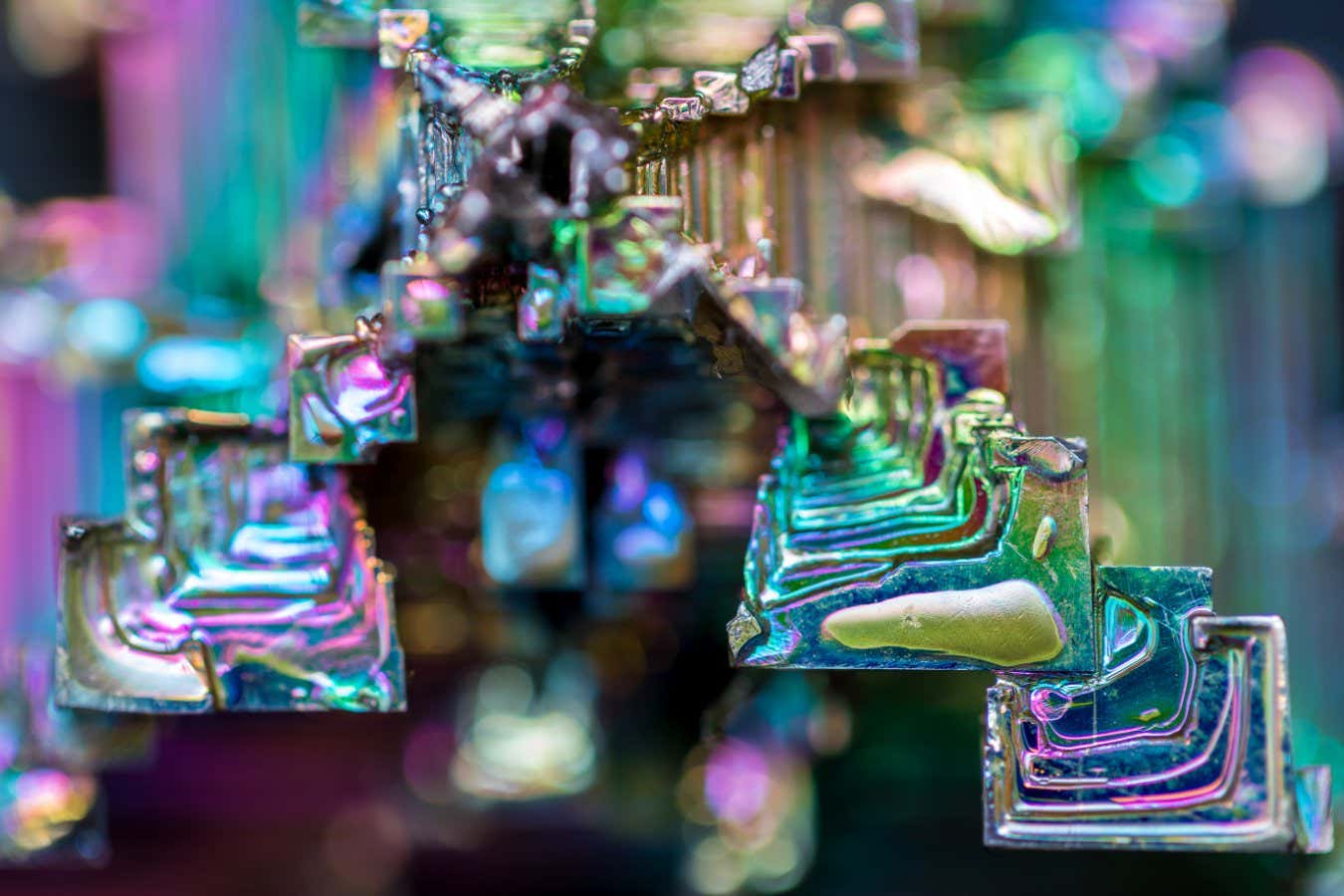
    In some heavy atoms, like those of bismuth (pictured in crystalline form), electrons move at relativistic speeds

    savva_25/Shutterstock

    Albert Einstein’s theory of special relativity can reshape chemical bonds within molecules, and researchers have just seen it happen for the first time.

    The theory of special relativity describes how moving at speeds close to the speed of light would affect travellers’ experience of space and time. Because of this, it is usually associated with particle accelerators and spacefaring objects, but within some heavy atoms, electrons experience relativistic speeds too.

    Lai-Sheng Wang at Brown University in Rhode Island and his colleagues have now managed to take an unprecedented look at how this breaks the standard notion of chemical bonds within a charged molecule made from bismuth and carbon.

    Within the molecule, a bismuth atom and a carbon atom were connected by three bonds, one of which the researchers expected to be of “sigma” type and two of “pi” type. The difference between these two types stems from electrons’ quantum character – each electron is “smeared” across some region of space, instead of being a tight ball, and whether these regions overlap head on or side by side determines the type of chemical bond they create between the atoms.

    In their experiment, Wang and his colleagues mapped the distribution of electrons throughout the molecule, effectively getting a look at its bonds. But instead of seeing electrons distributed in shapes associated with sigma and pi bonds, the team noticed that two of the bonds resembled two different mixes of sigma and pi shapes. “Their characters are different from our normal understanding,” says Wang. “You can’t really call it the sigma and pi.”

    His team turned to Kirk Peterson at Washington State University, whose calculations ultimately showed that this mixing was a consequence of electrons near the bismuth nucleus feeling such a strong electromagnetic interaction that they moved at relativistic speeds. He says this effect hadn’t previously been captured in an experiment.

    “The hardest thing about [studying] heavy elements is a lack of really good experimental data,” says Peterson. “To have such a beautiful experiment to be able to essentially compare very high-level theory to data is really a luxury.”

    Wang says one important part of the new experiment is that he and his colleagues could make the molecule very cold before looking at its electrons. This dampened any jitters and excitations that would have made the final images imprecise.

    “The methods they have used, both experimental and theoretical, are the best possible ones,” says Pekka Pyykkö at the University of Helsinki in Finland.

    He says this relativistic reshaping of bismuth’s bonding with carbon could influence how organic bismuth compounds are used in chemical reactions. In fact, a recent study by researchers at the Max Planck Institute for Coal Research in Germany has already shown that relativistic effects help make this heavy metal a good catalyst of chemical processes.

    Wang says the researchers now want to repeat their experiment but swap bismuth for elements close to it in the periodic table, so they can see when exactly special relativity makes the traditional chemical bond structure collapse.

    Topics:


    Source link

    Share. Facebook Twitter Pinterest LinkedIn Tumblr Email Telegram Copy Link

    Related Posts

    Science

    Resuscitated human retinas respond to light 10 hours after death

    July 9, 2026
    Science

    A worm that lived half a billion years ago preferred turning right

    July 9, 2026
    Science

    The 4 best science-fiction shows of 2026 so far

    July 9, 2026
    Science

    A surprisingly detailed look at the physics of a lugworm’s poop

    July 9, 2026
    Science

    The allergy culprit histamine also boosts our memory

    July 9, 2026
    Science

    Does time come from the entire universe running computations?

    July 9, 2026
    Editors Picks

    Dodgers’ Edwin Diaz shares major injury update

    April 29, 2026

    NASA puts ISS astronauts on evacuation alert after worsening air leak

    June 5, 2026

    Why some adults thrive after childhood adversity

    January 25, 2026

    Market Talk – May 28, 2026

    May 28, 2026

    Lady Gaga pauses Tokyo concert to speak out against ICE: ‘My heart is aching’

    January 30, 2026
    About Us
    About Us

    Welcome to Benjamin Franklin Institute, your premier destination for insightful, engaging, and diverse Political News and Opinions.

    The Benjamin Franklin Institute supports free speech, the U.S. Constitution and political candidates and organizations that promote and protect both of these important features of the American Experiment.

    We are passionate about delivering high-quality, accurate, and engaging content that resonates with our readers. Sign up for our text alerts and email newsletter to stay informed.

    Latest Posts

    Yankees’ Brian Cashman gives worrisome Aaron Judge injury update

    July 9, 2026

    Why B2B Customer Experience Needs a New Playbook

    July 9, 2026

    Special relativity can warp chemical bonds – now we’ve seen it happen

    July 9, 2026

    Subscribe for Updates

    Stay informed by signing up for our free news alerts.

    Paid for by the Benjamin Franklin Institute. Not authorized by any candidate or candidate’s committee.
    • Privacy Policy
    • About us
    • Contact us

    Type above and press Enter to search. Press Esc to cancel.