

Feedback is our weekly column of bizarre stories, implausible advertising claims, confusing instructions and more
Physics of defecation
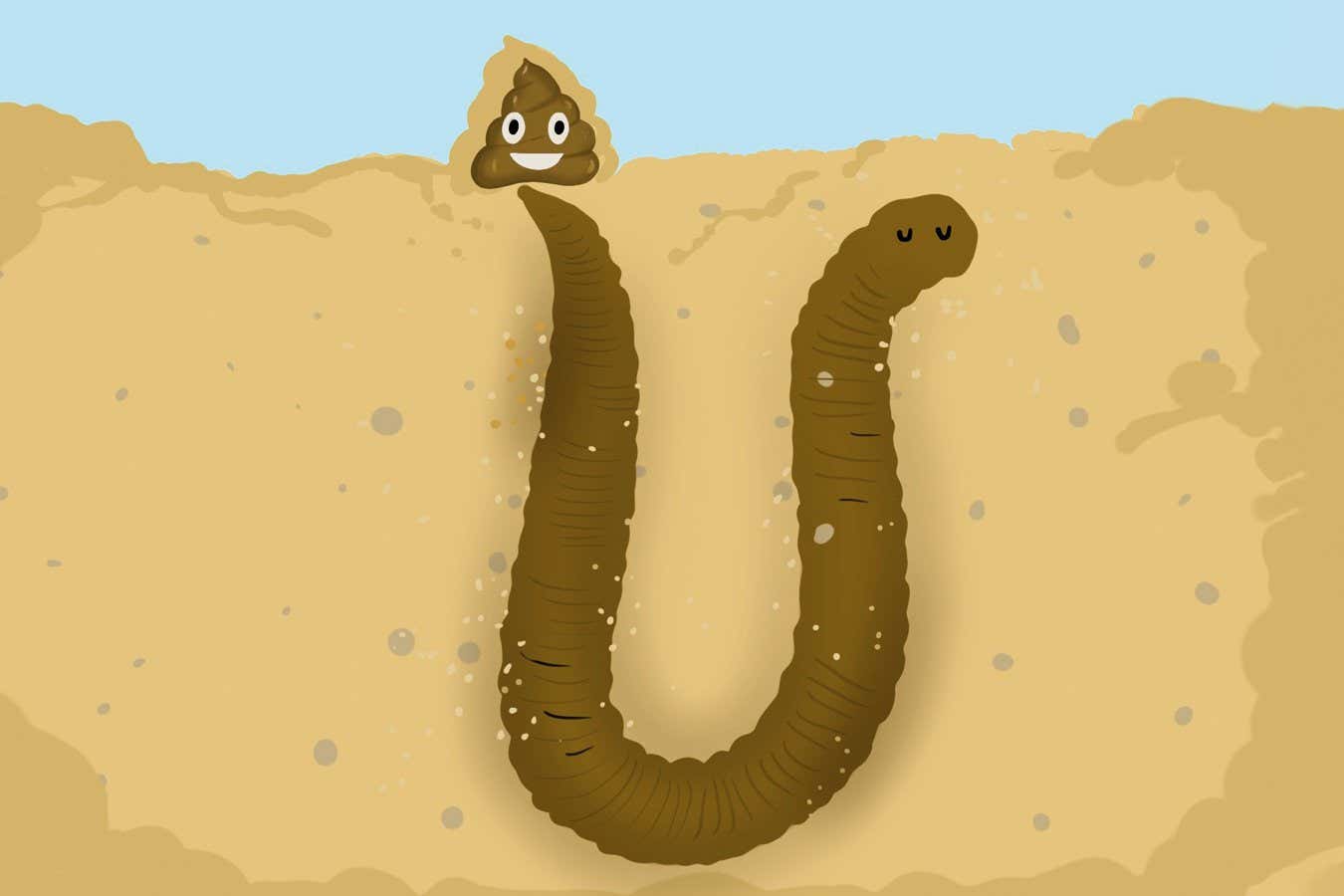
News editor Alexandra Thompson passes along a press release from the University of Amsterdam entitled “Hoe de poep-emoji zijn vorm kreeg“. A hasty bit of translation reveals that this means “How the poop emoji got its shape”.
For those whose knowledge of emoji doesn’t extend beyond the smiley face, a spot of explanation may be in order. Buried in the emoji alphabet is the poop emoji, which, though it can take many guises IRL, is shaped like a sort of conical tower made up of coiled ropes of faeces. The Emojipedia website helpfully compares it to “soft-serve ice cream”, which, in these heatwave-addled times, is a frankly monstrous image to put into people’s minds.
Readers who saw the 2017 cinematic triumph The Emoji Movie may recall that the poop emoji was a significant supporting character, its voice provided by none other than Shakespearean starship captain Patrick Stewart. We therefore encourage you to imagine that the rest of this item is being read by Stewart in his most stentorian tones.
The press release directed us to a study of the physics of lugworm poop, published in Nature Communications in April. The authors explain that many animals produce coiled poop, as illustrated by the emoji, including earthworms and some mammals. This shape emerges from “the coiling of fluid ‘ropes’ falling onto a rigid surface”, which is controlled by a combination of gravity, inertia and viscosity.
Lugworms are an interesting exception, because they defecate upwards, against gravity. They live in U-shaped burrows in intertidal sand flats. At low tide, each lugworm positions its anus just below the burrow entrance and poops upwards, leaving a deposit on the surface of the sand flat.
Yet despite defecating in the opposite direction to most animals, the lugworms still manage to produce a coiled poop. Somehow, this manages to hold its shape despite the risk of “buckling instabilities”. Resistance, at least to buckling instabilities, is apparently not futile.
Furthermore, the radius of the coil is “determined solely by material properties and rope geometry”, unlike in animals that defecate downwards, where the height of the fall is a key factor.
The researchers go on to describe this in great mathematical detail, and to show that the same model can accurately describe the coiling of other substances, such as rice noodles and spaghetti. There is something oddly beautiful about all this: it turns out the universe isn’t so badly designed.
A qeux for Bayeux
Queueing, and how to optimise it for maximum fairness and efficiency, is an intriguing little area of applied maths. If one train is late arriving at a station, should it be prioritised – perhaps causing a delay to another train – or made to wait? What would be fairest to the people on the trains, and the most efficient way to run the railway system?
Feedback has no idea, but we do know that history buff and chief subeditor Kelsey Hayes had a trying experience of online queueing courtesy of the British Museum. Kelsey is a paying member of the museum, so she got an email in early June notifying her that it would be showing the Bayeux tapestry from September: the first time it has been in the UK for 900 years. Members would get access to an early ticket sale, two weeks before tickets were made available to the general public.
The email advised Kelsey “to register to book” a slot. Or, as she put it, “it’s a sign-up to do a sign-up”. She booted it up, only to discover an online queue that was “over 1400 people deep and takes 20 minutes to get through”.
Once she had gone through the process, Kelsey learned it was an exercise in what she called “getting members to have their log-in details in order, so that there isn’t a register/reset password apocalypse in a couple of weeks”. Never before has Kelsey, or anyone Feedback knows, been asked to sit in a virtual queue for 20 minutes in order to reset a password.
Two weeks later, member booking finally opened. “Took me 4 hours in the queue to get a time slot,” Kelsey reports. She’s going to be so mad when she finds out it probably wasn’t made in Bayeux and isn’t even a tapestry.
Not my bag
Feedback always enjoys laughing at hubris, so it gives us considerable pleasure to deliver the news that a bag made of a trademarked substance called “T-Rex Leather” failed to sell at a Paris auction in June. The bag was expected to go for more than $500,000, but in the end the bids never even approached that.
It was apparently created using preserved collagen from a Tyrannosaurus rex femur, and Feedback is going to stop you right there. Leather is made from skin, and this “T-Rex Leather” isn’t made from T. rex skin.
Collagen is just one of many proteins and other biomolecules found in skin. To recreate T. rex skin properly, you would need a full T. rex genome in order to grow T. rex skin cells. Good luck with that: the oldest known preserved DNA is from a site in Greenland and is 2 million years old, while T. rex went extinct perhaps 66 million years ago.
We don’t have any T. rex DNA, let alone a full genome, so we can’t grow T. rex skin cells. Feedback would like to think this is why the bag didn’t sell, but we fear it might just be because it’s a distinctly unfashionable colour.
Got a story for Feedback?
You can send stories to Feedback by email at feedback@newscientist.com. Please include your home address. This week’s and past Feedbacks can be seen on our website.