
Close Menu
    Trending
    • Dan Morgan offers huge update on possible contract extension for Bryce Young
    • Big Tech capex ranked: What Alphabet, Amazon, Apple, Meta, and Microsoft are spending as AI investment surges
    • Oak trees use delaying tactics to thwart hungry caterpillars
    • May Day: history, traditions and why it’s celebrated
    • Europe Explores Wealth Taxes, Capital Taxes, And Exit Taxes
    • Pete Davidson’s Relationship Tested After Baby Arrival
    • Riot erupts over Australian Indigenous girl’s suspected killer, authorities urge calm
    • Oil prices rise again with little sign of war on Iran ending | Oil and Gas News
    Benjamin Franklin Institute
    Friday, May 1
    • Home
    • Politics
    • Business
    • Science
    • Technology
    • Arts & Entertainment
    • International
    Benjamin Franklin Institute
    Home»Science»Oak trees use delaying tactics to thwart hungry caterpillars
    Science

    Oak trees use delaying tactics to thwart hungry caterpillars

    Team_Benjamin Franklin InstituteBy Team_Benjamin Franklin InstituteMay 1, 2026No Comments3 Mins Read
    Share Facebook Twitter Pinterest Copy Link LinkedIn Tumblr Email VKontakte Telegram
    Share
    Facebook Twitter Pinterest Email Copy Link


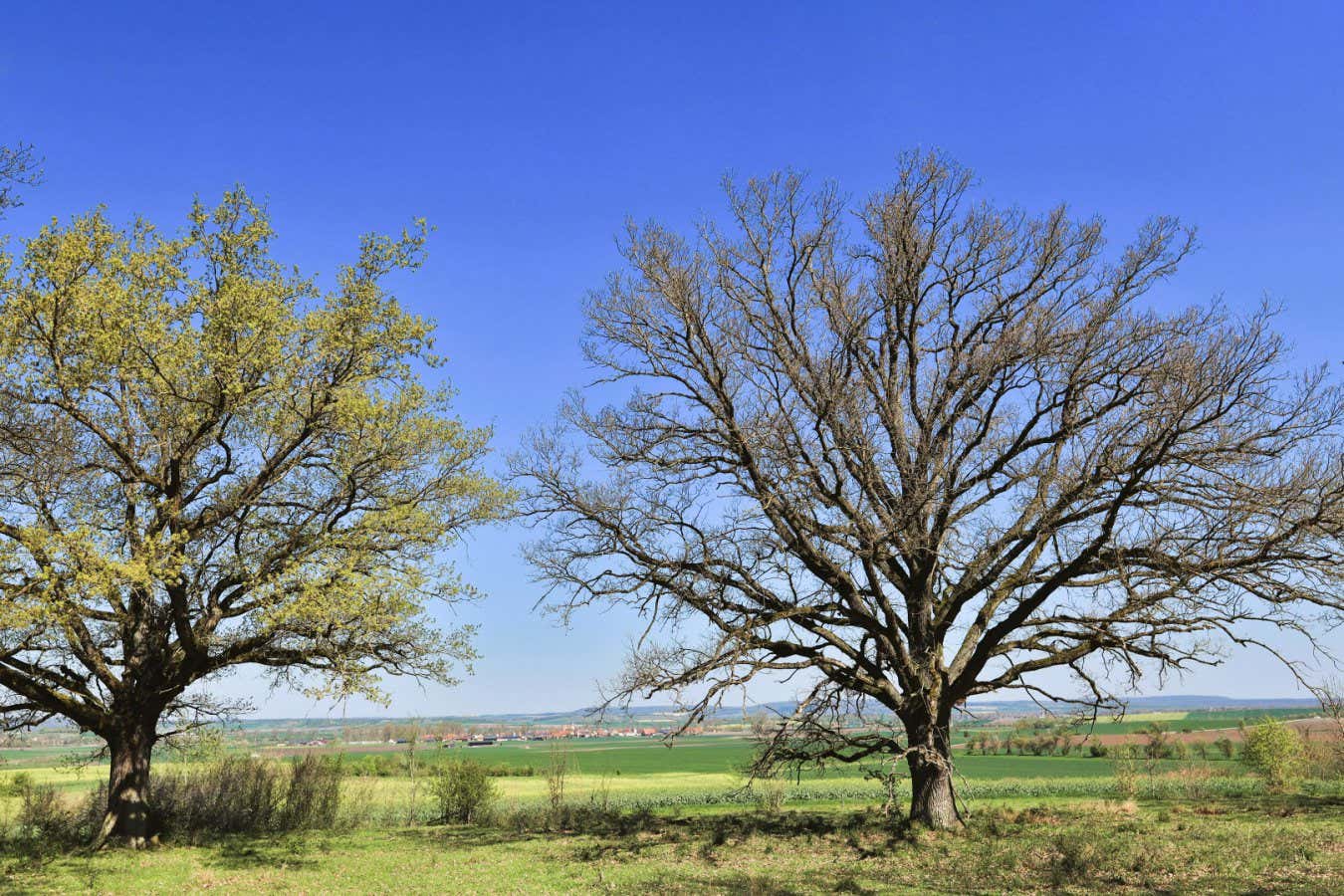
    Two oak trees in the spring, with varying degrees of leaf growth

    Sven Finnberg

    If caterpillars have munched through a lot of an oak tree’s leaves one year, then, the following spring, the tree’s buds open three days later. This delay means the caterpillars don’t have food available when they hatch, and so many die, halving how many leaves get eaten.

    In spring, longer, warmer days drive trees to start growing again, opening buds and unfurling young leaves. Many species time their life cycle to match this, so some caterpillars, for example, hatch when the leaves are new and soft, so they can start eating immediately.

    Now, Soumen Mallick at the University of Würzburg in Germany and his colleagues have discovered that oak trees have a way to fight back. They analysed the condition of tree canopies in images from Sentinel-1 radar satellites for a 2400-square-kilometre area in the northern Bavaria region of Germany between 2017 and 2021.

    The forests there are dominated by two species of oak: the pedunculate or English oak (Quercus robur) and the sessile oak (Quercus petraea). Each pixel in the satellite images showed an area of 10 by 10 metres – about the size of the crown of one tree – and the team looked at 27,500 pixels in total.

    In 2019, there was a massive outbreak of gypsy moths (Lymantria dispar), the hairy caterpillars of which feed on tree leaves, causing extensive damage when they are plentiful.

    The satellite data showed which trees were stripped of leaves and how they responded. If an oak tree was heavily infested by caterpillars, the following spring, its leaves would emerge three days later than those of trees that hadn’t been badly eaten.

    This delay slashed the damage caused by feeding on the tree by 55 per cent compared with the year before. This is because the caterpillars still hatch at the same time, but they emerge to a bare cupboard rather than a feast of young leaves, leading many of them to die, says Mallick.

    A caterpillar on an oak leaf bud

    Sven Finnberg

    Oak trees also have other defences, including making leaves tougher to chew or producing aromatic compounds that may attract other organisms to prey on the caterpillars. “The delay in bud opening seems to be more efficient than all these other defence mechanisms,” says Mallick, who thinks other deciduous plants may do it, too.

    “It’s very plausible,” says James Cahill at the University of Alberta in Canada, but he says the delay in bud emergence after the caterpillar outbreak is a correlation, and evidence of causality isn’t yet there. The delay could be caused by decreased plant vigour as a result of the leaf loss, he says, but having data from more than one outbreak would help work out what’s going on. “It certainly deserves more research.”

    Mallick says the delay could be explained by physiological constraints such as resource depletion, but because it was seen across dozens of tree populations and was strongest in forests where a delay most effectively reduced herbivory, he thinks it isn’t just a physiological response by individual trees, but an adaptation.

    “The mechanisms are intriguing and are a key aspect requiring further research,” says James Blande at the University of Eastern Finland.

    Forests sometimes turn green later in spring than computer models predict they will based on temperatures, especially as the climate warms, and this study explains why, says Mallick.

    “This point that plants respond to much more than climate change is very important,” says Cahill.

    Topics:


    Source link

    Share. Facebook Twitter Pinterest LinkedIn Tumblr Email Telegram Copy Link

    Related Posts

    Science

    Your oral microbiome could affect your weight, liver and diabetes risk

    May 1, 2026
    Science

    The best new science fiction books of May 2026 include a new Murderbot and books from Alan Moore and Ann Leckie

    May 1, 2026
    Science

    Weird ‘transdimensional’ state of matter is neither 2D nor 3D

    May 1, 2026
    Science

    ‘Green’ cryptocurrency uses 18 times more energy than makers claim

    April 30, 2026
    Science

    The rich but complicated legacy of genome pioneer Craig Venter

    April 30, 2026
    Science

    Doubts cast over ‘wild’ claim that magnetic control can turn on genes

    April 30, 2026
    Editors Picks

    Lakers’ March hot streak reveals a lot, should scare rest of NBA

    March 19, 2026

    North Korean hackers stole $1.3bn in crypto this year, report says

    December 27, 2024

    The Muslim Brotherhood Has Infiltrated UK Universities

    January 12, 2026

    Opinion | These Iranian Doctors Risked Their Lives So You Could See These Images

    February 25, 2026

    Obama, Clinton say killings by immigration agents should be wake-up call for US

    January 26, 2026
    About Us
    About Us

    Welcome to Benjamin Franklin Institute, your premier destination for insightful, engaging, and diverse Political News and Opinions.

    The Benjamin Franklin Institute supports free speech, the U.S. Constitution and political candidates and organizations that promote and protect both of these important features of the American Experiment.

    We are passionate about delivering high-quality, accurate, and engaging content that resonates with our readers. Sign up for our text alerts and email newsletter to stay informed.

    Latest Posts

    Dan Morgan offers huge update on possible contract extension for Bryce Young

    May 1, 2026

    Big Tech capex ranked: What Alphabet, Amazon, Apple, Meta, and Microsoft are spending as AI investment surges

    May 1, 2026

    Oak trees use delaying tactics to thwart hungry caterpillars

    May 1, 2026

    Subscribe for Updates

    Stay informed by signing up for our free news alerts.

    Paid for by the Benjamin Franklin Institute. Not authorized by any candidate or candidate’s committee.
    • Privacy Policy
    • About us
    • Contact us

    Type above and press Enter to search. Press Esc to cancel.