

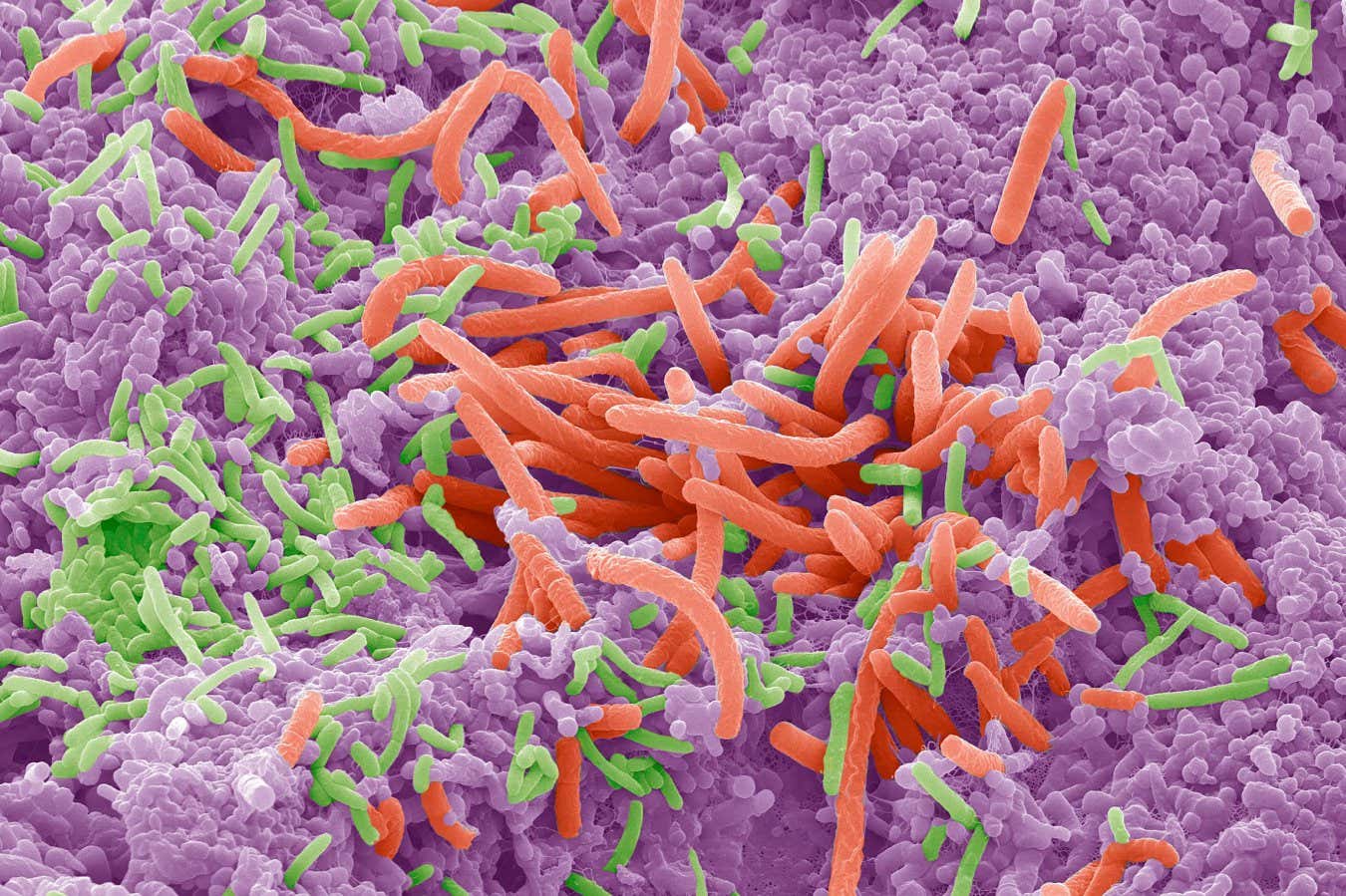
A scanning electron micrograph of bacteria on the surface of a human tongue
Science Photo Library/Alamy
They say you are what you eat, but the microbes in your mouth may be just as revealing. One of the largest studies yet to explore links between the oral microbiome and metabolic health suggests they may offer clues about our risk of obesity, pre-diabetes and fatty liver disease — and could one day help screen for these conditions.
“It presents one of the most ambitious attempts yet to map how the oral microbiome reflects metabolic health across multiple organ systems,” says Lindsey Edwards at King’s College London, who was not involved in the research.
The oral microbiome is the second-largest microbial ecosystem in the body after the gut, and previous research has hinted that it may offer a window into broader health. Yet many earlier studies were limited by a small number of participants, a focus on single conditions and a reliance on 16S-based profiling – a method that compares variation in the 16S gene, which is found in all bacteria, and can be used to identify broad groups of microbes, but not exact strains or other genes they may carry.
Instead, Imran Razzak at Mohamed bin Zayed University of Artificial Intelligence in Abu Dhabi, United Arab Emirates, and his colleagues have used whole metagenomic sequencing, which reads all the microbial DNA in a sample, to analyse oral swabs from 9431 participants in the Human Phenotype Project, a large study that uses multiple measurements to track people’s health over time.
They then combined this microbiome data with liver ultrasound scans, continuous blood glucose monitoring and body composition analyses to create a large statistical atlas linking specific mouth bacteria – and the genes and biological pathways associated with them – to 44 metabolic traits. These included liver fat, blood sugar swings, and visceral fat around the organs, all of which are linked to conditions such as high blood pressure, pre-diabetes, obesity and fatty liver disease.
Some of the bacteria highlighted in the study have emerged in previous research. For instance, earlier this year, Aashish Jha at New York University Abu Dhabi reported that Streptococcus parasanguinis and Oribacterium sinus were more abundant in people with obesity. Now, Razzak and his colleagues have similarly linked them to higher body mass index and body fat.
But the new study has also identified microbial functions that could plausibly be involved in disease processes. For instance, polyamine biosynthesis – the production of small nitrogen-containing molecules by bacteria – was associated with worse liver measures, poorer glucose control and higher body fat, while a microbial pathway involved in the breakdown of ceramide-related molecules – lipids already linked to insulin resistance, liver disease and obesity – correlated with worsening blood sugar control.
While the study cannot prove that these bacteria cause these health outcomes, as opposed to just being correlated with them, “they are credible leads for future mechanistic work”, says Razzak. “Our working hypothesis is that the oral microbiome is not merely a passive indicator but may play an active role in metabolic disease.”
Jha says there are several plausible ways that oral microbes could affect metabolic health. These include bacterial products entering the bloodstream through inflamed gums and triggering inflammation elsewhere; mouth microbes seeding the gut and altering its ecology; and chemicals released by bacteria influencing processes such as blood sugar control, blood pressure and vascular health.
Overall, the most plausible mechanism isn’t that a single oral bacterium causes obesity or other metabolic conditions, “but that oral dysbiosis contributes to a chronic inflammatory and metabolic burden through repeated microbial exposure, oral-gut transfer, immune activation, and microbial metabolite production,” says Jha.
One question is why some people harbour these potentially problematic microbes, while others do not. “I think it is likely multifactorial,” says Razzak, pointing to factors such as gum health, age, sex, smoking and diet. Importantly, many of the associations remained even after accounting for common oral health problems, such as gum disease.
If confirmed in future studies, oral microbial signatures could eventually be used to assess metabolic risk. “The idea that a simple buccal swab could provide early warning signals for conditions like fatty‑liver disease or impaired glucose regulation is compelling, especially given the global rise in metabolic disorders and the need for accessible, non‑invasive diagnostic tools,” says Edwards.
Shifting the balance of these microbes might also one day emerge as a treatment strategy, says Razzak.
Both cautioned that further work is needed to better understand the links, confirm them in other populations and validate them in clinical settings. “Still, this work represents a significant step forward in population‑scale microbiome research and reinforces the growing recognition that the oral cavity is not just a window into oral health but a potential sentinel for whole‑body physiology,” says Edwards.
Topics: