

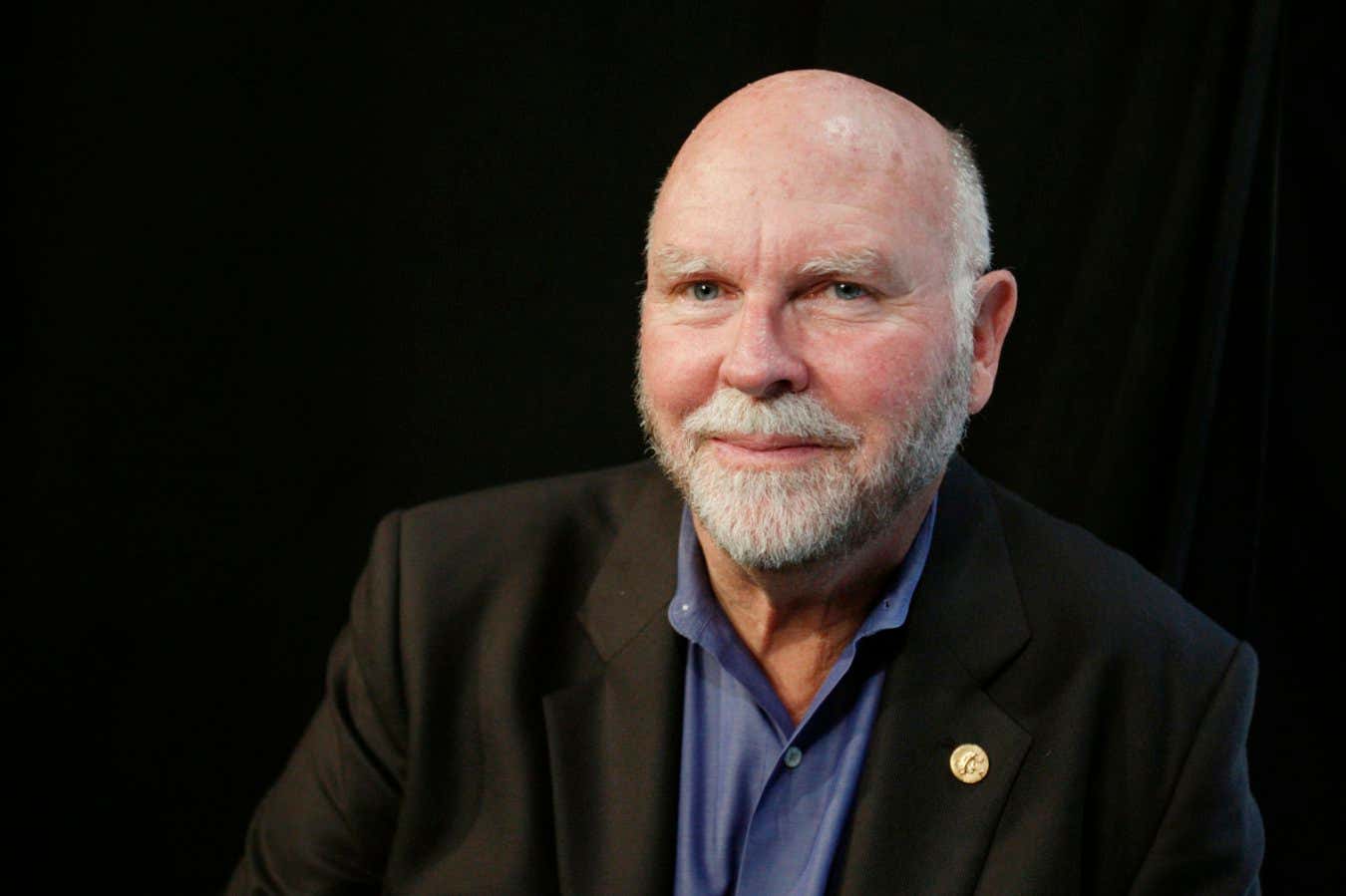
Craig Venter in 2010
REUTERS/Jessica Rinaldi
Craig Venter, who played a leading role in the sequencing of the human genome and, later, in synthetic biology, has died.
According to the J. Craig Venter Institute, the not-for-profit research institute he founded, Venter died “following a brief hospitalization for unexpected side effects that arose from treatment of recently diagnosed cancer”. He was 79.
Venter leaves behind a vast and complicated legacy. He made major advances in genomics, fundamental biology and biodiversity. At the same time, he drove the commercialisation of biological research and promoted the idea of science as a competitive race.
His path into research was circuitous. He graduated from high school, having been an indifferent student who preferred to sail and surf. But he was then conscripted into the US Navy and sent to Vietnam as a war orderly. Venter later said that this experience inspired him to get his life together. Returning to the US, he attended community college and then university, and by the 1980s, he was working as a biomedical researcher for the National Institutes of Health (NIH).
Venter became fascinated by the idea of reading the entire human genome. This vastly long sequence of DNA contains a huge amount of biological information, and variations in the sequence can contribute to the risk of diseases.
In his own work, Venter began using automated sequencing machines, which sped things up enormously. He began sequencing short chunks of DNA called expressed sequence tags, each of which represented a bit of an active gene. But he immediately ran into controversy after announcing that the NIH was going to patent all these sequences, despite having no idea what any of them did. It was the first of many such arguments.
The official Human Genome Project (HGP) launched in 1990, but Venter felt that its chosen methods were too slow. So, in 1998, he founded Celera, a commercial company, and set out to complete the genome ahead of the publicly funded HGP.
The HGP was using Sanger sequencing, in which the genome was first mapped before being broken down into overlapping fragments. These were sequenced individually and could be easily put back together, but the initial mapping was time-consuming. Venter instead used shotgun sequencing, in which the genome was shattered into random fragments, each of which was sequenced, after which he relied on a computer to make sense of the resulting mess. In 1995, he used this method to sequence an entire bacterial genome, and with that proof of concept, he targeted the much larger human genome.
The result was a tie. The publicly funded and commercial genome teams both announced draft sequences in 2000, and published their results the following year: the HGP in Nature, Venter’s team in Science. However, while the HGP made all its data publicly available, Venter initially held some of his back so that Celera could monetise it.
In the aftermath, Venter found that many geneticists regarded him with contempt, but he was also flush with cash and no longer needed their approval.
Using his own yacht, Sorcerer II, Venter spent 2004 to 2006 circumnavigating the globe, collecting samples of seawater. His team sequenced vast amounts of DNA from these samples, leading to the discovery of millions of proteins, including over 1000 new families.
Venter then set out to create synthetic life, arguing that the ability to engineer novel organisms could have enormous benefits for everything from medicine to agriculture. In 2010, his team built a sort of synthetic cell.
The researchers began with an existing bacterium called Mycoplasma mycoides. They created an entire artificial genome for it, stringing together strands of DNA they had synthesised in the lab. Then they removed the genome from a living cell of a closely related species, Mycoplasma capricolum, and inserted their artificial one as a replacement. This could easily have killed the cell, but, instead, the new genome “booted up” and the cell thrived.
Venter didn’t claim that he had created life from scratch, but rather that this was a new kind of life: its genome had been created by a computer, so, in a sense, it had no biological ancestors. In a rhetorical flourish, Venter’s team added their names into the genome: this served as a proof that the genome had been successfully transferred, but it also served the emotional purpose of signing their work.
Once again, Venter’s efforts were controversial. Other synthetic biologists weren’t sure what the point was, other than a proof of concept, and argued that less flashy experiments would probably yield more benefits.
Undaunted, Venter continued editing his creation, stripping away genes that weren’t essential for survival in a bid to create an organism with a “minimal genome”. The key discovery from this was that there were many essential genes whose function was unknown – a reminder of how far we still have to go before we really understand life.
It will take historians of science a long time to sift through every aspect of Venter’s life and work. What is already clear is that his impact was enormous.
Topics: