
Close Menu
    Trending
    • Huge landslide in Alaska caused 481m-high tsunami
    • Ten Key Enablers for 6G Wireless Communications
    • Digital Surveillance Is Becoming The New Form Of Government Power
    • How ‘RHOP’ Star Stacey Rusch Really Feels About Gizelle
    • Zelenskyy says Russia choosing war as dual ceasefires falter
    • What is the FDD, the pro-Israel think tank shaping Trump’s Iran policy? | US-Israel war on Iran News
    • Astros star Carlos Correa suffers ‘serious’ injury
    • The Pentagon wants lasers. Can anyone build them fast enough?
    Benjamin Franklin Institute
    Wednesday, May 6
    • Home
    • Politics
    • Business
    • Science
    • Technology
    • Arts & Entertainment
    • International
    Benjamin Franklin Institute
    Home»Science»Huge landslide in Alaska caused 481m-high tsunami
    Science

    Huge landslide in Alaska caused 481m-high tsunami

    Team_Benjamin Franklin InstituteBy Team_Benjamin Franklin InstituteMay 6, 2026No Comments3 Mins Read
    Share Facebook Twitter Pinterest Copy Link LinkedIn Tumblr Email VKontakte Telegram
    Share
    Facebook Twitter Pinterest Email Copy Link


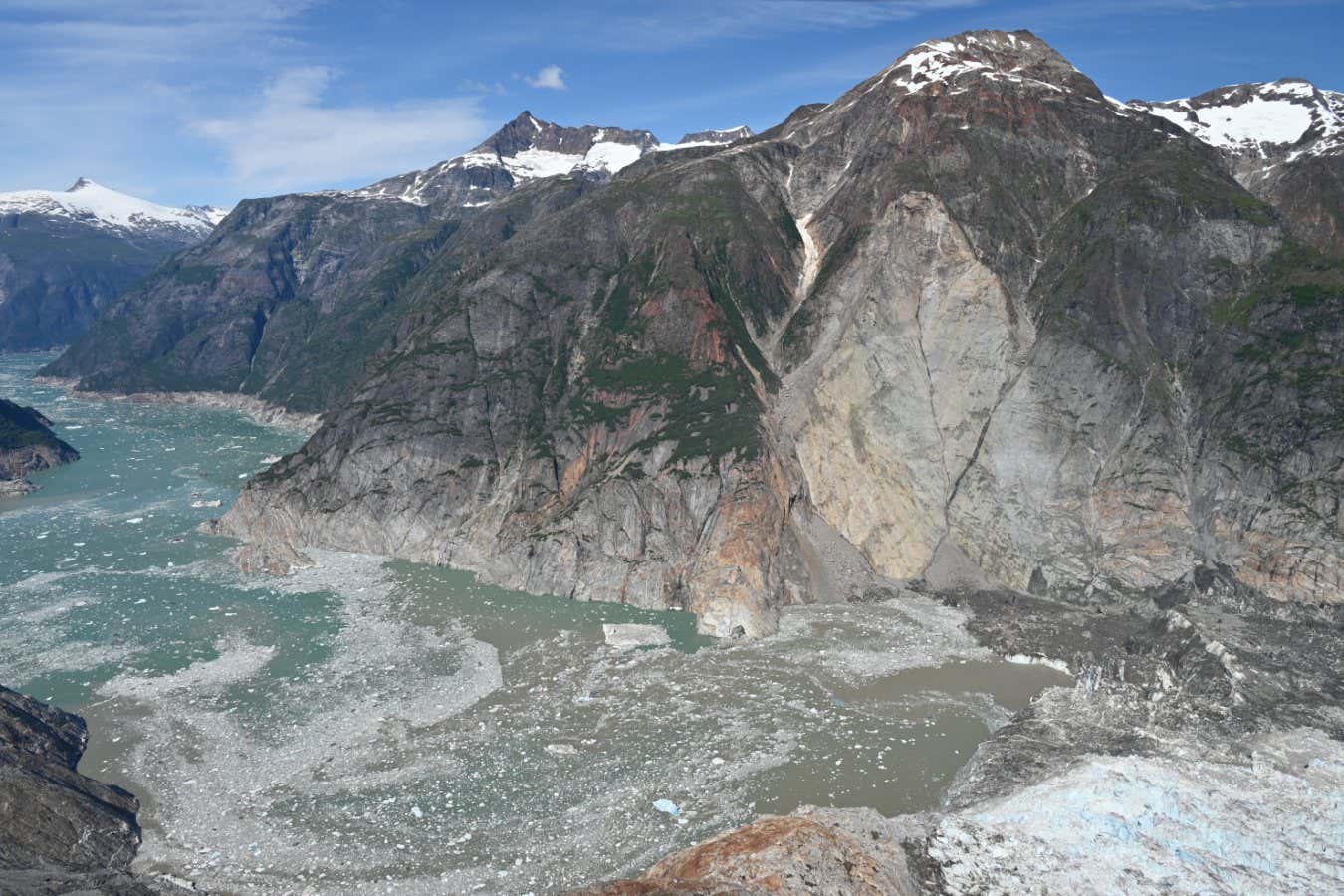
    A reconnaissance flight a few days after the tsunami captured this photo of Tracy Arm fjord, showing bare sections of slopes on the far side where the tsunami stripped away vegetation

    Cyrus Read/U.S. Geological Survey

    A massive landslide in August 2025 caused the second-biggest tsunami ever recorded, with waters rising over 480 metres inside an Alaskan fjord.

    The tsunami sped down the fjord at a speed of at least 70 metres per second and created a seiche, or reflecting wave, that sloshed around in the fjord for 36 hours.

    Only the 1958 Lituya Bay tsunami, also in Alaska, which spilled over a 530-metre-tall ridge, is known to be bigger.

    The region near Juneau, Alaska, is home to stunning landscapes where glaciers break off into waters enclosed by steep-sided fjords, attracting thousands of cruise ships each year.

    But because the tsunami occurred at 5.26am, deep within the Tracy Arm fjord in south-east Alaska, no tourist vessels were close to where the worst of the catastrophic event took place, says Dan Shugar at the University of Calgary, Canada.

    “This was a really… terrifyingly big wave,” says Shugar. “If a ship were in the upper part of the fjord, I can’t see how it would survive.”

    Shugar and his colleagues reconstructed the event using satellite images, seismic data, eyewitness accounts and computer models. They found that it was almost certainly caused by a retreating glacier destabilising terrain around Tracy Arm fjord, leading to a massive landslide.

    Throughout the 20th century and continuing into recent decades, the South Sawyer Glacier, which feeds into the fjord, has retreated by more than 10 kilometres and thinned dramatically.

    In spite of the massive retreat, there was no significant indication that a huge section of the mountain was about to give way, dropping 64 million cubic metres of rock into the fjord. Only in hindsight did researchers identify small tremors in the days leading up to the landslide.

    At 5.45am, a group of kayakers camped 50 kilometres away woke to find their campsite being inundated and their gear being swept away.

    The first that Shugar and his colleagues knew about the disaster was within hours, when they were notified that the landslide had triggered a 5.4 magnitude seismic event. However, it was not until mid-October that a team could be sent to the area to study the scale of what had happened.

    It could be a harbinger of a future with many more climate-change-driven tsunamis, warns Shugar. “Hopefully this will be a wake-up call to policymakers in places anywhere where we have steep landscapes next to the ocean or lakes – North America or Greenland or New Zealand, Chile – because these tsunamis are a threat that are probably underappreciated.”

    “Tsunamis are generally not primarily linked to climate factors, so this is another clear example of how climate change can indirectly trigger even those natural hazards we wouldn’t traditionally associate with it,” says Martin Koehler at the University of Queensland, Australia.

    “It’s fortunate that no vessels were nearby at the time, especially given the frequency of cruise ship traffic in the region and the sudden, unexpected nature of the event.”

    Topics:


    Source link

    Share. Facebook Twitter Pinterest LinkedIn Tumblr Email Telegram Copy Link

    Related Posts

    Science

    Tiny frozen world unexpectedly appears to have an atmosphere

    May 6, 2026
    Science

    A lost ancient script reveals how writing as we know it really began

    May 6, 2026
    Science

    Extinct relative of koalas discovered in Western Australia

    May 6, 2026
    Science

    Hantavirus: Where has the deadly cruise ship outbreak come from?

    May 6, 2026
    Science

    Mythos: Backlash builds over NHS plan to hide source code from AI hacking risk

    May 5, 2026
    Science

    The 50-year quest to create a quantum spin liquid may finally be over

    May 5, 2026
    Editors Picks

    Our verdict on Juice by Tim Winton: Australian climate novel is a hit

    February 28, 2026

    The ‘Single playoff-points leaders’ quiz

    March 3, 2026

    LeBron James’ Wife Gets Real About Her ‘Love’ For Strip Clubs

    February 15, 2026

    Mariah Carey Explains Why She’s Rejecting The ‘Legend’ Title

    January 29, 2026

    What are the new bin collection rules coming into force in 2026?

    December 30, 2025
    About Us
    About Us

    Welcome to Benjamin Franklin Institute, your premier destination for insightful, engaging, and diverse Political News and Opinions.

    The Benjamin Franklin Institute supports free speech, the U.S. Constitution and political candidates and organizations that promote and protect both of these important features of the American Experiment.

    We are passionate about delivering high-quality, accurate, and engaging content that resonates with our readers. Sign up for our text alerts and email newsletter to stay informed.

    Latest Posts

    Huge landslide in Alaska caused 481m-high tsunami

    May 6, 2026

    Ten Key Enablers for 6G Wireless Communications

    May 6, 2026

    Digital Surveillance Is Becoming The New Form Of Government Power

    May 6, 2026

    Subscribe for Updates

    Stay informed by signing up for our free news alerts.

    Paid for by the Benjamin Franklin Institute. Not authorized by any candidate or candidate’s committee.
    • Privacy Policy
    • About us
    • Contact us

    Type above and press Enter to search. Press Esc to cancel.