
Close Menu
    Trending
    • Prince William’s Reaction Ahead Of Harry’s Infamous Interview
    • Vivian Balakrishnan stresses importance of free transit through Strait of Hormuz during Gulf visit
    • In Gaza, the simplest of weddings are barely affordable | Israel-Palestine conflict News
    • Austin Reaves endures historically poor playoff shooting game in Lakers’ loss
    • Sara Blakely credits this habit from her teen years with empowering her to build Spanx
    • Extinct relative of koalas discovered in Western Australia
    • Ryan Reynolds Reportedly Pushed Blake Lively Toward Settlement
    • Washington media gala suspect slapped with additional charge for shooting officer
    Benjamin Franklin Institute
    Wednesday, May 6
    • Home
    • Politics
    • Business
    • Science
    • Technology
    • Arts & Entertainment
    • International
    Benjamin Franklin Institute
    Home»Science»Extinct relative of koalas discovered in Western Australia
    Science

    Extinct relative of koalas discovered in Western Australia

    Team_Benjamin Franklin InstituteBy Team_Benjamin Franklin InstituteMay 6, 2026No Comments3 Mins Read
    Share Facebook Twitter Pinterest Copy Link LinkedIn Tumblr Email VKontakte Telegram
    Share
    Facebook Twitter Pinterest Email Copy Link


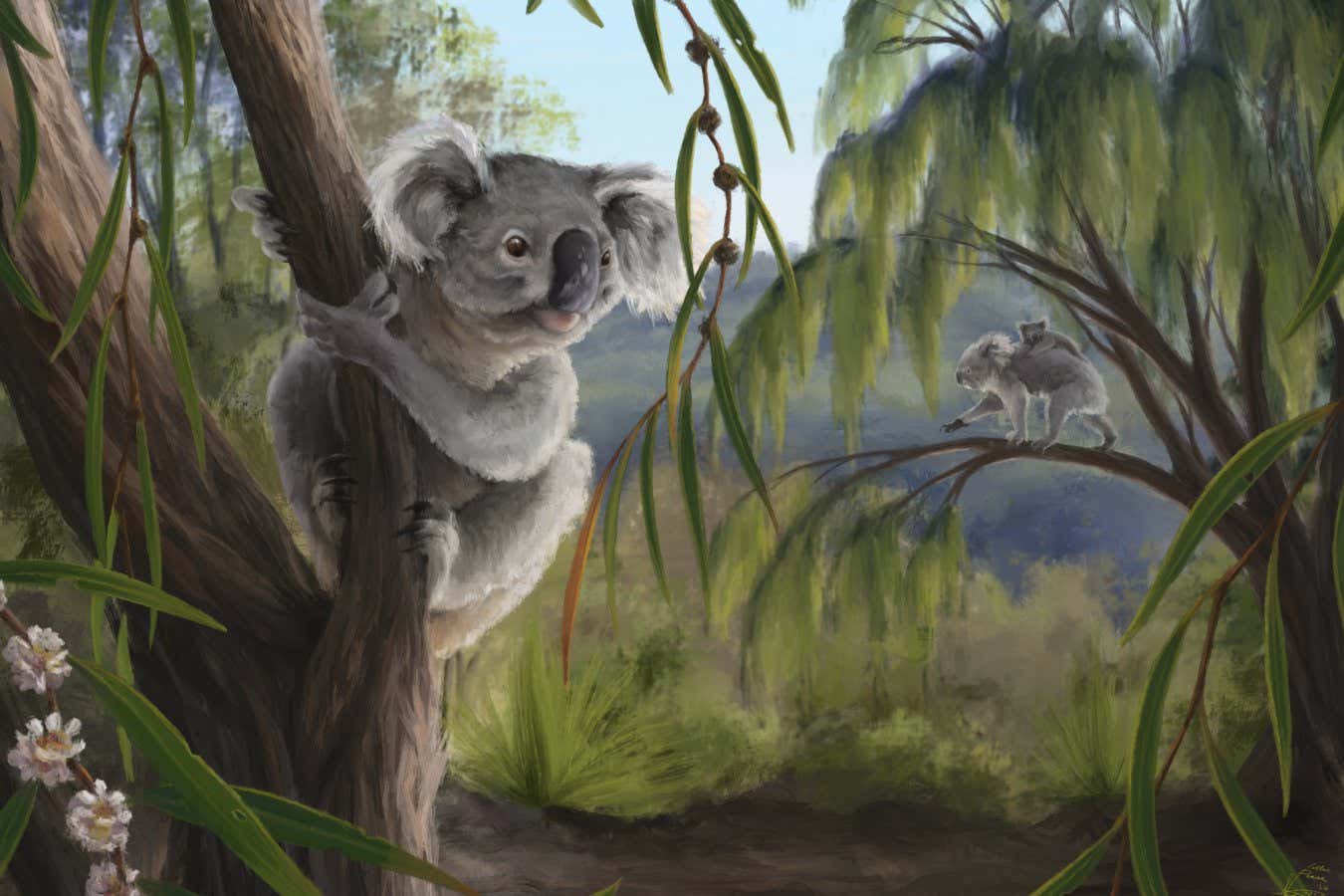
    An artist’s impression of the Western Australian koala

    WA Museum

    Australia was once home to a second species of koala that lived only in the west of the continent, where it became extinct around 30,000 years ago.

    Today, there is only one koala species: Phascolarctos cinereus. It is found almost exclusively in eucalyptus forests in eastern Australia and is threatened by habitat loss, disease, collisions with cars and predation by introduced species.

    Numerous koala fossils, aged between 137,000 and 31,000 years old, have been collected in Western Australian caves over the past century. Until now, however, there wasn’t enough material to conclude that the remains were from a different species.

    In the past 25 years, more fossils have become available to researchers, including skulls donated by the family of late speleologist Lindsay Hatcher, who discovered numerous ancient remains during his expeditions in caves in the south-west of Western Australia.

    “Amongst the donation was a koala skull in very good condition,” says Kenny Travouillon at the Western Australian Museum. “Upon examination of that skull, we noticed differences with modern koalas that got us to start working on the fossil material in the collection.”

    To the untrained eye, the new species, named Phascolarctos sulcomaxilliaris, would have been difficult to distinguish from P. cinereus, but there are subtle differences.

    “In short, the Western Australian koalas were same-same but different,” says Travouillon. “They had shorter heads, for sure, and they seem to have less-well-developed chewing muscles than the east-coast koalas. But they simply chewed in a different way by having larger teeth and having a more efficient, shorter jaw to break down the leaves.”

    A large groove on the cheek of P. sulcomaxilliaris suggests the animal had a larger muscle attached there that was used to either move a larger lip, with which it perhaps grabbed leaves, or inflate its nostrils to be able to smell leaves over a greater distance. Its skeleton was also less agile, suggesting it spent less time moving between trees.

    When the climate dried and Western Australia’s forests disappeared about 30,000 years ago, P. sulcomaxillaris vanished, along with many other animals that once shared its habitat. “There would have been [Tasmanian] devils, thylacines, giant echidnas, short-faced kangaroos and the giant marsupial Zygomaturus,” says Travouillon.

    “Our first peoples in Western Australia would have lived amongst them and they would have been witness to their extinction.”

    Tim Flannery at the Australian Museum in Sydney says the study makes a “convincing case for the distinctiveness of the Western Australia koalas as a unique species”. “I look forward to seeing if any DNA can be extracted from the fossils,” he says.

    New Scientist. Science news and long reads from expert journalists, covering developments in science, technology, health and the environment on the website and the magazine.

    Fossil hunting in the Australian outback

    Join this extraordinary adventure through the heart of Australia’s fossil frontier. Once a shallow inland sea millions of years ago, eastern Australia is now a hotspot for fossils. Over 13 unforgettable days, you’ll travel deep into the outback, tracing the footsteps of prehistoric giants and uncovering the secrets of Earth’s ancient history.

    Topics:


    Source link

    Share. Facebook Twitter Pinterest LinkedIn Tumblr Email Telegram Copy Link

    Related Posts

    Science

    Hantavirus: Where has the deadly cruise ship outbreak come from?

    May 6, 2026
    Science

    Mythos: Backlash builds over NHS plan to hide source code from AI hacking risk

    May 5, 2026
    Science

    The 50-year quest to create a quantum spin liquid may finally be over

    May 5, 2026
    Science

    Woman in cancer remission without treatment in highly unusual case

    May 5, 2026
    Science

    Man destined to get Alzheimer’s saved by accidental heat therapy

    May 5, 2026
    Science

    NASA just dropped more than 12,000 Artemis II photos—here’s how to see them

    May 5, 2026
    Editors Picks

    Harry And Meghan ‘Scared’ About Sarah Ferguson Spilling Royal Secrets

    March 7, 2026

    Heavy rains wreak havoc in New Zealand, several people missing in landslide

    January 22, 2026

    The ‘First round QB’s since 2000’ quiz

    April 23, 2026

    Niecy Nash Claps Back At Critics Over ‘All’s Fair’ Hate

    November 10, 2025

    Demi Lovato Still In Honeymoon Phase Ahead Of First Anniversary

    February 8, 2026
    About Us
    About Us

    Welcome to Benjamin Franklin Institute, your premier destination for insightful, engaging, and diverse Political News and Opinions.

    The Benjamin Franklin Institute supports free speech, the U.S. Constitution and political candidates and organizations that promote and protect both of these important features of the American Experiment.

    We are passionate about delivering high-quality, accurate, and engaging content that resonates with our readers. Sign up for our text alerts and email newsletter to stay informed.

    Latest Posts

    Prince William’s Reaction Ahead Of Harry’s Infamous Interview

    May 6, 2026

    Vivian Balakrishnan stresses importance of free transit through Strait of Hormuz during Gulf visit

    May 6, 2026

    In Gaza, the simplest of weddings are barely affordable | Israel-Palestine conflict News

    May 6, 2026

    Subscribe for Updates

    Stay informed by signing up for our free news alerts.

    Paid for by the Benjamin Franklin Institute. Not authorized by any candidate or candidate’s committee.
    • Privacy Policy
    • About us
    • Contact us

    Type above and press Enter to search. Press Esc to cancel.