
Close Menu
    Trending
    • Matt Damon And Ben Affleck Sued Over ‘The Rip’
    • US, French nationals from hantavirus ship test positive
    • Iran war day 73: Trump and Tehran clash over latest peace proposals | US-Israel war on Iran News
    • Shane van Gisbergen wins NASCAR Cup Series race at Watkins Glen
    • AI means presence is the new performance
    • Pressure from individual particles measured for the first time
    • Vietnamese Are Feeling The Economy Grow In Real-Time
    • James Charles Slammed For ‘Privileged’ Rant About Laid-Off Staff
    Benjamin Franklin Institute
    Monday, May 11
    • Home
    • Politics
    • Business
    • Science
    • Technology
    • Arts & Entertainment
    • International
    Benjamin Franklin Institute
    Home»Science»Woman in cancer remission without treatment in highly unusual case
    Science

    Woman in cancer remission without treatment in highly unusual case

    Team_Benjamin Franklin InstituteBy Team_Benjamin Franklin InstituteMay 5, 2026No Comments4 Mins Read
    Share Facebook Twitter Pinterest Copy Link LinkedIn Tumblr Email VKontakte Telegram
    Share
    Facebook Twitter Pinterest Email Copy Link


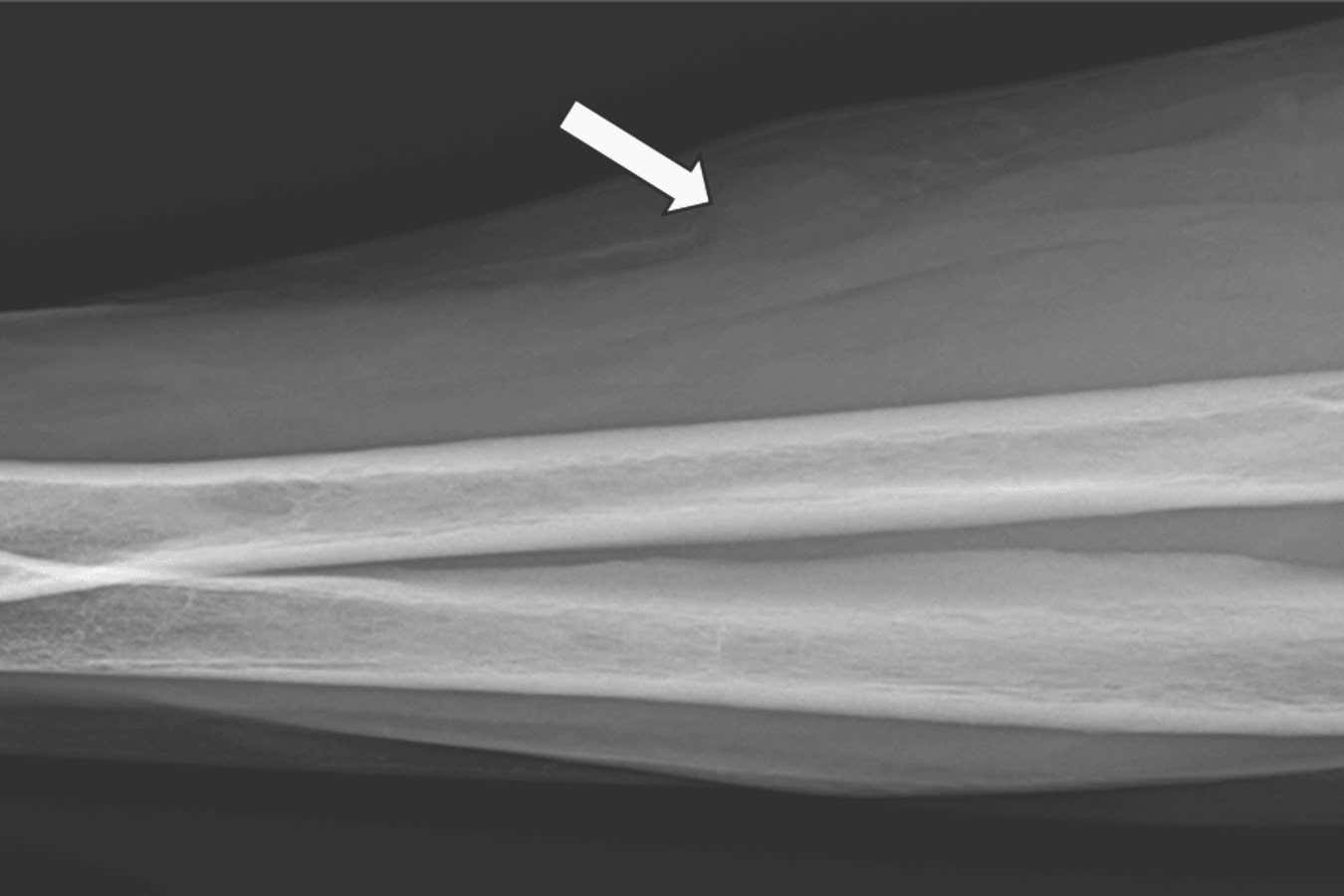
    An X-ray of the woman’s arm, with the arrow pointing to her tumour before the biopsy

    Gannon M C, Gabor R M, Gupta A, et al. (April 15, 2026)

    A woman who had a cancerous tumour in her arm is now in remission despite receiving no treatment. This is thought to be due to a biopsy she had to diagnose the growth causing an immune response against the cancer.

    She is one of just nine known cases where a biopsy led to a cancer of this type, which affected her connective tissue, disappearing within a few weeks.

    “It’s extremely remarkable,” says Toby Lawrence at the Centre for Immunology of Marseille-Luminy in France, who wasn’t involved in the case. “It really suggests some kind of immune activation in response to the injury of the biopsy, because it had extremely rapid effects on tumour growth.”

    The woman, aged 59, noticed the rapidly growing lump a few weeks before she sought help, at which point it was 2 centimetres wide. “It had been progressing rapidly, causing some pain and discomfort; she was concerned,” says Rohit Sharma at Marshfield Clinic Health System in Wisconsin, who treated the woman.

    Sharma and his colleagues marked the tumour’s location with tattoo ink and took a biopsy by briefly inserting a thin needle into it. This revealed that the lump, which was located in the connective tissue between the woman’s skin and muscle, was a tumour called myxofibrosarcoma that contained aggressive cancer cells. “It was likely to spread, [and] cancers kill by spreading,” says Sharma.

    Two weeks later, the woman returned for surgery to remove the tumour, but the clinicians were surprised to discover it had completely disappeared. “She said that after the biopsy, it had started to go down within three [to] four days,” says Sharma.

    To make sure the tumour really had gone, the team surgically excised the tissue surrounding where it had been, which confirmed there were no cancer cells. “The timing of the biopsy and resolution suggests there’s an immune reaction occurring,” says Sharma. Any type of cancer disappearing after biopsy is highly unusual, but this has been most commonly reported for cancers that are more easily recognised by the immune system, such as those of the skin, he says.

    Taking a biopsy may cause some cancer cells to die and release inflammatory signals that activate first-responder immune cells, such as natural killer cells, to kill off damaged tumour tissue within hours to days, says Sharma. This may then cause even more proteins that are specifically in or on cancer cells to be spewed out, says Sharma. In turn, T cells of the immune system probably also become activated to recognise and destroy cancer cells, he says.

    But, of course, this doesn’t occur – at least in a meaningful way – in most people, so the lucky few probably have certain genetic factors and environmental exposures that mean their immune systems can respond in this way, says Lawrence.

    A magnetic resonance imaging scan of the tumour

    A magnetic resonance imaging scan of the tumour

    Gannon M C, Gabor R M, Gupta A, et al. (April 15, 2026)

    Unpicking what those are, such as by analysing the genomes and medical histories of these rare cases, could reveal ways to improve general responses to cancer therapy, says Lawrence.

    Analysing how the immune system of mice with cancer responds to minor tissue injuries could also help to reveal what’s going on, says Caetano Reis e Sousa at the Francis Crick Institute in London. “If we understand the mechanism by which biopsy is making those cells visible to the immune system, we could harness it and develop drugs that do that too,” he says.

    Sharma says the team hopes to explore this in the next few years, after compiling a database of similar cases.

    Topics:


    Source link

    Share. Facebook Twitter Pinterest LinkedIn Tumblr Email Telegram Copy Link

    Related Posts

    Science

    Pressure from individual particles measured for the first time

    May 11, 2026
    Science

    Prebiotic chewing gum could be helpful for gum disease

    May 11, 2026
    Science

    Man destined for Alzheimer’s may have been saved by accidental therapy

    May 11, 2026
    Science

    PCOS postpones perimenopause and allows pregnancies at older ages

    May 10, 2026
    Science

    Former Soviet scientific megastructures captured in striking photos

    May 10, 2026
    Science

    Tiny ‘metajets’ could use light to steer sails for interstellar travel

    May 10, 2026
    Editors Picks

    Why Iranians are taking to Tehran’s streets during war | News

    March 17, 2026

    Venezuela’s interim president’s oil law reform to break with Chavez model | Oil and Gas News

    January 23, 2026

    ‘On level of atomic bomb’: Iran highlights Hormuz importance amid US talks | US-Israel war on Iran News

    May 9, 2026

    Trump asks Supreme Court to pause law that could ban TikTok in the US

    December 28, 2024

    Kelsea Ballerini Gets Fans Prepared For Her Grammy Appearance

    January 31, 2026
    About Us
    About Us

    Welcome to Benjamin Franklin Institute, your premier destination for insightful, engaging, and diverse Political News and Opinions.

    The Benjamin Franklin Institute supports free speech, the U.S. Constitution and political candidates and organizations that promote and protect both of these important features of the American Experiment.

    We are passionate about delivering high-quality, accurate, and engaging content that resonates with our readers. Sign up for our text alerts and email newsletter to stay informed.

    Latest Posts

    Matt Damon And Ben Affleck Sued Over ‘The Rip’

    May 11, 2026

    US, French nationals from hantavirus ship test positive

    May 11, 2026

    Iran war day 73: Trump and Tehran clash over latest peace proposals | US-Israel war on Iran News

    May 11, 2026

    Subscribe for Updates

    Stay informed by signing up for our free news alerts.

    Paid for by the Benjamin Franklin Institute. Not authorized by any candidate or candidate’s committee.
    • Privacy Policy
    • About us
    • Contact us

    Type above and press Enter to search. Press Esc to cancel.