
Close Menu
    Trending
    • Magic may be spinning wheels with firing of Jamahl Mosley
    • Chinese humanoids are leaving American robots in the dust
    • 300-year-old experiment could become world’s best dark matter detector
    • Map: 5.7-Magnitude Earthquake Shakes Mexico
    • Bella Hadid Sparks Met Gala Drama With Subtle Move
    • Iran Nobel laureate Mohammadi needs urgent heart treatment in Tehran, brother says
    • Modi’s party poised for big wins in Indian state elections | Elections News
    • The ‘NFL Defensive Players of the Year’ quiz
    Benjamin Franklin Institute
    Monday, May 4
    • Home
    • Politics
    • Business
    • Science
    • Technology
    • Arts & Entertainment
    • International
    Benjamin Franklin Institute
    Home»Science»300-year-old experiment could become world’s best dark matter detector
    Science

    300-year-old experiment could become world’s best dark matter detector

    Team_Benjamin Franklin InstituteBy Team_Benjamin Franklin InstituteMay 4, 2026No Comments3 Mins Read
    Share Facebook Twitter Pinterest Copy Link LinkedIn Tumblr Email VKontakte Telegram
    Share
    Facebook Twitter Pinterest Email Copy Link


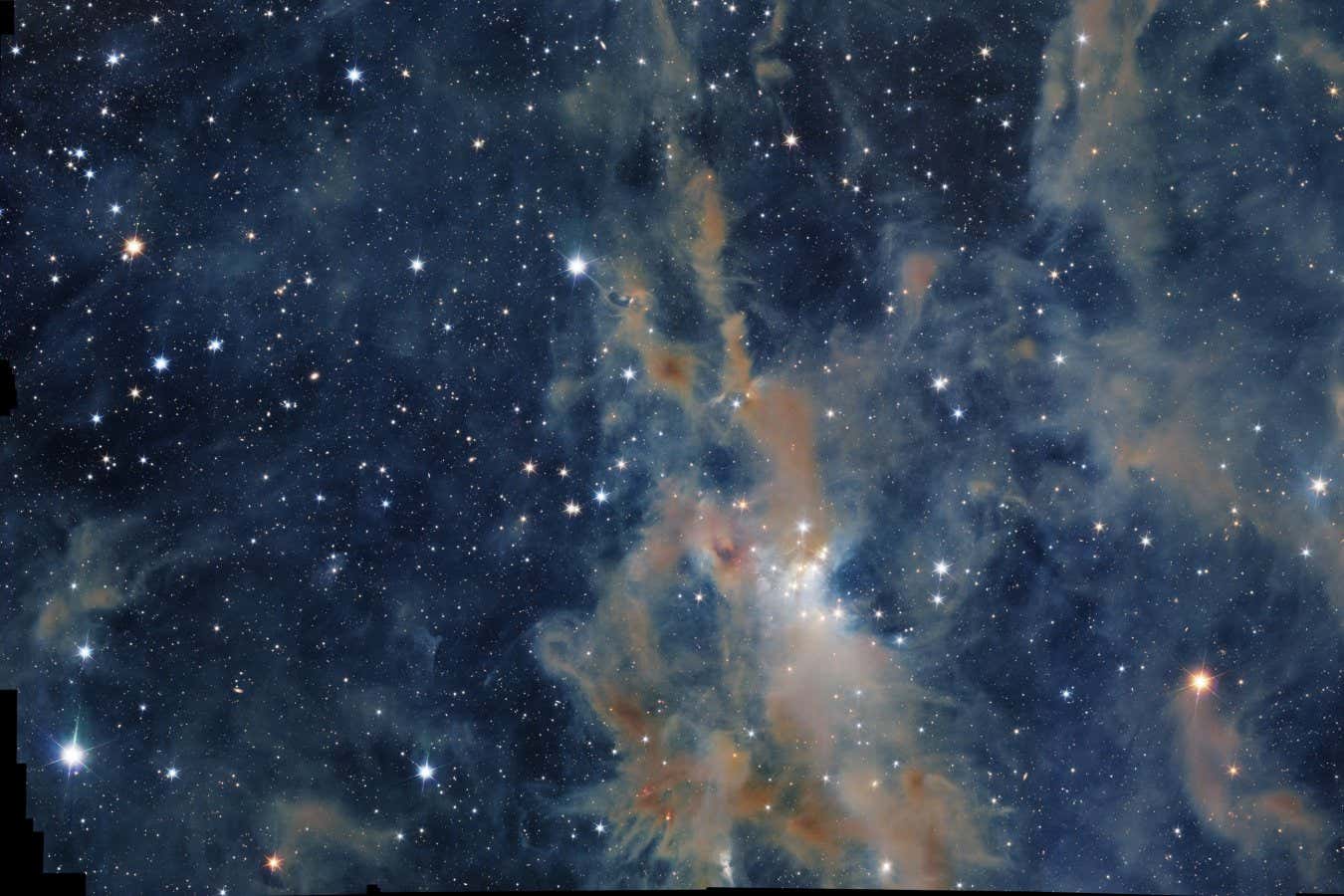
    Dark matter makes up more of our universe than ordinary matter

    ESA/Euclid/Euclid Consortium/NASA, image processing by M. Schirmer (MPIA, Heidelberg)

    A centuries-old experiment could help accelerate the search for new and exotic particles, including those that make up dark matter.

    In 1773, British scientist Henry Cavendish set up a simple experiment aimed at uncovering the nature of electromagnetism. It involved measuring the electric potential at the surface of two nested metal shells to discern how charged particles affect each other within them.

    Now, Peter Graham at Stanford University in California and his colleagues say that reviving Cavendish’s experiment could help reveal an even more mysterious feature of our cosmos – the particles that make up dark matter.

    Though dark matter comprises much more of our cosmos than the ordinary matter, we don’t know what it is made of. There are many theoretical proposals for what it could be, and experiments trying to find out range from using particle colliders to elaborate underground detectors.

    Graham and his colleagues focused on one dark matter candidate called millicharged particles (mCPs), which, as the name suggests, have unusually tiny charges. The property of being charged makes them a good match for Cavendish’s centuries-old setup.

    The team propose to replicate his nested shell design, apply voltage to the bigger, outer shell then measure the difference in voltage between it and the inner shell. Because mCPs are electrically charged, this measurement would reveal whether any are present in the experiment.

    Maxwell's determination of the inverse square law (P2025) Colour photograph of the apparatus used in Maxwell's determination of the inverse square law of electrostatics in 1887-8. The experiments were carried out with Donald MacAlister and resulted in an improvement by a factor of 1000 in the accuracy with which the inverse square law was known to hold good. Information about this document Physical Location: Cavendish Laboratory Classmark: P2025 Subject(s): Maxwell; Inverse square law; Electrostatics; MacAlister Origin Place: Cambridge Date of Creation: 2016 Associated Name(s): Fagan, Kelvin Extent: tiff: 33.7 MB: 72 dpi. 4200 x 2803 Material: Digital colour photograph (tiff) Format: Photograph Author(s) of the Record: TEI created from spreadsheet. Collection: Cavendish Laboratory

    Henry Cavendish’s 18th century experiment was designed to explore electromagnetism

    Cavendish Laboratory

    To aid this, the new experiment would include an accumulator device which would suck up all the charged particles from the room like a vacuum cleaner, bringing all potential mCPs into the setup, says team-member Harikrishnan Ramani at the University of Delaware.

    The design is simpler and more affordable relative to other mCP searches, with its cost estimated to be under a million dollars or a thousandth of operating a particle accelerator for a year. The researchers’ calculations also show that it could be more sensitive than some particle accelerator experiments that will come online in the future.

    Kevin Kelly at Texas A&M University says that some of the estimates in the researchers’ calculations are probably conservative, so the proposed experiment could ultimately be between 100 and 10,000 more sensitive than past methods, allowing them to detect mCPs with charges even tinier than previously assumed.

    “This technique could be better than some of the things that me and others are [already] doing,” says Christopher Hill at the Ohio State University. Like Graham and Ramani, he estimates that the experiment could be built and completed much more quickly than, for example, a particle accelerator experiment, thus significantly shortening the time to a possibly huge discovery. “It would be a big step to understanding what much of the universe is made of, and how it works,” says Hill. He says that he is contemplating whether he could build a similar experiment with his own team.

    The team are now ironing out the details of building and securing funding for the experiment. If it works, which Ramani says could happen as soon as two or three years, it will have one more benefit – mCPs could be extracted from the Cavendish device and studied afterwards. “You could store and gift people millicharged particles,” he says.

    Topics:

    • dark matter/
    • particle physics


    Source link

    Share. Facebook Twitter Pinterest LinkedIn Tumblr Email Telegram Copy Link

    Related Posts

    Science

    New Scientist staff pick the greatest David Attenborough documentaries you really need to watch

    May 4, 2026
    Science

    Smart underwear detects lactose intolerance by tracking your farts

    May 4, 2026
    Science

    At shadow climate summit on phasing out fossil fuels, scientists are center stage

    May 4, 2026
    Science

    ‘Spectacular’ Viking coin hoard discovery is likely the largest in history

    May 4, 2026
    Science

    Trump, ibogaine and the science behind the psychedelics boom in the U.S.

    May 3, 2026
    Science

    Key U.S. science panels are being axed—and others are becoming less open

    May 3, 2026
    Editors Picks

    The Euro Vs Dollar | Armstrong Economics

    February 16, 2026

    Realising the importance of our microbiome: Best ideas of the century

    February 2, 2026

    Kanye West’s Album Move Rekindles Fake Apology Claims

    January 30, 2026

    Ukraine, Russia to hold second day of direct talks on US plan

    January 24, 2026

    Optimizing a Battery Electric Vehicle Thermal Management System

    March 3, 2026
    About Us
    About Us

    Welcome to Benjamin Franklin Institute, your premier destination for insightful, engaging, and diverse Political News and Opinions.

    The Benjamin Franklin Institute supports free speech, the U.S. Constitution and political candidates and organizations that promote and protect both of these important features of the American Experiment.

    We are passionate about delivering high-quality, accurate, and engaging content that resonates with our readers. Sign up for our text alerts and email newsletter to stay informed.

    Latest Posts

    Magic may be spinning wheels with firing of Jamahl Mosley

    May 4, 2026

    Chinese humanoids are leaving American robots in the dust

    May 4, 2026

    300-year-old experiment could become world’s best dark matter detector

    May 4, 2026

    Subscribe for Updates

    Stay informed by signing up for our free news alerts.

    Paid for by the Benjamin Franklin Institute. Not authorized by any candidate or candidate’s committee.
    • Privacy Policy
    • About us
    • Contact us

    Type above and press Enter to search. Press Esc to cancel.