
Close Menu
    Trending
    • Inside The Drunken Night That Sparked Row Among Spice Girls
    • US Senate candidate’s implosion forces Democratic reckoning
    • Is Syria stable enough to engage with the world? | Syria’s War News
    • Must-draft players in new Yahoo College Fantasy Football leagues
    • Here’s What It Really Takes to Support Other Entrepreneurs
    • Resuscitated human retinas respond to light 10 hours after death
    • Map: 3.5-Magnitude Earthquake Shakes Central California
    • Ukraine & Zelensky’s Ultimate Corruption
    Benjamin Franklin Institute
    Thursday, July 9
    • Home
    • Politics
    • Business
    • Science
    • Technology
    • Arts & Entertainment
    • International
    Benjamin Franklin Institute
    Home»Science»Arctic fires are releasing carbon stored for thousands of years
    Science

    Arctic fires are releasing carbon stored for thousands of years

    Team_Benjamin Franklin InstituteBy Team_Benjamin Franklin InstituteMay 13, 2026No Comments3 Mins Read
    Share Facebook Twitter Pinterest Copy Link LinkedIn Tumblr Email VKontakte Telegram
    Share
    Facebook Twitter Pinterest Email Copy Link


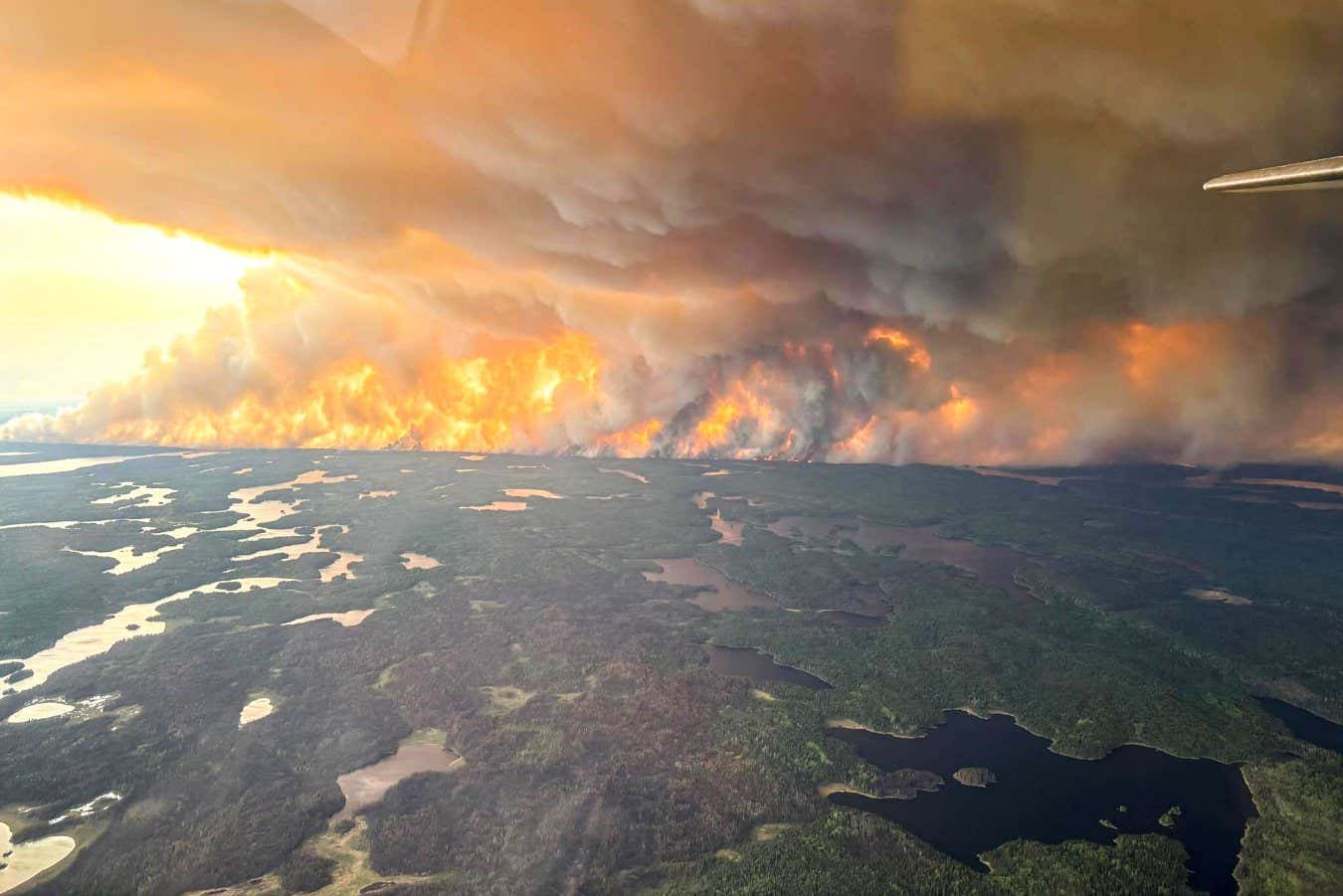
    A wildfire rips through the boreal forest in Manitoba, Canada, in 2025

    Anadolu via Getty Images

    The wildfires that have been raging in many places around the Arctic in recent years could be contributing much more to global warming than currently thought. It has been assumed that what’s burning is mostly recent plant growth, but a study of soil cores from around the Arctic and boreal regions has shown that these fires are igniting stored carbon that is up to 5000 years old.

    “Soil combustion could unlock long-stored carbon from soils that have been considered previously as carbon sinks,” says Meri Ruppel at the Finnish Meteorological Institute in Helsinki. Currently, climate models don’t take the release of this ancient carbon into account.

    Plants grow slowly in the cold conditions of the Arctic, but their remains can accumulate in soil in forms such as peat, building up over centuries and millennia. This means soils in the Arctic and in the boreal forests nearby have been acting as a carbon sink – that is, helping to remove carbon dioxide from the atmosphere.

    But with fires becoming larger and more frequent in the Arctic region, this may be changing. To investigate, Ruppel’s team collected soil cores from a number of areas where there have been recent fires.

    The cores show that, in many places, the rapid burning of the surface vegetation is triggering much slower smouldering of old organic materials in the soil, releasing lots of soot, or black carbon, as well as CO2.

    Black carbon absorbs heat from the sun, so it warms the atmosphere directly. What’s more, in cold regions, it can be deposited on ice or snow, darkening the surface and causing melting that wouldn’t have happened otherwise.

    “Not surprisingly, we found that the age of combusted carbon is different in different environments since the organic soil depth and the depth of burn vary,” Ruppel told a meeting of the European Geosciences Union in Vienna last week.

    The risk of ancient carbon release tends to increase towards the Arctic, she said, as Arctic soils are shallower and organic matter builds up closer to the surface. For instance, in the Northwest Territories in Canada, fires are burning several centimetres down into the soil and releasing carbon stored up to 400 years ago.

    In Greenland, fires are burning 10 centimetres down into the soil, on average, releasing carbon that is up to 560 years old. In places, fires have burned 15 cm down, releasing carbon dating back 1000 years.

    In the boreal forest in Quebec, Canada, the team found places where fires have released carbon from 5000 years ago. “But this was not at all widespread,” said Ruppel at the meeting.

    The big question is just how much ancient carbon is now being released by fires. Ruppel said this work is just the start and much more needs to be done to get an idea of the quantities involved.

    “I think her work makes an important point that people need to hear about,” says Sandy Harrison at the University of Reading in the UK, who was at Ruppel’s talk. “It is clear that there is a lot of old carbon in high-latitude soils and peats. As we move into new fire regimes that are destroying the top-soil layers and also burning in peatlands, there will be a release of old carbon.”

    Topics:


    Source link

    Share. Facebook Twitter Pinterest LinkedIn Tumblr Email Telegram Copy Link

    Related Posts

    Science

    Resuscitated human retinas respond to light 10 hours after death

    July 9, 2026
    Science

    A worm that lived half a billion years ago preferred turning right

    July 9, 2026
    Science

    The 4 best science-fiction shows of 2026 so far

    July 9, 2026
    Science

    A surprisingly detailed look at the physics of a lugworm’s poop

    July 9, 2026
    Science

    The allergy culprit histamine also boosts our memory

    July 9, 2026
    Science

    Does time come from the entire universe running computations?

    July 9, 2026
    Editors Picks

    Venezuela oil deal angers China, pushes prices down

    January 7, 2026

    Veteran HC has reportedly expressed interest in Michigan job

    December 21, 2025

    Lizzo Faces Online Mockery Over Album’s Early Numbers

    June 6, 2026

    Tech firms face demands to stop illegal content going viral

    June 30, 2025

    Bethenny Frankel Says Taylor Frankie Paul Drama Is ‘Reality TV Gold’

    March 22, 2026
    About Us
    About Us

    Welcome to Benjamin Franklin Institute, your premier destination for insightful, engaging, and diverse Political News and Opinions.

    The Benjamin Franklin Institute supports free speech, the U.S. Constitution and political candidates and organizations that promote and protect both of these important features of the American Experiment.

    We are passionate about delivering high-quality, accurate, and engaging content that resonates with our readers. Sign up for our text alerts and email newsletter to stay informed.

    Latest Posts

    Inside The Drunken Night That Sparked Row Among Spice Girls

    July 9, 2026

    US Senate candidate’s implosion forces Democratic reckoning

    July 9, 2026

    Is Syria stable enough to engage with the world? | Syria’s War News

    July 9, 2026

    Subscribe for Updates

    Stay informed by signing up for our free news alerts.

    Paid for by the Benjamin Franklin Institute. Not authorized by any candidate or candidate’s committee.
    • Privacy Policy
    • About us
    • Contact us

    Type above and press Enter to search. Press Esc to cancel.