

Feedback is New Scientist’s popular sideways look at the latest science and technology news. You can submit items you believe may amuse readers to Feedback by emailing feedback@newscientist.com
ZuckGPT
Feedback has had a number of bosses over the years. Some were good. Some were bad. One reorganised the company at which we worked in such a way that our job no longer existed. On the whole, then, a mixed bag. However, none of them was an AI.
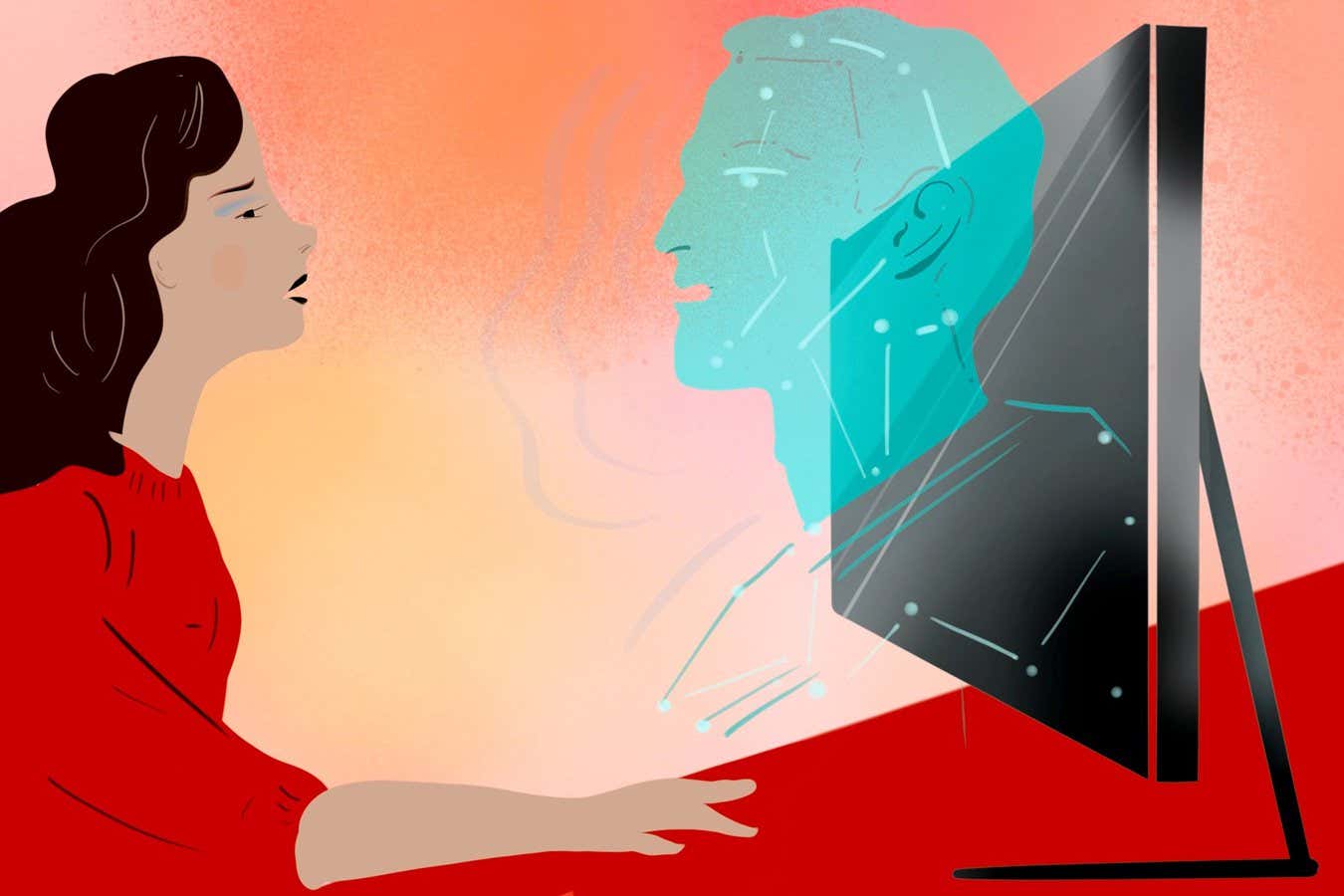
So, then, to Meta, parent company of Facebook, Instagram and WhatsApp. According to the Financial Times, Meta is building an AI version of its boss, Mark Zuckerberg, which will be able to interact with staff. The AI Zuckerberg is reportedly being trained on his public statements and policies, plus his tone and mannerisms. This is being done by a division of Meta called Superintelligence Labs, which is focused on creating lifelike AI characters.
The aim is apparently to help employees feel more connected to Zuckerberg. Readers will have their own view on whether they would want to be more connected to their own bosses, or to Zuckerberg specifically, via an AI avatar or indeed any other medium.
Feedback’s own position is that this feels like a nightmare. The one good thing that all our bosses had in common was that they were frequently nowhere to be seen: whether on business trips, in meetings or just at home asleep because it was nighttime. These absences meant we were able to get on with things (or, sometimes, let’s be frank, to goof off).
Likewise, the flesh-and-blood Zuckerberg could, at times, be found relaxing at one of his private estates, testifying before the US Congress or dressing up as singer Benson Boone for his wife’s birthday party. In contrast, ZuckGPT could be online 24/7.
The one positive about the plan is that it might not happen. Readers with longish memories may recall Meta’s faltering attempt to build the metaverse: a 3D online environment where everyone could have their own avatar and interact with anyone else who was online.
One of the many reasons why Meta’s metaverse came undone was because, after billions of dollars of investment, the company failed to create avatars with legs that walked, a problem that video game designers largely solved in the 1990s. Maybe the AI Zuckerberg will stall out because engineers can’t work out how to make his lips move.
Theoretical chocolate
In our ongoing but intermittent topic of “questions you never thought to ask”, we regret to inform you we have found another one. Not a nice silly one, like “why is a boxing ring square”, but one with the potential to revolutionise the entire field of confectionery.
Reader Toby Pereira very much enjoyed Tom Gauld’s cartoon on “a proposed standard model of confectionery Easter egg structure” (11 April, p 47), and it caused him to have some thoughts. The cartoon, he writes, “got me thinking about the three standard types of chocolate: milk, dark and white. All three types typically have cocoa butter and sugar, but the two variables are cocoa powder and milk. Both cocoa powder and milk makes milk chocolate. Cocoa powder and no milk makes dark chocolate. Milk and no cocoa powder makes white chocolate. But logically there should be a fourth type. What is the name for chocolate with no cocoa powder and no milk, and where can I get my hands on some?”
If Feedback was writing this on a social media platform, at this point we would include one of those “mind blown” GIFs. Since we aren’t, we will say that we stared into the middle distance in fascination for several minutes, then tried and failed to find any information about this hypothetical fourth form of chocolate. Our one dim thought was that a chocolate that is made of nothing but cocoa butter and sugar would probably wreak havoc on a gastrointestinal tract. Furthermore, something this simple must surely have been tried. Mustn’t it?
Feedback would say more, but we urgently need chocolate.
Synecdoche, except not
Feedback has discovered a situation that seems to need a word to describe it, but we aren’t sure what that word is. Hence this item’s position at the end of the column: we are seeking reader advice and, by placing this as the finale, we hope it will stay fresh in your minds and trigger you to take action. We have no evidence whatsoever that this will work, but we do think it makes us sound like we plan these things.
Anyway: our attention has been drawn to the Wikipedia page for the Ship of Theseus paradox. This is the question of whether Theseus’s ship is still the same ship if, over the years, he has replaced every single component of it. It’s a reasonably profound question that picks at our ideas about identity and continuity, revealing the distinctions between material reality and our conception of the world.
The neat thing is that this Wikipedia page has been edited a lot. When we checked on 22 April, there had been 2132 edits since the page was created in 2003, of which 1653 were “major”. The result, it seems, is that none of the original text remains – so is it still the Ship of Theseus article?
In other words, the Wikipedia page for the Ship of Theseus paradox is itself an example of the Ship of Theseus paradox. The story is an instance of the thing it’s about. There must be a word for that, but other than muttering “recursive”, we can’t think what it would be, and “self-referential” doesn’t quite capture it. We also can’t think of other examples. Could anyone untwist this Möbius strip for us?
Got a story for Feedback?
You can send stories to Feedback by email at feedback@newscientist.com. Please include your home address. This week’s and past Feedbacks can be seen on our website.