

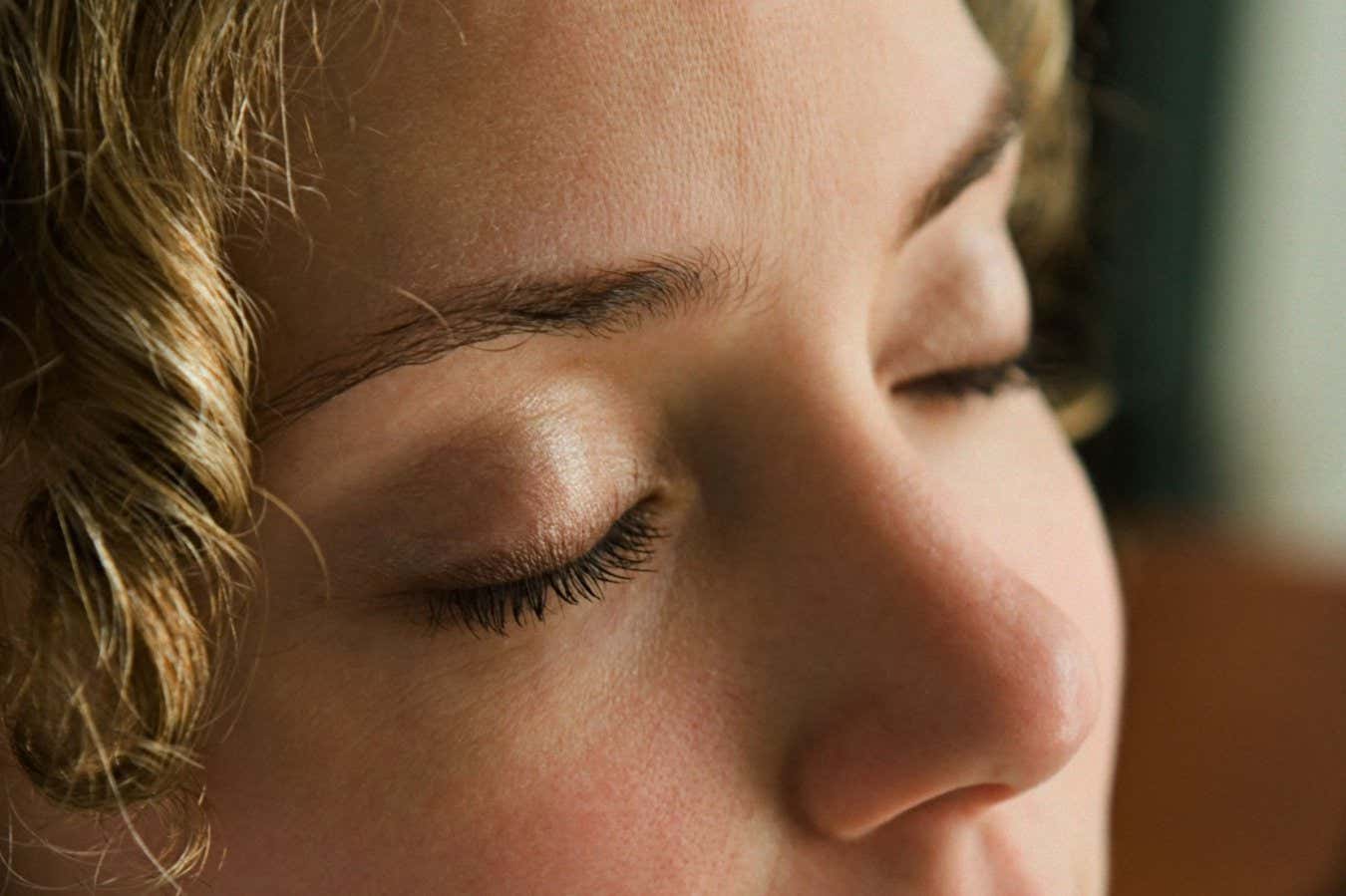
Many people look forward to a good night’s sleep, but it would be handy to reap some of its benefits while getting things done
Walters Digital UG/Alamy
It may one day be possible to reap some of the benefits of sleep without ever closing our eyes. Stimulating specific brain activity in awake mice led to some of the same effects as deep sleep, including a boost in memory.
“It should be possible, at least in theory and to some extent, to replicate these results in our species,” says Vladyslav Vyazovskiy at the University of Oxford, who wasn’t involved in the research. “It would be fascinating to explore whether artificially inducing [this activity] during waking [hours] in humans can result in a subjective feeling of being more refreshed and rested afterwards.”
Sleep is thought to be an essential way for the brain to carry out most of its maintenance work. This includes synaptic homeostasis, the process whereby the brain declutters the thousands of new neural connections made during the day – storing important ones and weakening or cutting away ones that aren’t as necessary.
During non-rapid eye movement (NREM) sleep – the deep sleep state that makes up around 80 per cent of sleep in adults – the brain’s cortex repeatedly fires signals at the exact same time and then shuts those neurons off, in a pattern called slow-wave sleep activity. “This has been linked to synaptic homeostasis, and may be a key mechanism underlying sleep’s restorative functions,” says Chiara Cirelli at the University of Wisconsin-Madison.
Cirelli and her colleagues wondered if a small part of the cortex could be nudged into entering this deep sleep state while an individual is still awake. Some animals do this naturally, such as dolphins, ducks and fur seals, in which one half of the brain enters NREM sleep while the other remains alert and vigilant for predators.
To see if a similar state could be induced, the researchers genetically engineered mice so their neuronal activity could be switched off using light. They implanted a probe into one half of their brain and kept the mice awake for five hours by giving them new things to explore. Near the end of this time period, the light probe was repeatedly turned on and off for 30 minutes, mimicking NREM sleep.
Afterwards, when the mice were allowed to sleep, brain recordings showed that the stimulated side of the brain didn’t show the usual signs of exhaustion caused by sleep deprivation. “Because that small part of the brain did its decluttering while awake, it no longer needed extra deep sleep afterwards,” says Cirelli.
Next, the researchers wondered whether forcing sleep during wakefulness boosts memory. So they placed the genetically modified mice in a square box with carpet that had the same texture on both sides of the container. After 15 minutes of exploring the space, the mice were assigned to either a sleep group, a group that was sleep-deprived for 1 hour, or a group that was sleep-deprived for 1 hour but received the artificial deep-sleep stimulation.
The next day, the mice went back into the box, but one side of the container had a new texture. Mice are naturally drawn to novelty, so the researchers measured how much they remembered the old environment by the amount of time they spent on the new side. They found that the sleep-deprived mice that received no stimulation seemed to struggle to tell the new and old side apart, while both the sleep group and the sleep-deprived mice that received the stimulation spent more time on the new side.
The team plans to study whether similar effects could come about in people if this brain activity were induced non-invasively via transcranial electrical stimulation. However, Vyazovskiy stresses that sleep can probably never be replaced. “Sleep is of two kinds – NREM and REM [rapid eye movement] – and we still do not know what it is about the alternation of these two states that makes sleep complete,” he says.
Topics: