

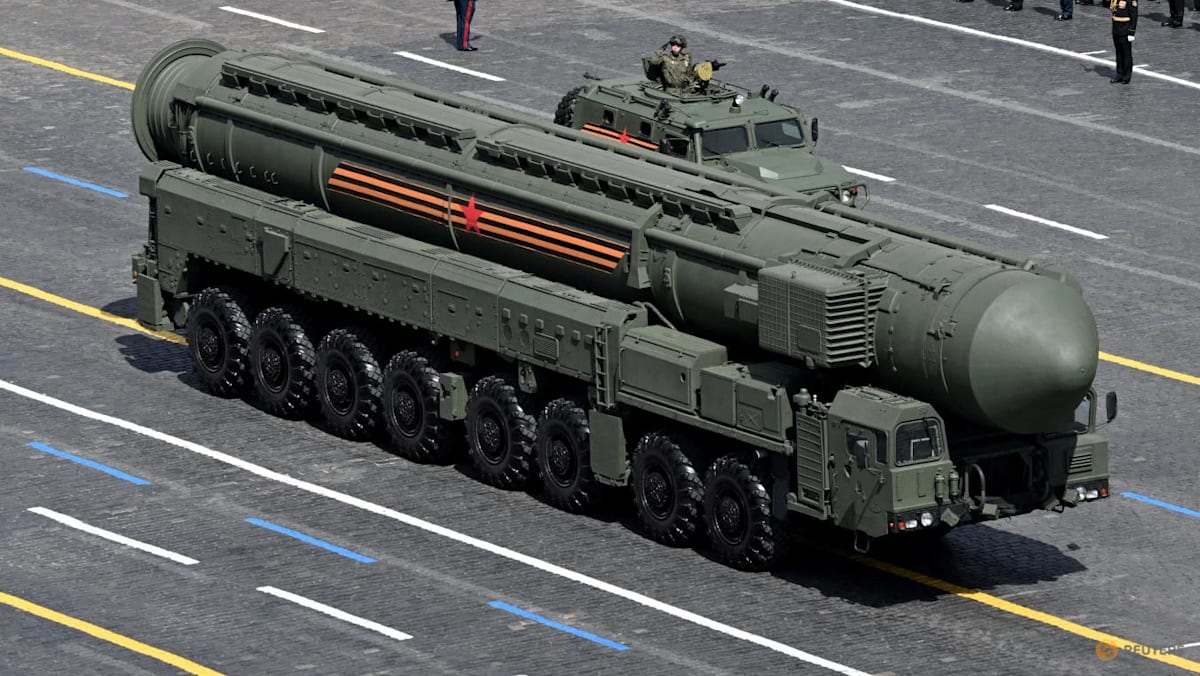
If nothing replaces New START, security analysts see a more dangerous environment with a higher risk of miscalculation. Forced to rely on worst-case assumptions about the other’s intentions, the US and Russia would see an incentive to increase their arsenals, especially as China plays catch-up.
Russia would prefer to have a dialogue with the United States after New START but is ready for any scenario, Foreign Minister Sergei Lavrov said on Friday.
The Kremlin said Russia and the United States both recognised the need to launch talks soon about nuclear arms control. It said the two sides, at talks in Abu Dhabi this week, had reached an understanding they would both act responsibly.
Russia says the nuclear allies of NATO members Britain and France should also be up for negotiation – something those countries reject.
At the Geneva forum, Britain said it was time for a new era of nuclear arms control that would bring China, Russia and the US to the table, adding that it shared US concerns about Beijing’s rapid expansion of its nuclear arsenal.
France said an agreement between states with the biggest nuclear arsenals was crucial, at a time when there is an unprecedented weakening of nuclear norms.
Arms control deals are highly complex to negotiate, and the environment has changed significantly since New START was signed in 2010.
Russia is developing so-called “exotic” new systems, including the Burevestnik cruise missile and Poseidon underwater torpedo, while Trump has promised to build a space-based “Golden Dome” anti-missile defence.
Security analysts say any new nuclear agreement is likely to take years to negotiate, leaving a void in arms control at a time of heightened international tension over Ukraine, the Middle East and other flashpoints.
Some say these tensions, and the fact that Russia and the US have failed to agree or even discuss a new treaty until now, could intensify debates in countries including Japan, South Korea and Poland on whether they should seek to join the nuclear club.