

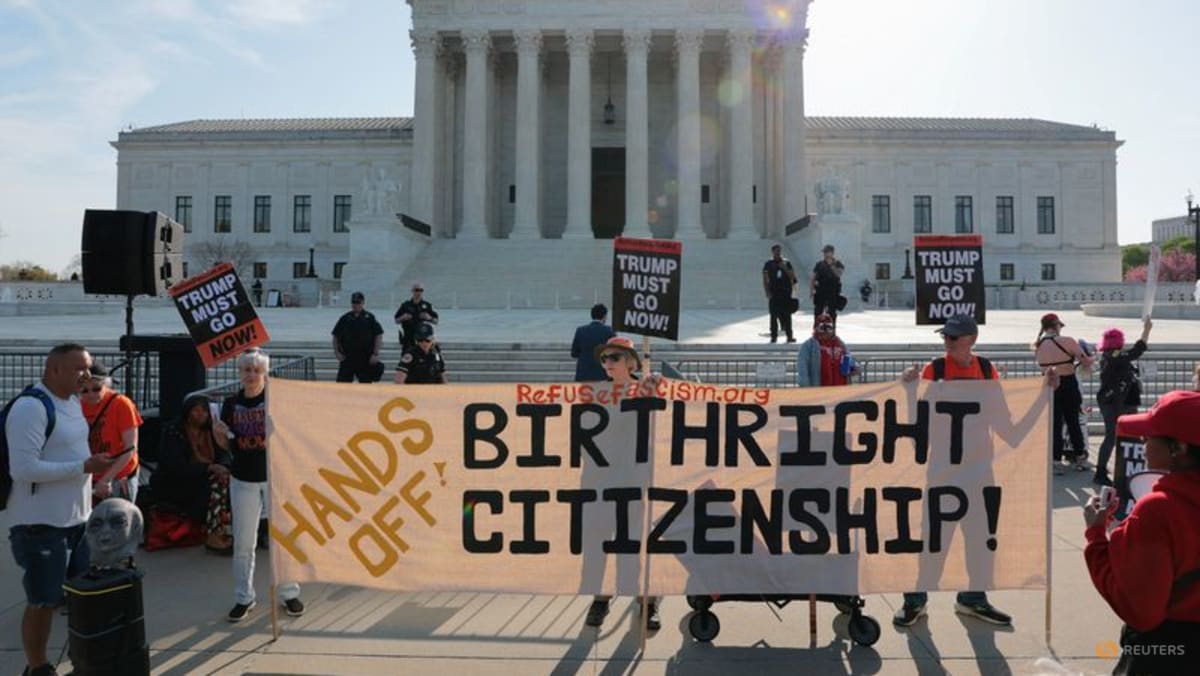
DECISION BY JULY
Wang, the ACLU attorney, told the justices a rejection of birthright citizenship would call into question “the citizenship of millions of Americans past, present and future.”
“Ask any American what our citizenship rule is, and they’ll tell you, everyone born here is a citizen alike,” Wang said. “That rule was enshrined in the 14th Amendment to put it out of the reach of any government official to destroy.”
The Trump administration is arguing that the 14th Amendment, passed in the wake of the 1861-1865 Civil War, addresses citizenship rights of former slaves and not the children of undocumented migrants or visitors.
Trump’s executive order is premised on the notion that anyone in the United States illegally, or on a visa, is not “subject to the jurisdiction” of the country and therefore excluded from automatic citizenship.
The Supreme Court rejected such a narrow definition in a landmark 1898 case involving a man who was born in San Francisco to parents from China.
If the Supreme Court rejects ending birthright citizenship, it would be the second major loss for Trump this term – the justices struck down most of his global tariffs in February.
A decision in the case is expected by late June or early July.