

SYDNEY: Shares fell in Asia on Thursday (Mar 12) as oil prices jumped on reports that more ships had been struck in the Strait of Hormuz and in Iraqi waters, fuelling inflation and pushing borrowing costs higher worldwide.
US crude rose 7.5 per cent to US$93.80 a barrel, extending a rise of more than 4 per cent overnight. Brent crude futures jumped 7.7 per cent to US$99.03 a barrel.
That was despite plans from the International Energy Agency to release 400 million barrels of oil from its reserves, the largest such move in its history. The US said it would release 172 million barrels of oil from next week, as part of the IEA plan.
Two fuel tankers in Iraqi waters had been struck by explosive-laden Iranian boats, Iraqi security officials said early on Thursday, while an Iraqi official told state media that oil ports “have completely stopped operations.”
“Multiple tankers loaded with Iraqi crude are now reported burning in the Persian Gulf off the coast of Basra, engulfed in flames and leaking burning oil into the water,” said Tony Sycamore, analyst at IG.
“This appears to mark a direct and forceful Iranian response to the IEA’s overnight announcement of a massive strategic reserve release aimed at cooling runaway prices.”
Iran had earlier stepped up attacks on merchant ships in the Strait of Hormuz, telling the world to get ready for oil at US$200 a barrel. On Wednesday, three vessels were reported to have been hit in Gulf waters as Iran’s Revolutionary Guards said their forces had fired on ships in the Gulf that had disobeyed their orders.
US President Donald Trump on Wednesday declared the war on Iran has been won, but he will stay in the fight to finish the job, throwing more uncertainty in the mix.
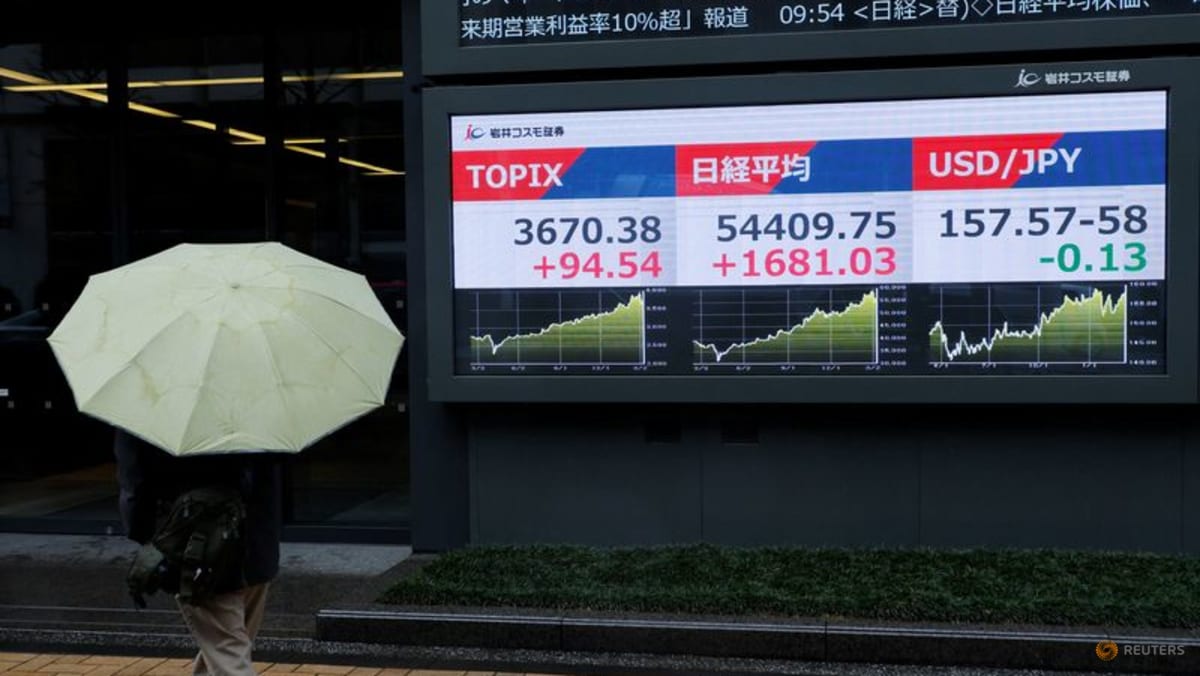
All of this was bad for shares. MSCI’s broadest index of Asia-Pacific shares outside Japan fell 0.8 per cent, while the Nikkei dropped 1.6 per cent as Japan is a major importer of oil and gas.
Both S&P 500 futures and Nasdaq futures fell 0.8 per cent. Over in Europe, EUROSTOXX 50 futures fell 0.6 per cent and DAX futures slid 0.8 per cent.