
Close Menu
    Trending
    • The ’20-point, 15-rebound Game 7’s’ quiz
    • A viral influencer wants to buy Spirit Airlines and run it like the Green Bay Packers. Could it work?
    • Thought-provoking photographs capture what it feels like to have ADHD
    • Barbie Ferreira Reveals Cosmetic Her Fear
    • China’s Wu Yize wins World Snooker Championship for first time
    • ‘Extensive brutality’: Rebel attacks reap hell on Congolese civilians | News
    • Tennessee basketball lands elite scorer Juke Harris in transfer portal
    • This fast-food giant is quietly removing something millions of customers use every visit
    Benjamin Franklin Institute
    Tuesday, May 5
    • Home
    • Politics
    • Business
    • Science
    • Technology
    • Arts & Entertainment
    • International
    Benjamin Franklin Institute
    Home»Science»Nasal spray could prevent infections from any flu strain
    Science

    Nasal spray could prevent infections from any flu strain

    Team_Benjamin Franklin InstituteBy Team_Benjamin Franklin InstituteFebruary 5, 2026No Comments3 Mins Read
    Share Facebook Twitter Pinterest Copy Link LinkedIn Tumblr Email VKontakte Telegram
    Share
    Facebook Twitter Pinterest Email Copy Link


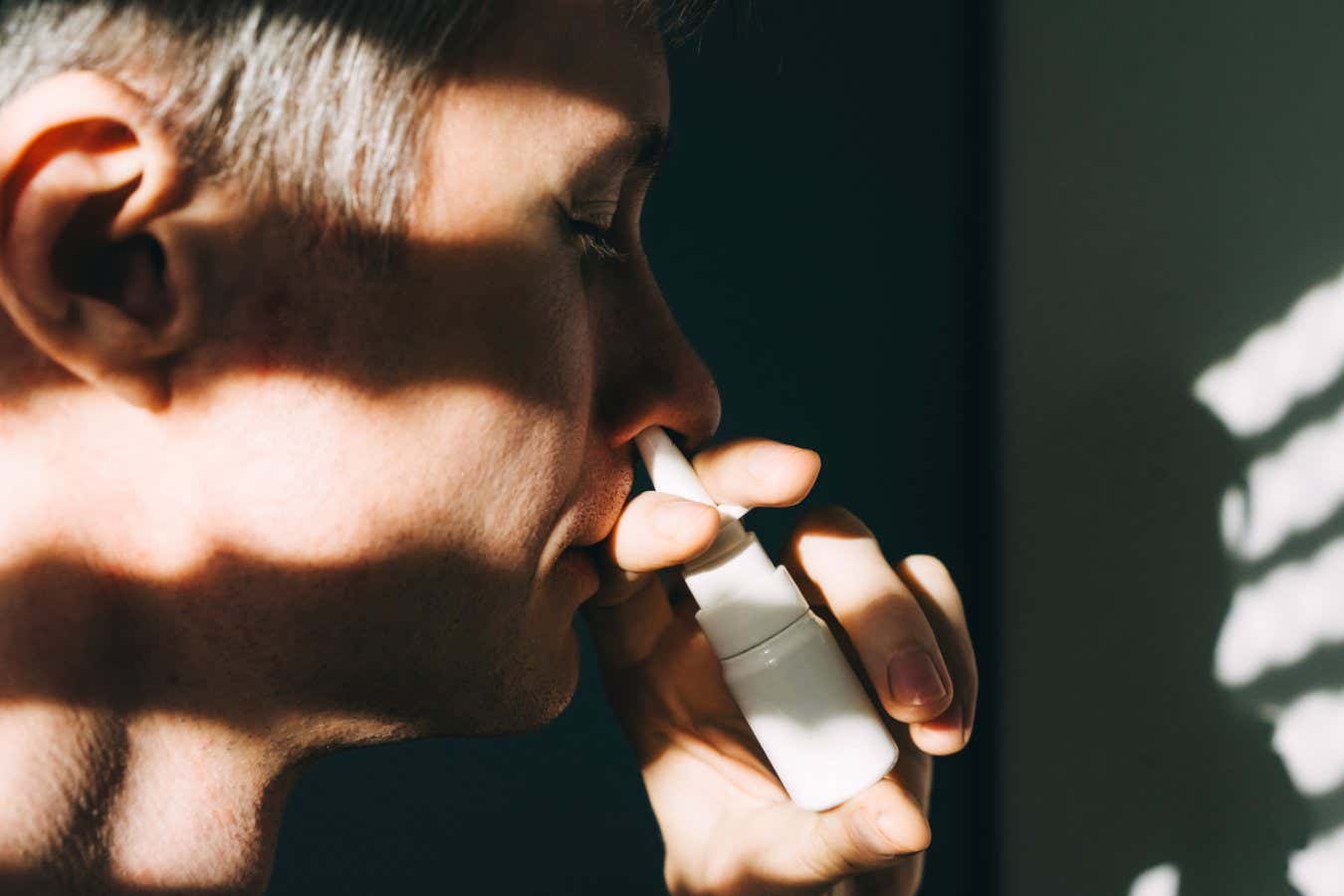
    Nasal sprays target flu viruses at their main point of entry into the body

    Tatiana Maksimova/Getty Images

    An antibody nasal spray has shown promise for protecting against flu in preliminary human trials, after first being validated in mice and monkeys. It may be useful for combatting future flu pandemics because it seems to neutralise any kind of influenza virus, including ones that spill over from non-human animals.

    The main tool we have for stopping the spread of flu is the annual vaccine, which stimulates our immune system to make antibodies against recently circulating strains of influenza virus. However, because influenza strains are constantly morphing, vaccines are only moderately effective.

    To address this, pharmaceutical company Johnson & Johnson developed a special antibody called CR9114 that can neutralise any of these strains. It does this by recognising and binding to a part of the virus that always stays the same, regardless of how other parts of it are changing.

    When CR9114 was initially injected into animals’ bloodstreams, it failed to provide robust protection against flu. This was because only a small proportion reached the nose, the main point of entry for influenza viruses. In 2022, the firm Leyden Labs licensed CR9114 and developed a formulation that could be sprayed up the nose instead.

    Since then, the company has shown that spraying CR9114 up the noses of mice and macaques stops them from getting sick when they are exposed to various strains of influenza A and B, including one collected from a scientist’s throat during a bad flu season in 1933.

    Preliminary tests were also conducted in 143 people aged 18 to 55. Researchers found that administering the spray twice a day maintained steady levels of the antibody inside participants’ noses and didn’t cause any major side-effects. Samples of their nasal mucus collected afterwards also neutralised a range of influenza strains, including a bird flu strain that crossed into people in China in 2013.

    The next step will be to directly expose people who have used the spray to a range of influenza viruses to confirm that it actually stops them from getting sick.

    The spray may not be 100 per cent effective because the virus can enter the body via routes other than the nose, like the mouth, says Linda Wakim at the University of Melbourne, Australia. “But nonetheless, blocking nasal entry would still intercept the virus at a major access point for infection.”

    It will probably also be less convenient than the flu vaccine because it requires twice-daily administration rather than a single jab, says Wakim. “However, it could be a game changer for specific high-risk groups, such as immunocompromised individuals, frontline healthcare workers, or during a pandemic situation where rapid, short-term population protection is needed while vaccines are being developed or rolled out.”

    Topics:


    Source link

    Share. Facebook Twitter Pinterest LinkedIn Tumblr Email Telegram Copy Link

    Related Posts

    Science

    Thought-provoking photographs capture what it feels like to have ADHD

    May 5, 2026
    Science

    We have figured out a new way to send messages into the past

    May 5, 2026
    Science

    Honey has been used as medicine for centuries – does it really work?

    May 4, 2026
    Science

    300-year-old experiment could become world’s best dark matter detector

    May 4, 2026
    Science

    New Scientist staff pick the greatest David Attenborough documentaries you really need to watch

    May 4, 2026
    Science

    Smart underwear detects lactose intolerance by tracking your farts

    May 4, 2026
    Editors Picks

    What will the storm names be for 2026 as Storm Goretti strikes?

    January 8, 2026

    Report: Cody Bellinger is choosing from four teams

    January 21, 2026

    ‘El Mencho’ killing sparks ‘overwhelming fear’ as violence erupts in Mexico | Drugs News

    February 23, 2026

    Iran’s gunboat fires on container ship off Oman coast | US-Israel war on Iran News

    April 22, 2026

    Yankees will miss Gleyber Torres more than they realize

    December 27, 2024
    About Us
    About Us

    Welcome to Benjamin Franklin Institute, your premier destination for insightful, engaging, and diverse Political News and Opinions.

    The Benjamin Franklin Institute supports free speech, the U.S. Constitution and political candidates and organizations that promote and protect both of these important features of the American Experiment.

    We are passionate about delivering high-quality, accurate, and engaging content that resonates with our readers. Sign up for our text alerts and email newsletter to stay informed.

    Latest Posts

    The ’20-point, 15-rebound Game 7’s’ quiz

    May 5, 2026

    A viral influencer wants to buy Spirit Airlines and run it like the Green Bay Packers. Could it work?

    May 5, 2026

    Thought-provoking photographs capture what it feels like to have ADHD

    May 5, 2026

    Subscribe for Updates

    Stay informed by signing up for our free news alerts.

    Paid for by the Benjamin Franklin Institute. Not authorized by any candidate or candidate’s committee.
    • Privacy Policy
    • About us
    • Contact us

    Type above and press Enter to search. Press Esc to cancel.