

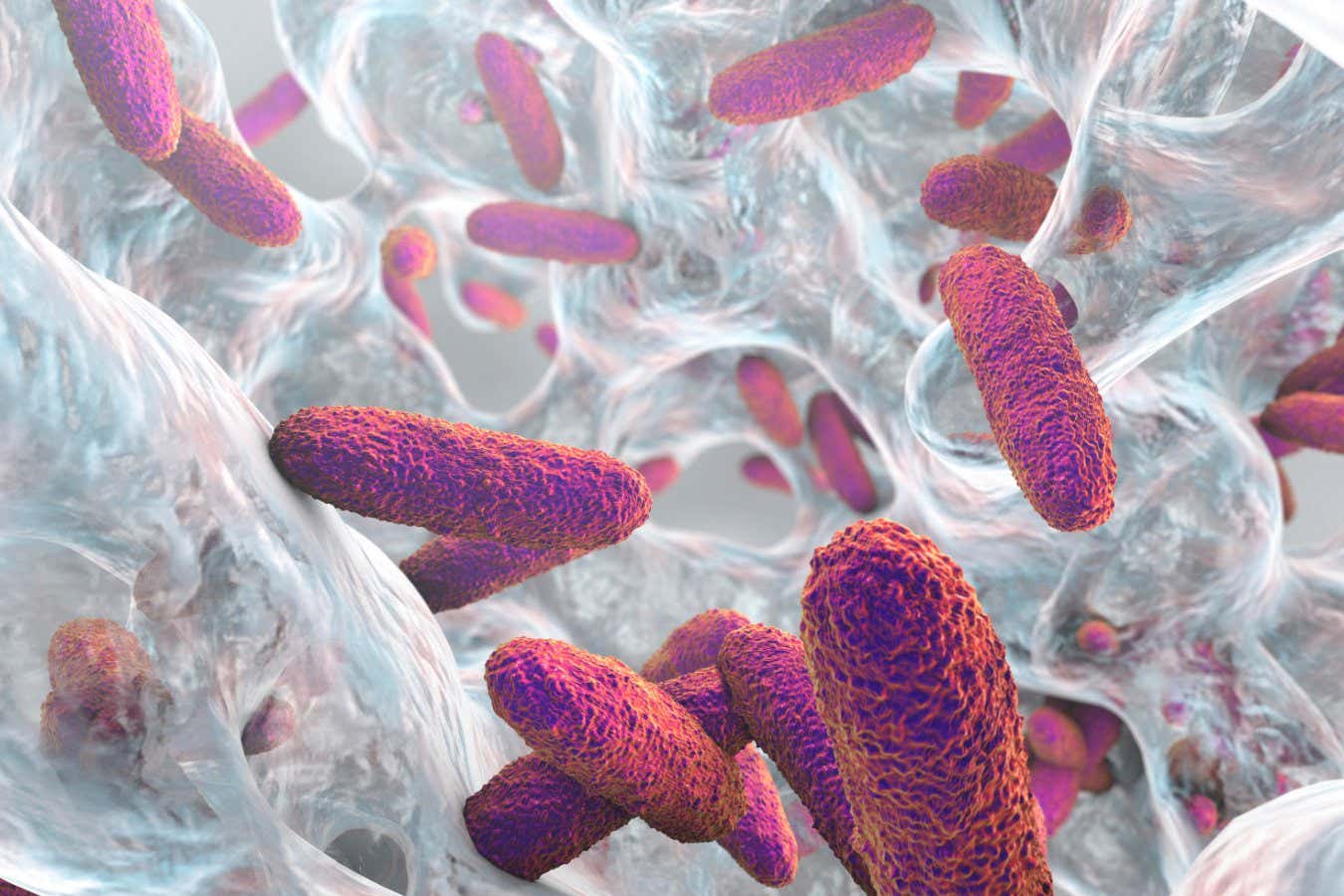
Righting a man’s microbial wrongs stopped his body from producing intoxicating amounts of alcohol
Science Photo Library / Alamy
A man in Massachusetts whose gut started brewing its own alcohol, which made him heavily intoxicated, has finally recovered after swallowing multiple doses of bacteria from a healthy person’s faeces.
The man, a retired US Marine officer in his 60s, started experiencing odd symptoms after taking multiple courses of antibiotics to treat an inflamed prostate. He had been fit and healthy, and had only an occasional alcoholic drink, but he suddenly began feeling very drunk, disoriented and sleepy on a regular basis.
The man visited the emergency department on several occasions, but no one believed he hadn’t been drinking. Eventually, he was diagnosed with auto-brewery syndrome, a rare condition in which microbes in the gut produce large amounts of alcohol.
His severe intoxication made it difficult to perform his normal daily tasks. He also had to have a breathalyser lock installed in his car to ensure he didn’t drive while over the limit.
After connecting with a patient support group, the man learned that faecal transplants were being considered as a potential treatment for auto-brewery syndrome. This inspired him to call Elizabeth Hohmann, a physician who conducts faecal transplants at Massachusetts General Hospital. “He kept leaving messages on my voicemail and he sounded intoxicated, so I kept trying to ignore them,” she says.
Eventually, the man’s wife called Hohmann and explained the situation. Hohmann discussed the case with Bernd Schnabl, a gastroenterologist and auto-brewery syndrome expert at the University of California San Diego. Together, they agreed to trial a faecal transplant in the man.
Before conducting the transplant, Hohmann, Schnabl and their colleagues conducted the most in-depth study yet of people with auto-brewery syndrome to investigate its causes. They studied stool samples from 22 people with the condition and 21 household partners to see whether they had different kinds of gut microbes. “Our lab was a little bit smelly,” says Schnabl.
The team found that stools from people with auto-brewery syndrome produced large amounts of alcohol on their own when cultured in a dish. This seemed to be because they contained unusually high levels of certain gut bacteria, like Escherichia coli and Klebsiella pneumoniae, which naturally produce alcohol by fermenting sugars. Previous cases have been attributed to high levels of yeast colonising the gut. This also occurred in the bladder of a woman who then started urinating alcohol, without consuming it.
To treat the Massachusetts man, Hohmann gave him multiple doses of oral capsules that she produced from the faeces of a male donor with exemplary health and gut microbes. “This is a donor that we’ve used over time and I know very well – he’s a personal trainer and gym manager and very into fitness,” she says. “I gave this guy’s [faecal] capsules to another group to analyse and they were like, ‘Wow, we’ve never seen a gut microbiome this good,’” she says.
Over time, the Massachusetts man’s auto-brewery syndrome resolved as his alcohol-producing gut bacteria were gradually replaced by the donor’s healthier mix. “One of the most gratifying parts of this case was when I got to meet the man’s daughter, who is actually now graduating from medical school. She told us she was just so grateful for the treatment because her ‘old dad is back’,” says Hohmann.
According to Schnabl, most of us probably make a small amount of alcohol in our guts because we typically have some E. coli and K. pneumoniae bacteria. However, it is only when these bacteria become overly abundant that their alcohol production reaches a level that becomes intoxicating. This sometimes occurs after prolonged antibiotic use, as in the Massachusetts man’s case, because it disrupts the normal gut microbiome.
Hohmann and Schnabl are now conducting a larger trial to see whether faecal transplants administered in oral capsule form also help other people with auto-brewery syndrome.
Topics: