
Close Menu
    Trending
    • Why UK’s Makerfield by-election matters far beyond one parliamentary seat | Politics News
    • George Pickens gives massive update on Cowboys future
    • Elon Musk’s Twitter deal looked like a $44 billion disaster. Now, his investors stand to make a 200% return—thanks to a brilliant (and controversial) M&A move
    • NASA data reveals weird x-ray changes in the exploded ruins of dead stars
    • Will Lebanon Become The Next Gaza?
    • DJ Fat Tony Defends Addressing Brooklyn Beckham’s Family Feud
    • Austria return from long World Cup absence with nervy 3-1 win over Jordan
    • England vs Croatia – World Cup 2026: Kane, predictions, TV channel, kickoff | World Cup 2026 News
    Benjamin Franklin Institute
    Wednesday, June 17
    • Home
    • Politics
    • Business
    • Science
    • Technology
    • Arts & Entertainment
    • International
    Benjamin Franklin Institute
    Home»Science»A nuclear war between India and Pakistan could destroy the ozone layer
    Science

    A nuclear war between India and Pakistan could destroy the ozone layer

    Team_Benjamin Franklin InstituteBy Team_Benjamin Franklin InstituteJune 11, 2026No Comments3 Mins Read
    Share Facebook Twitter Pinterest Copy Link LinkedIn Tumblr Email VKontakte Telegram
    Share
    Facebook Twitter Pinterest Email Copy Link


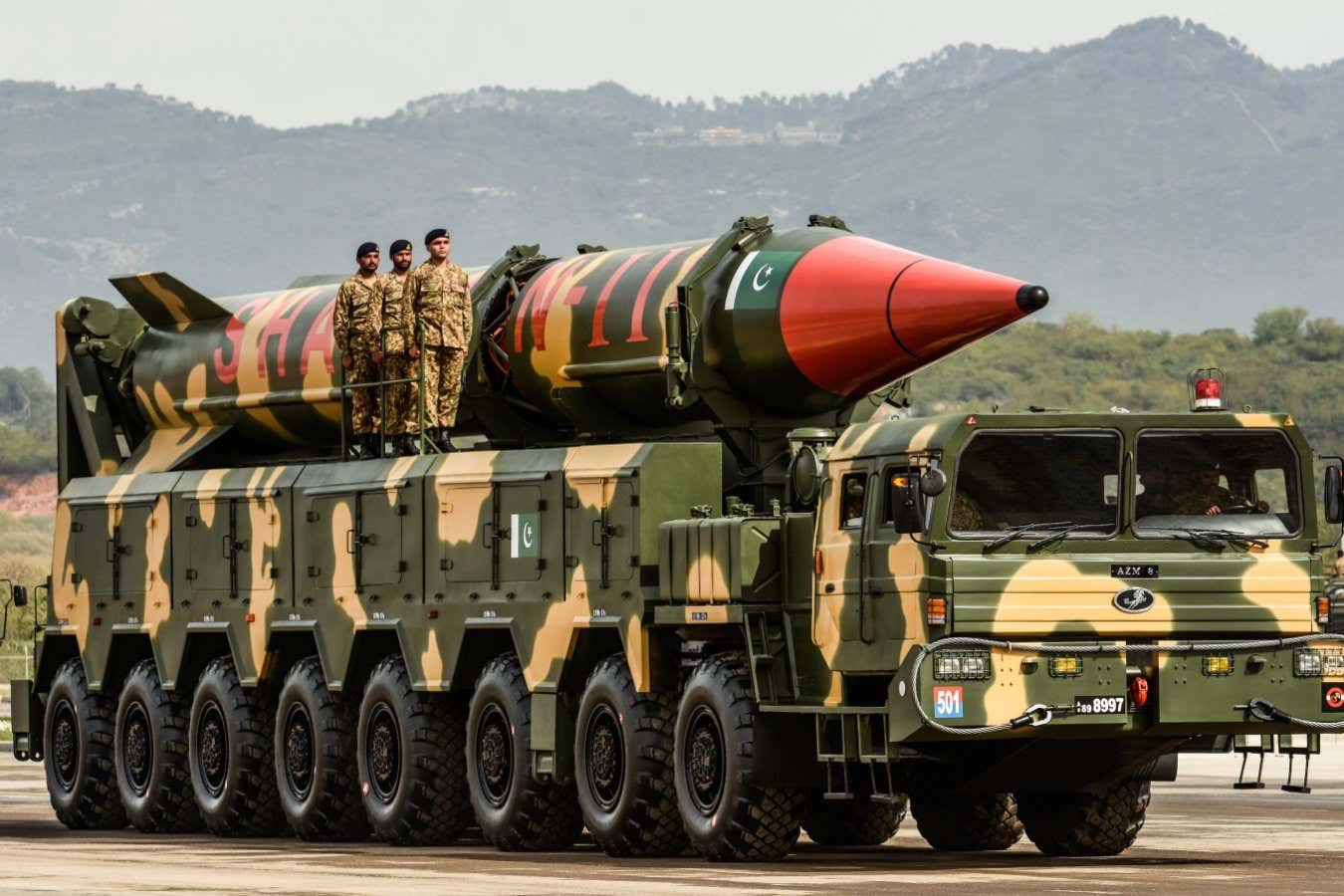
    A Pakistani missile capable of carrying a nuclear warhead

    T Mughal/EPA/Shutterstock

    A nuclear war would not only trigger a nuclear winter, but also severely damage the ozone layer, making recovery even harder. Now, a study has shown that a relatively small nuclear war between India and Pakistan could do just as much damage to the ozone layer as a larger nuclear war between the US and Russia.

    “We want to emphasise that even a small-scale nuclear war can produce far-reaching global side effects beyond the conflict regions,” says Zhihong Zhuo at the University of Quebec in Montreal.

    A nuclear war would devastate the areas where bombs or warheads explode, with the explosions, heat and radiation potentially killing many millions directly. The explosions and fires would be so large that huge quantities of smoke would be pumped into the atmosphere, blocking sunlight and causing global temperatures to plummet – a nuclear winter.

    “There’s strong surface cooling in the first several years,” says Zhuo, who presented her team’s results at a meeting of the European Geosciences Union in Vienna last month.

    For instance, a 2007 study estimated that a billion people could die of starvation as a result of a nuclear winter caused by a war between India and Pakistan.

    Recovery from a nuclear winter would be delayed by damage to the ozone layer in the stratosphere that blocks harmful ultraviolet light – volcanic eruptions and even large wildfires can also damage the ozone layer. High UV levels can harm plants as well as animals, meaning lower yields from farming even as temperatures recover.

    Recent studies with advanced climate models suggest the extent of ozone damage after a nuclear war has been underestimated. So, concerned by the many conflicts around the world, Kuo and her colleagues decided to look at the possible consequences if one went nuclear. Drawing on estimates from previous studies, they modelled an India-Pakistan nuclear war that would release 5 million tonnes of soot into the atmosphere and a US-Russia war releasing 16 million tonnes. Unlike previous studies, they also took into account other pollutants such as organic carbon.

    Their climate model suggests that air circulation patterns in the tropics would allow the pollutants from an India-Pakistan war to rise higher into the atmosphere, stay there longer and spread more widely around the world.

    “The upward transport is stronger for the tropical cases,” Kuo says. So although the quantities of pollutants are smaller than from a US-Russia war, the effects on the ozone layer are actually greater.

    The damage to the ozone layer would be greatest over the poles, similar to the situation caused by ozone-damaging pollutants known as CFCs. But there could be an increase in UV levels of up to 30 per cent even in tropical areas, the model suggests, with serious impacts on the health of people and wildlife.

    Topics:


    Source link

    Share. Facebook Twitter Pinterest LinkedIn Tumblr Email Telegram Copy Link

    Related Posts

    Science

    NASA data reveals weird x-ray changes in the exploded ruins of dead stars

    June 17, 2026
    Science

    Math predicts humans could go extinct in about 17,000 years

    June 17, 2026
    Science

    Proposed White House regulations could kill 5,000 clinical trials, analysis finds

    June 17, 2026
    Science

    Ozempic maker Novo Nordisk breach exposed patients’ clinical trial data

    June 16, 2026
    Science

    The secrets to keeping your brain sharp in old age

    June 16, 2026
    Science

    Walking shark found in Papua New Guinea is new to science

    June 16, 2026
    Editors Picks

    WhatsApp Communities Will Make It Easier To Spread Misinformation, Critics Say

    December 11, 2025

    Venezuela’s oil supply to rise in years ahead and depress prices, say analysts

    January 5, 2026

    ‘Stuck in a nightmare’: A Kashmiri woman’s battle with heroin addiction | Drugs News

    March 10, 2025

    Trump signs memo requiring universities to disclose admissions data on race

    August 8, 2025

    Workers remove Trump’s name from Kennedy Center after court ruling | Donald Trump News

    June 13, 2026
    About Us
    About Us

    Welcome to Benjamin Franklin Institute, your premier destination for insightful, engaging, and diverse Political News and Opinions.

    The Benjamin Franklin Institute supports free speech, the U.S. Constitution and political candidates and organizations that promote and protect both of these important features of the American Experiment.

    We are passionate about delivering high-quality, accurate, and engaging content that resonates with our readers. Sign up for our text alerts and email newsletter to stay informed.

    Latest Posts

    Why UK’s Makerfield by-election matters far beyond one parliamentary seat | Politics News

    June 17, 2026

    George Pickens gives massive update on Cowboys future

    June 17, 2026

    Elon Musk’s Twitter deal looked like a $44 billion disaster. Now, his investors stand to make a 200% return—thanks to a brilliant (and controversial) M&A move

    June 17, 2026

    Subscribe for Updates

    Stay informed by signing up for our free news alerts.

    Paid for by the Benjamin Franklin Institute. Not authorized by any candidate or candidate’s committee.
    • Privacy Policy
    • About us
    • Contact us

    Type above and press Enter to search. Press Esc to cancel.