

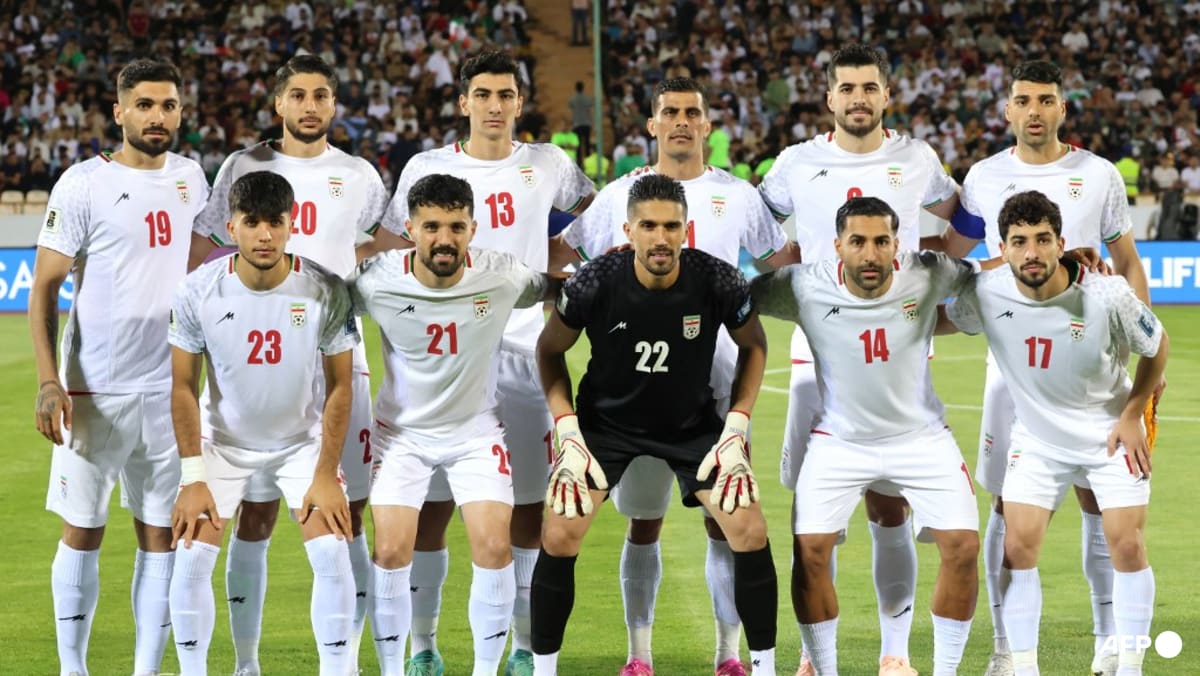
CONFLICTING SIGNALS FROM LEADERS
In March, US President Donald Trump wrote on social media that the team was welcome, but added he did not believe it was “appropriate” for them to be there, citing concerns for their lives and safety.
Iran’s sports minister said in response that “considering the US assassinated their leader, under no circumstances could they participate in the World Cup”, referring to the killing of Supreme Leader Ayatollah Ali Khamenei in US-Israeli strikes on Feb 28.
Team Melli pushed back on social media, saying “no one can exclude them from playing”, while the Iranian Football Federation indicated it was exploring the possibility of moving matches to another host country, such as Mexico.
However, FIFA president Gianni Infantino later said Iran would play in the US, following discussions with the team and coach.
PRESSURE AND GLOBAL IMPLICATIONS
Sports diplomacy experts say withdrawing from the tournament at this stage would come at a high cost.
Lindsay Krasnoff, clinical assistant professor at New York University’s Preston Robert Tisch Institute for Global Sport, noted that teams face penalties for pulling out after qualification deadlines.
“It would make the Iranian Football Association and its team subject to disciplinary measures within FIFA … whether it is potential non-qualification for future tournaments or fines,” she added.
Allowing Iran’s matches to be relocated could also set a precedent.
“There could be, in the future, other requests for teams to be moved based on geopolitical events or other issues,” Krasnoff said.
If Iran does not participate, its spot could go to another Asian team, with the United Arab Emirates seen as one of the frontrunners.