

“FOUR-FRONT WAR”
Thousands of people filled the capital’s Enghelab (Revolution) Square brandishing the national flag as prayers were read for victims of what the government has termed “riots”, state TV showed.
Addressing the crowds, parliament speaker Mohammad Bagher Ghalibaf said Iran was fighting a “four-front war”, listing economic war, psychological war, “military war” with the United States and Israel, and “today a war against terrorists” – a reference to the protests.
Flanked by the slogans “Death to Israel, Death to America” in Persian, he vowed the Iranian military would teach US President Donald Trump “an unforgettable lesson” if Iran were attacked.
Trump said Sunday that Iran’s leadership under supreme leader Ayatollah Ali Khamenei, in power since 1989 and now 86, had called him seeking “to negotiate” after the US president repeatedly threatened to intervene militarily if Tehran killed protesters.
“The Islamic Republic of Iran is not seeking war but is fully prepared for war,” Foreign Minister Abbas Araghchi told a conference of foreign ambassadors in Tehran broadcast by state television.
“We are also ready for negotiations but these negotiations should be fair, with equal rights and based on mutual respect.”
Foreign ministry spokesman Esmaeil Baghaei said a channel of communication was open between Araghchi and Trump’s special envoy for the Middle East Steve Witkoff despite the lack of diplomatic relations.
Meanwhile, the foreign minister of Oman, which has on occasion acted as a mediator, met Araghchi in Tehran on Saturday.
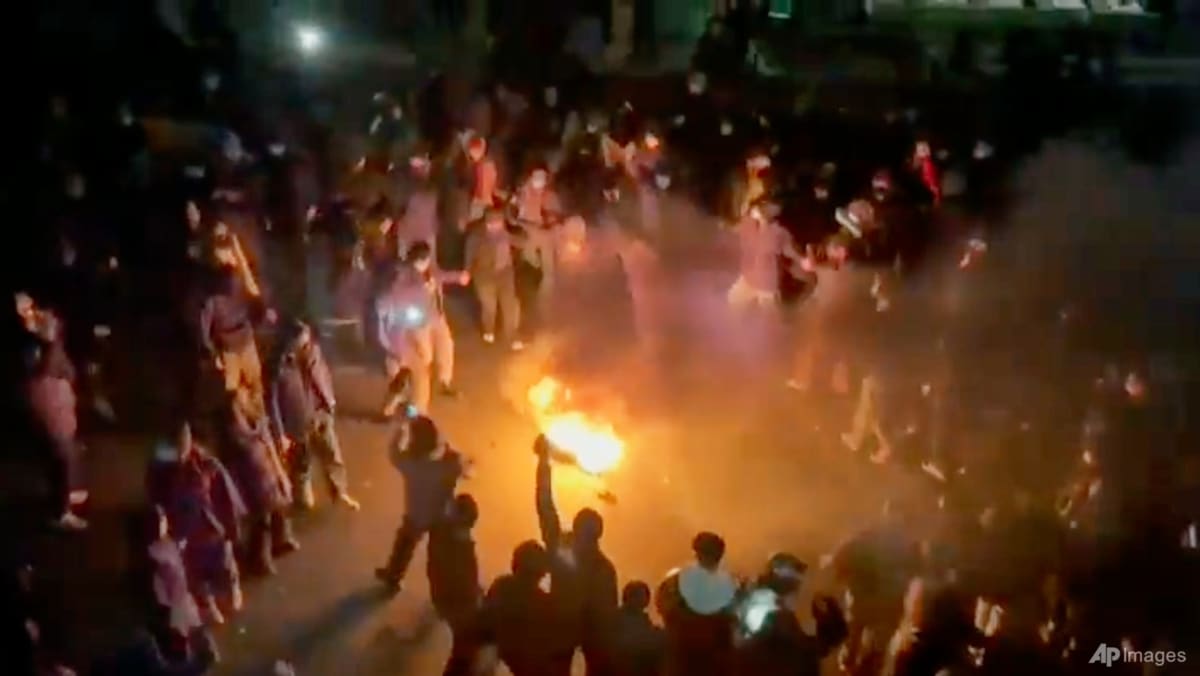
Iranian state media has said dozens of members of the security forces have been killed, with their funerals turning into large pro-government rallies. The government has declared three days of national mourning for those killed.
State outlets were at pains to present a picture of calm returning, broadcasting images of smooth-flowing traffic.
Tehran Governor Mohammad-Sadegh Motamedian insisted in televised comments that “the number of protests is decreasing”.