
Close Menu
    Trending
    • How do earthquakes end? A seismic ‘stop sign’ could help predict earthquake risk
    • Trump Announces Cease-Fire Between Israel and Lebanon
    • Google Is Tracking Your Life – Photo Cloud Feeding AI System
    • Rachel Zoe Confronts Amanda Frances In ‘RHOBH’ Reunion Clip
    • China’s DeepSeek says it released long-awaited new AI model
    • China’s DeepSeek unveils latest models a year after upending global tech | Technology News
    • Malik Nabers’ reaction to Cowboys drafting Caleb Downs should thrill Dallas fans
    • AI is replacing creativity with ‘average’
    Benjamin Franklin Institute
    Friday, April 24
    • Home
    • Politics
    • Business
    • Science
    • Technology
    • Arts & Entertainment
    • International
    Benjamin Franklin Institute
    Home»World Economy»Historians Will Say World War III Already Began
    World Economy

    Historians Will Say World War III Already Began

    Team_Benjamin Franklin InstituteBy Team_Benjamin Franklin InstituteMarch 19, 2026No Comments3 Mins Read
    Share Facebook Twitter Pinterest Copy Link LinkedIn Tumblr Email VKontakte Telegram
    Share
    Facebook Twitter Pinterest Email Copy Link


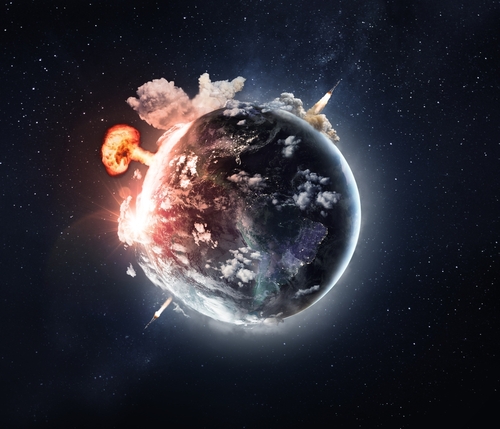
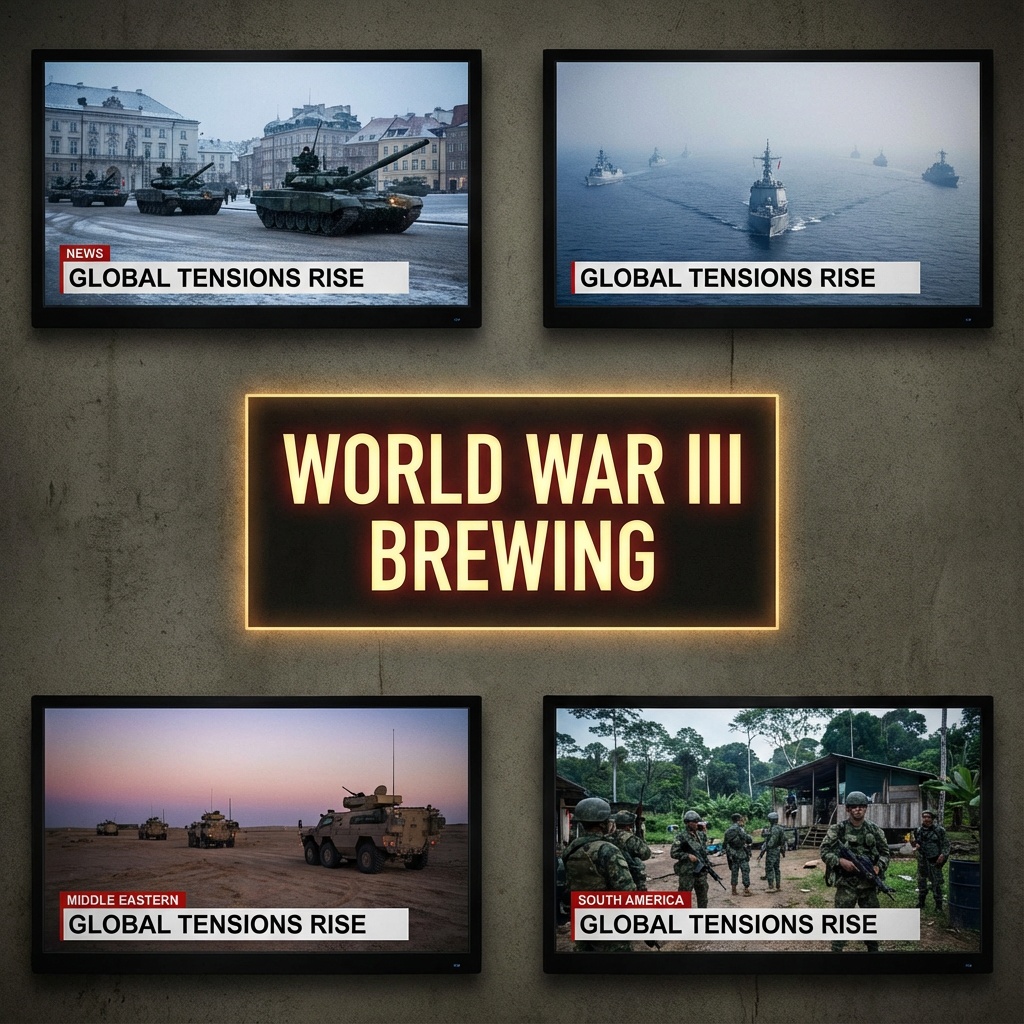
    WWIII Brewing


    For years, the press has insisted that every conflict must be viewed in isolation: Ukraine is separate from the Middle East, China is separate from Russia, and Iran is simply another regional crisis. But history rarely works that way. When historians look back at major wars, they rarely begin them on the date politicians announce them. World War I did not suddenly begin with a single shot in Sarajevo, and World War II was not simply the invasion of Poland. The causes were decades in the making. The uncomfortable reality is that when historians eventually write about this period, many will likely conclude that what we are witnessing today is the early phases of a world war.

    One of the greatest mistakes made after the Cold War was the assumption that the ideological struggle had been permanently resolved. The collapse of the Soviet Union was treated as a final victory rather than the end of a phase. Yet no durable geopolitical framework was created to integrate the defeated power structure into a stable international system. After World War II, the United States and its allies invested enormous resources into rebuilding Europe and Japan through the Marshall Plan and establishing institutions such as the United Nations and the Bretton Woods financial order. Those efforts created stability and prevented the reemergence of the same ideological conflict that produced two world wars. After the Cold War, nothing comparable was built.
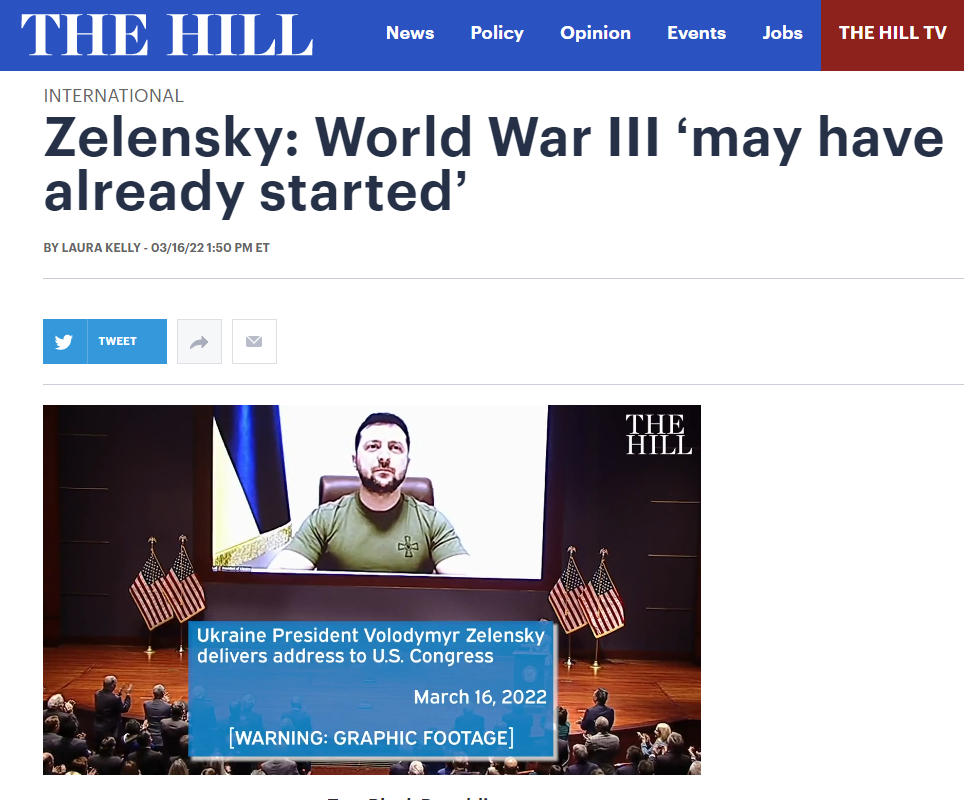
    Zelensky_World_War_III_may_have_already_started 2China.Russia.Putin_.Xi_

    Instead, Russia and other former Soviet states were left to endure economic collapse, political humiliation, and social chaos during the 1990s. Entire populations watched their national power evaporate while Western institutions expanded eastward. Whether one agrees with the political narratives or not is irrelevant. What matters historically is that unresolved tensions remained. Just as the Treaty of Versailles failed to resolve the deeper contradictions after World War I, the end of the Cold War left grievances that continued to grow beneath the surface.

    Now those unresolved tensions are resurfacing simultaneously across multiple regions. Russia is locked in confrontation with the West in Ukraine. China is challenging the global economic and military balance in the Pacific. The Middle East is once again erupting, with Iran increasingly aligned with Russia and China as geopolitical pressure mounts. These are not isolated events. They are overlapping theaters of strategic competition that increasingly resemble the early stages of great-power conflict.
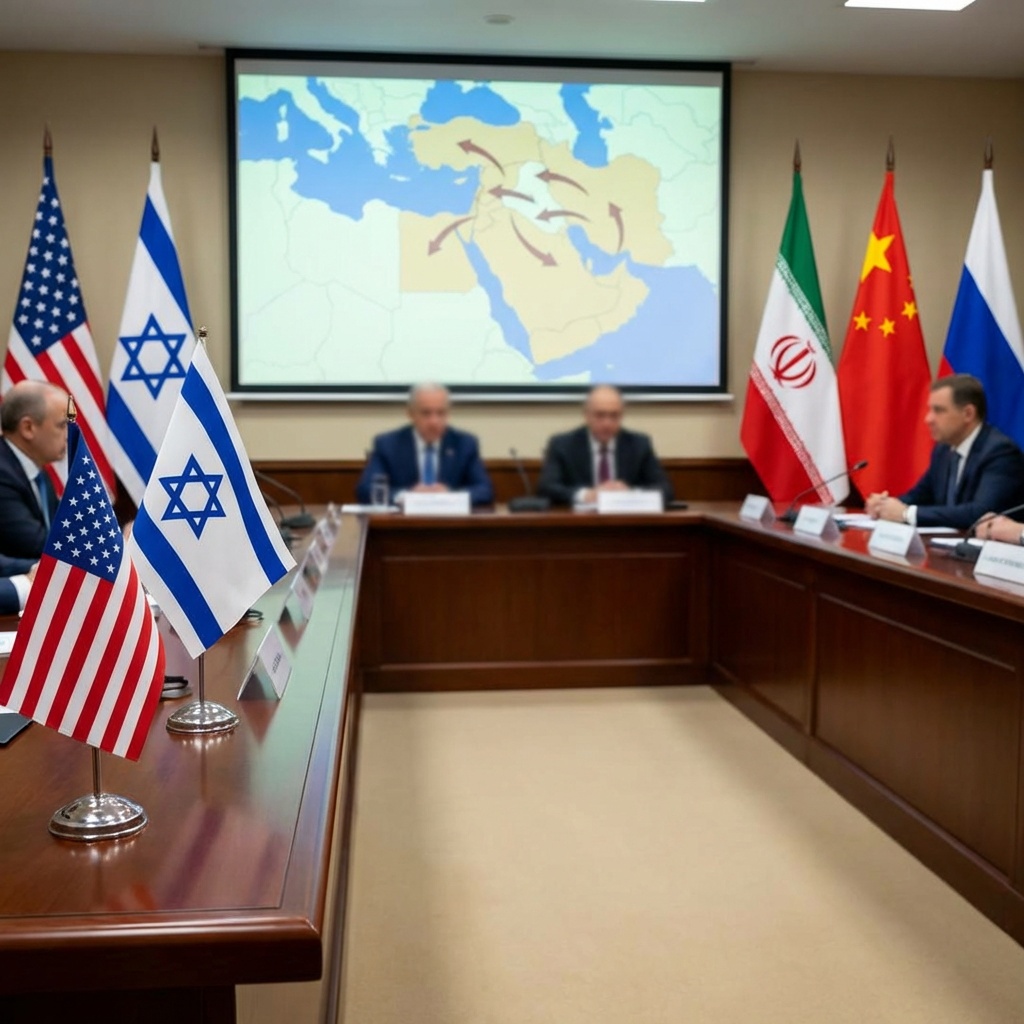
    US Israel vs Iran China RussiaThe_Neocon_Coup_of_Europe 2 28 25

    The Economic Confidence Model has long projected that the period around 2026 would mark a geopolitical turning point. That does not mean a sudden global war declared overnight. Historically, major conflicts emerge through a series of regional crises that gradually merge into a broader struggle. The Panic Cycle expected in 2027, and the larger turning point into 2028, suggest rising volatility and confrontation across multiple fronts. What we are seeing today fits that pattern perfectly. If history is any guide, future historians may not mark the beginning of the next world war with a single event. They may instead look back and say the war had already begun during this decade but we simply failed to recognize it at the time.
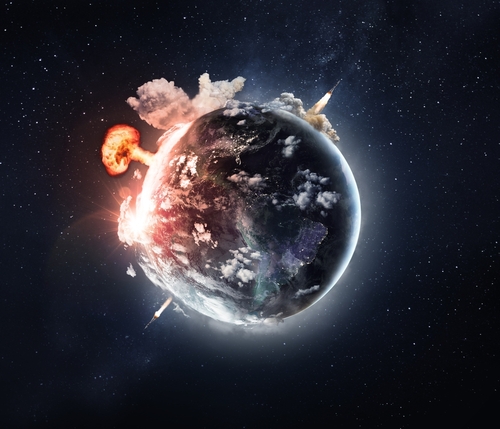
    World Nuclear War 1


    Source link

    Share. Facebook Twitter Pinterest LinkedIn Tumblr Email Telegram Copy Link

    Related Posts

    World Economy

    Google Is Tracking Your Life – Photo Cloud Feeding AI System

    April 24, 2026
    World Economy

    Market Talk – April 23, 2026

    April 23, 2026
    World Economy

    Understanding Iran | Armstrong Economics

    April 23, 2026
    World Economy

    The Dollar Lifeline In War – Currency Swaps

    April 23, 2026
    World Economy

    Data Harvesting In The Classroom

    April 23, 2026
    World Economy

    Europe Turns On Turkey As The War Cycle Expands

    April 23, 2026
    Editors Picks

    Pakistan’s Sharif hosts Iran’s Pezeshkian, agrees to security, trade boost | International Trade News

    August 3, 2025

    The ‘Multiple 130-RBI MLB seasons’ quiz

    April 16, 2026

    Trump says will not sign other legislation until voter act Bill is passed by Congress

    March 8, 2026

    Michael B. Jordan ‘Repulsed’ By BAFTAs Racial Slur As It Left His Parents In Tears

    February 24, 2026

    Lauren Sánchez Bezos’s happiness routine is going viral for the wrong reasons

    April 14, 2026
    About Us
    About Us

    Welcome to Benjamin Franklin Institute, your premier destination for insightful, engaging, and diverse Political News and Opinions.

    The Benjamin Franklin Institute supports free speech, the U.S. Constitution and political candidates and organizations that promote and protect both of these important features of the American Experiment.

    We are passionate about delivering high-quality, accurate, and engaging content that resonates with our readers. Sign up for our text alerts and email newsletter to stay informed.

    Latest Posts

    How do earthquakes end? A seismic ‘stop sign’ could help predict earthquake risk

    April 24, 2026

    Trump Announces Cease-Fire Between Israel and Lebanon

    April 24, 2026

    Google Is Tracking Your Life – Photo Cloud Feeding AI System

    April 24, 2026

    Subscribe for Updates

    Stay informed by signing up for our free news alerts.

    Paid for by the Benjamin Franklin Institute. Not authorized by any candidate or candidate’s committee.
    • Privacy Policy
    • About us
    • Contact us

    Type above and press Enter to search. Press Esc to cancel.