
Close Menu
    Trending
    • Commentary: Despite chaos and controversy, there’s much to celebrate about this World Cup
    • China and Philippines trade accusations after sailor injured at sea | Border Disputes News
    • Shedeur Sanders discusses relationship with Deshaun Watson amid competition
    • How the Franchise They Started With $10k Reached $113 Million
    • A bitter irony sits in the credits of The Wolf of Wall Street: prosecutors say this film about financial fraud was itself part-funded with money looted from Malaysia’s 1MDB fund — fraud, in effect, bankrolling its own movie
    • IEEE Program Helps Girls In India See a Future In STEM
    • America’s Food Supply Has Become Too Big To Fail – Cyclospora
    • ‘Another in a Long String of Attacks’ (VIDEO) * The Gateway Pundit * by Mike LaChance
    Benjamin Franklin Institute
    Tuesday, July 21
    • Home
    • Politics
    • Business
    • Science
    • Technology
    • Arts & Entertainment
    • International
    Benjamin Franklin Institute
    Home»Science»Forever chemical TFA has tripled due to ozone-preserving refrigerants
    Science

    Forever chemical TFA has tripled due to ozone-preserving refrigerants

    Team_Benjamin Franklin InstituteBy Team_Benjamin Franklin InstituteFebruary 8, 2026No Comments4 Mins Read
    Share Facebook Twitter Pinterest Copy Link LinkedIn Tumblr Email VKontakte Telegram
    Share
    Facebook Twitter Pinterest Email Copy Link


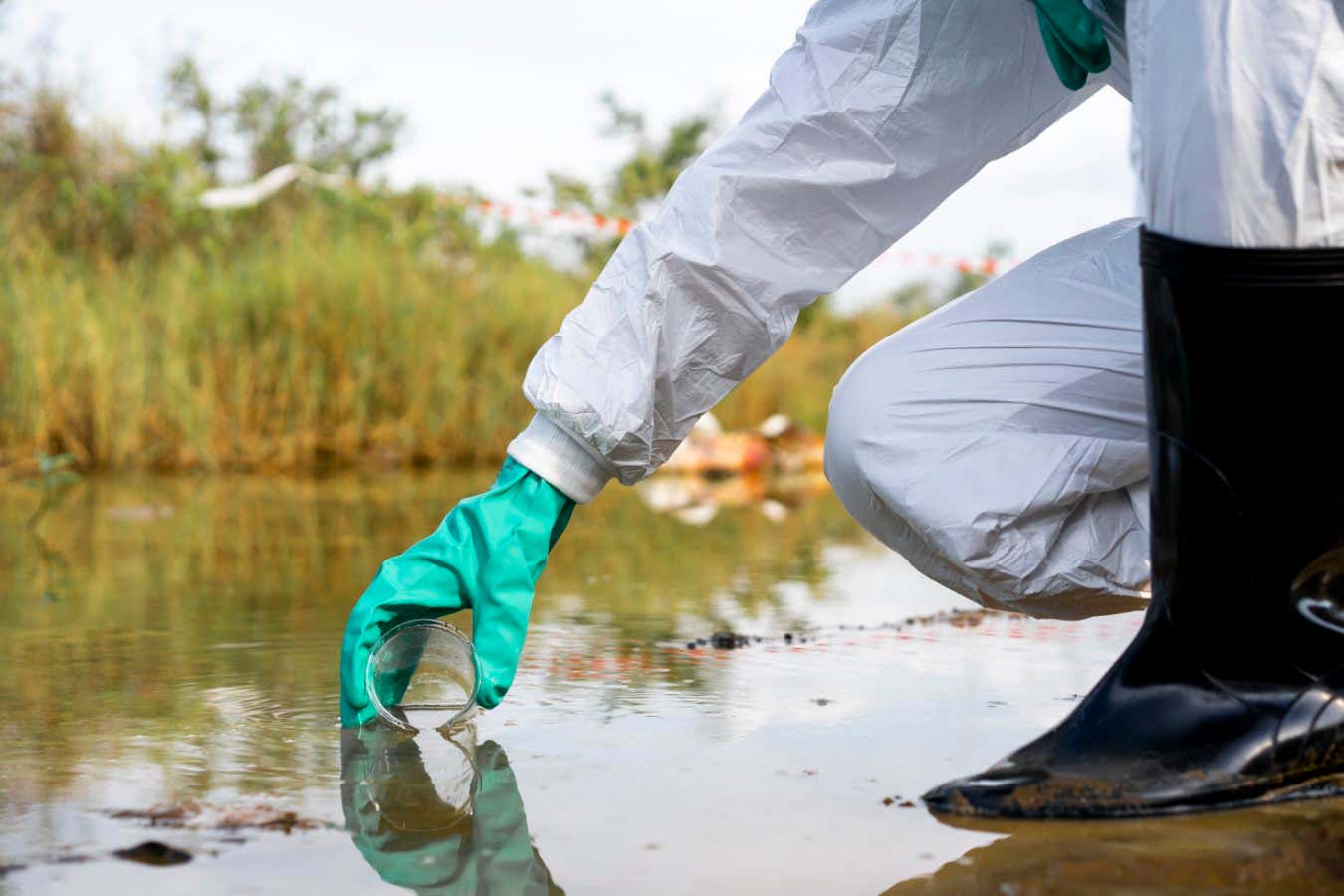
    Trifluoroacetic acid can be found in surface water

    Silicon Quantum Computing

    Trifluoroacetic acid (TFA), a potentially toxic “forever chemical”, has more than tripled in the global environment in two decades due to refrigerants that are helping to close the hole in the ozone layer.

    The amount of TFA falling out of the atmosphere via wind and rain has risen from 6800 tonnes per year in 2000 to 21,800 tonnes in 2022. Although that is below known safe thresholds, TFA’s effects on human health haven’t been studied in detail and its accumulation in the environment is expected to accelerate.

    TFA caused eye deformities in most of the rabbit fetuses exposed to it in one trial. The European Union has classified it as harmful to aquatic life and is considering whether to deem it toxic to human reproduction.

    “It is shocking that we’re emitting large amounts of a chemical into the environment that we have a very poor understanding of its impacts, and it’s irreversible basically,” says Lucy Hart at Lancaster University, UK, who led the new research.

    Humans and animals will be exposed to TFA in soil and surface water until it flows out to sea and is trapped in ocean sediments after decades or centuries.

    Chlorofluorocarbons (CFCs) were once found in refrigerators, aerosol sprays, fire extinguishers and other items. But they were banned in 1989 after it was discovered they were creating a hole in Earth’s protective ozone layer. They were largely substituted by hydrofluorocarbons (HFCs), which react with hydroxyl radicals in the atmosphere to form compounds including TFA.

    While HFCs are now being phased out, they are often replaced by hydrofluoroolefins (HFOs), which break down into TFA at a far higher rate. HFO-1234yf, which is now found in air conditioners in hundreds of millions of cars, produces 10 times more TFA than the HFC it is gradually replacing. Pesticides, pharmaceuticals and industrial chemicals are also sources of TFA.

    Cores from ice caps in northern Canada and Svalbard have revealed that TFA concentrations have been increasing there since the 1970s. Based on long-running atmospheric measurements of nine CFC replacement gases, Hart and her colleagues modelled the rate at which TFA was produced and deposited around the world, which revealed a 3.5-fold global increase.

    That rate could as much as double by 2050 based only on HFCs, which can last for several decades in the atmosphere. Other research found that HFO-1234yf could boost TFA production by more than 20 times by 2050.

    While the world can’t go back to CFCs and should continue moving away from HFCs, which have a significant global warming effect, the replacements for these chemicals need further scrutiny, says Lucy Carpenter at the University of York, UK.

    Ammonia already cools many food warehouses and industrial processes, and could also be used in home refrigerators and air conditioners. Carbon dioxide is another natural refrigerant.

    “We need to take a serious look at whether there are better alternatives to HFO-1234yf,” Carpenter says. “TFA has increased and is going to further increase… It’s been found in all kinds of food products now that it never used to be found in. It’s everywhere.”

    A 2020 study discovered high concentrations of TFA in the blood of 90 per cent of people in China, which is a hotspot for the chemical because of industrial pollution and warm, wet weather in many places.

    The EU, which is developing proposals for a ban on forever chemicals, predicted that freshwater TFA concentrations would eventually reach a toxic level. But it has come under fire for hiring a consultancy that has also lobbied for chemical manufacturers and disputed this expected increase in TFA.

    The new findings are a call to action to study both HFOs and their possible replacements, so countries can break the cycle of adopting chemicals with unexpected consequences, says Hart. Unlike HFCs, HFOs break down in days, giving us greater control. “If we stop emitting them, you’ll stop TFA production very quickly,” she says.

    Topics:


    Source link

    Share. Facebook Twitter Pinterest LinkedIn Tumblr Email Telegram Copy Link

    Related Posts

    Science

    A bitter irony sits in the credits of The Wolf of Wall Street: prosecutors say this film about financial fraud was itself part-funded with money looted from Malaysia’s 1MDB fund — fraud, in effect, bankrolling its own movie

    July 21, 2026
    Science

    Psychology researchers know why The Odyssey transcends time

    July 21, 2026
    Science

    Neanderthals may have been just as smart as modern human peers

    July 20, 2026
    Science

    Inside the race to spot wildfires before they spiral out of control

    July 20, 2026
    Science

    A SpaceX rocket is about to crash into the moon—scientists will be watching

    July 20, 2026
    Science

    The Southern Delta Aquariids and Alpha Capricornids meteor showers are about to peak

    July 20, 2026
    Editors Picks

    Jessica Simpson Shares Real Reason Her Kids Flew Coach

    May 20, 2026

    Chris Pratt Reportedly ‘Spiraling’ As His New Action Film Struggles

    January 27, 2026

    Meta to trial premium subscriptions for Instagram, Facebook and WhatsApp

    January 27, 2026

    EU reforms carbon market under pressure from industry

    July 17, 2026

    Why Prince Harry’s New Life In Hollywood Is Allegedly In Shambles

    January 27, 2026
    About Us
    About Us

    Welcome to Benjamin Franklin Institute, your premier destination for insightful, engaging, and diverse Political News and Opinions.

    The Benjamin Franklin Institute supports free speech, the U.S. Constitution and political candidates and organizations that promote and protect both of these important features of the American Experiment.

    We are passionate about delivering high-quality, accurate, and engaging content that resonates with our readers. Sign up for our text alerts and email newsletter to stay informed.

    Latest Posts

    Commentary: Despite chaos and controversy, there’s much to celebrate about this World Cup

    July 21, 2026

    China and Philippines trade accusations after sailor injured at sea | Border Disputes News

    July 21, 2026

    Shedeur Sanders discusses relationship with Deshaun Watson amid competition

    July 21, 2026

    Subscribe for Updates

    Stay informed by signing up for our free news alerts.

    Paid for by the Benjamin Franklin Institute. Not authorized by any candidate or candidate’s committee.
    • Privacy Policy
    • About us
    • Contact us

    Type above and press Enter to search. Press Esc to cancel.