

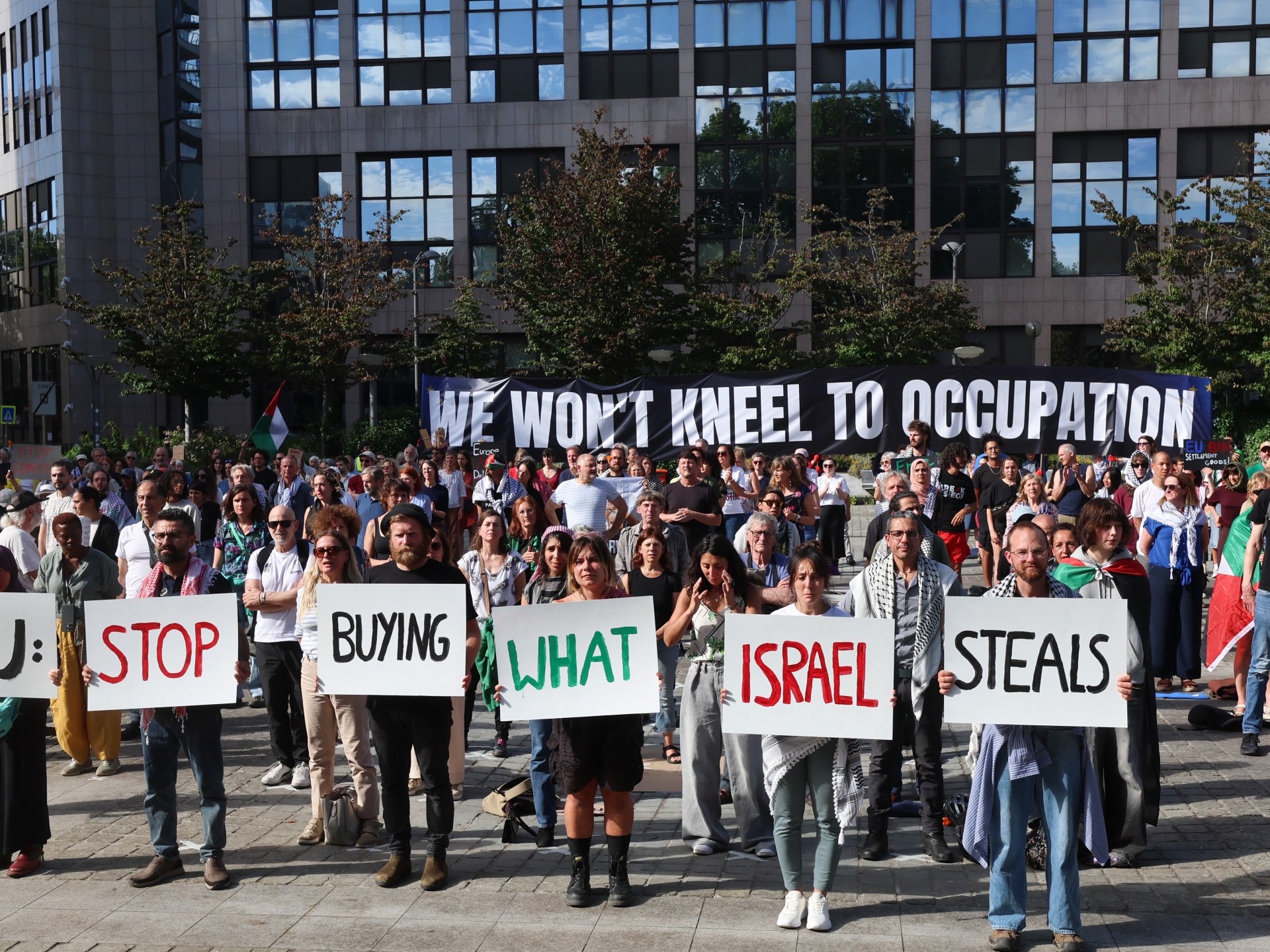
On July 13, European Union foreign ministers are due to meet again at the Foreign Affairs Council in Brussels. The agenda includes an “exchange of views on Gaza and the West Bank” and is expected to cover settlement trade, the EU-Israel Association Agreement, possible sanctions on Israeli National Security Minister Itamar Ben-Gvir, and proposals to restrict, rather than ban, goods from illegal Israeli settlements.
If previous efforts are any guide, the July meeting will follow a familiar pattern: Hesitation, euphemism and no meaningful action to hold Israel accountable. The stated obstacle will likely be a “lack of consensus”. In practice, that phrase has become the bloc’s preferred way of masking collective inaction.
Germany and Italy, backed by several Eastern European states, have repeatedly blocked meaningful action in response to Israel’s violations. Other member states, meanwhile, have remained largely paralysed, shifting responsibility between national governments and EU institutions instead of taking decisive steps.
Yet the EU and its member states continue to invoke the language of international law while refusing to apply it when Israel is concerned. The gap between principle and practice, between rhetoric and action, is no longer a diplomatic inconsistency. It has become policy.
That is becoming harder to justify and harder to hide.
According to reports on a leaked 2017 legal memo, the EU had already been advised that it had legal grounds to suspend the Association Agreement, the political and trade framework governing the bloc’s relations with Israel. Another investigation has shown that Israel has damaged or destroyed more than 150 million euros ($172m) in EU-funded infrastructure in Gaza and the West Bank without accountability, while settlement goods continue to enter European markets under misleading labels. At the same time, United Nations and human rights bodies have continued to document grave violations, including a June 2026 report by a UN human rights body that described the deliberate targeting of Palestinian children in Palestine as amounting to genocide, alongside crimes against humanity and war crimes.
The recent episode involving EU foreign policy chief Kaja Kallas exposed how far the EU has submitted to Israeli pressure. Reports that she compared Israeli practices to apartheid in a closed meeting triggered a furious response from Israeli officials, with Israel’s foreign minister saying he was severing all contact with her until she retracted the remarks. The European Commission’s response was to send another commissioner to Israel to reassure officials that relations would remain intact.
That is the real message from Brussels: Preserving ties with Israel matters more than internal solidarity, self-respect, or the EU’s stated commitment to international law and its own values.
Pressure at the EU level is essential, and exposing the complicity of EU institutions and leaders must remain a priority. But accountability cannot end there.
Member states, especially those that claim to uphold Palestinian rights and international law, must also be held responsible for their ongoing complicity.
The International Court of Justice was clear in July 2024: Israel’s occupation of Palestinian territory is unlawful. It violates the Palestinian right to self-determination and must end. Settlement activity must stop immediately, and Israel’s policies breach the international prohibition on racial segregation and apartheid.
The court did not stop at Israel. It ruled that every state, not just Israel, is legally bound not to recognise the occupation as lawful, not to aid or assist in sustaining it, and to cooperate to bring it to an end.
EU member states do not only have a legal obligation to act. They also have tools at their disposal that do not require EU-wide consensus.
Member states can suspend bilateral cooperation, including visa facilitation and cultural or scientific exchanges; apply national export-control regimes to block arms, military equipment and dual-use transfers to Israel; and adopt national measures to ban trade with illegal settlements. They may also impose targeted sanctions, including travel bans and asset freezes, against individuals implicated in serious violations of international law.
They can press the EU to activate the Blocking Statute against US sanctions targeting those pursuing accountability at the ICC, while ensuring continued funding for Palestinian civil society. They can pursue accountability through domestic courts, support the enforcement of ICC arrest warrants, and contribute to the implementation of ICJ rulings and advisory opinions. They can also formally intervene in South Africa’s genocide case before the International Court of Justice.
The EU and its member states have spent two and a half years finding reasons not to act. The July Council should expose that reality plainly, especially with Ireland holding the rotating presidency from July 1 to December 31, 2026 and having the institutional power to translate its words into action.
The issue is no longer whether the bloc has the legal tools. It does. The question is whether member states will keep outsourcing responsibility to Brussels or finally act within their own powers.
The views expressed in this article are the author’s own and do not necessarily reflect Al Jazeera’s editorial policy.