

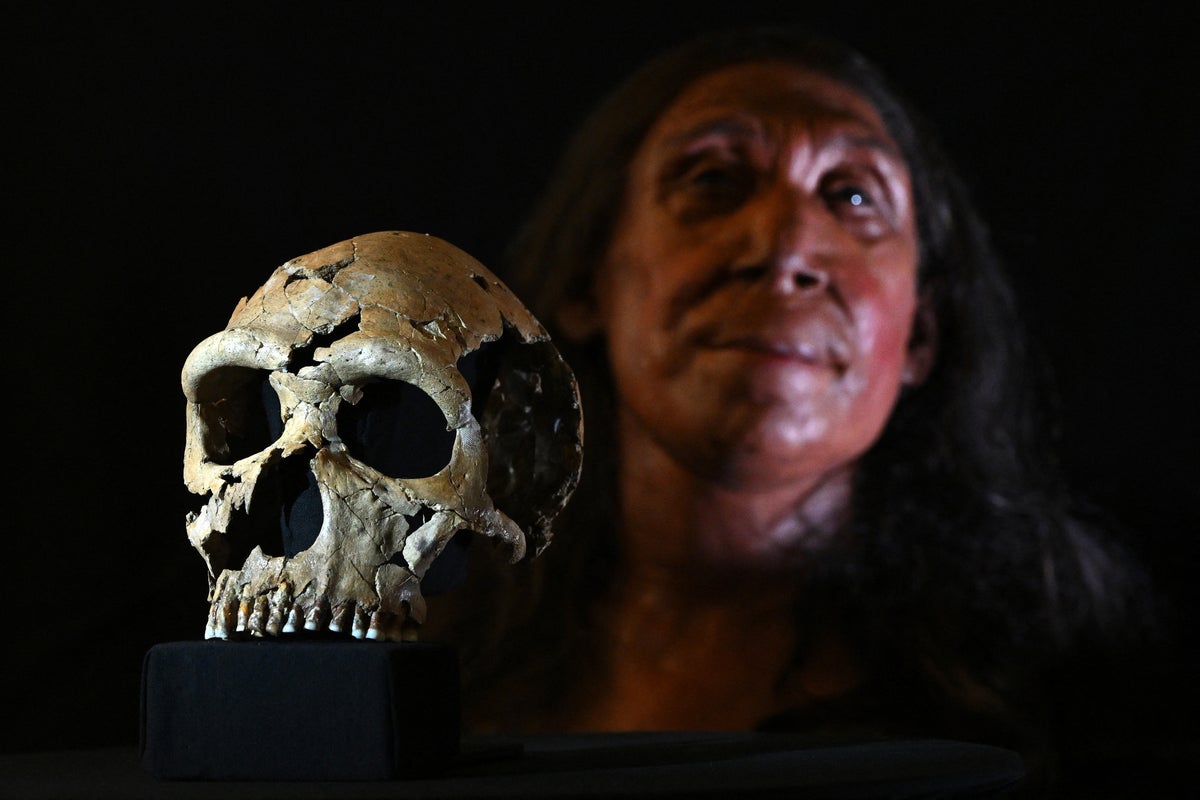
Scientists have long known that ancient Homo sapiens and Neanderthals lived alongside each other for thousands of years—until that is, Neanderthals went extinct some 40,000 years ago. That includes mating—most of the world’s population carries Neanderthal DNA to this day. But beyond these genetic remnants, the exact nature of any interactions between our species and Neanderthals is much more of a mystery.
Now a new study published in the Proceedings of the National Academy of Sciences USA argues that at least some Neanderthals and modern humans may have shared certain cultural practices.
The research centers on fossil evidence discovered inside a cave in what is now Türkiye called Üçağızlı II. Fossils suggest that Neanderthals occupied Üçağızlı II Cave from around 77,000 to 59,000 years ago and that the cave was then occupied by modern humans until around 47,000 years ago. The study authors don’t explicitly say that the two groups overlapped in their occupancy of the cave, but the evidence suggests they shared previously unrecognized behavior patterns.
On supporting science journalism
If you’re enjoying this article, consider supporting our award-winning journalism by subscribing. By purchasing a subscription you are helping to ensure the future of impactful stories about the discoveries and ideas shaping our world today.
The Neanderthal and H. sapiens fossils were found at “different layers” in the cave, indicating that they were there in different timeframes, but “they are associated with remarkably similar stone tool technologies, hunting strategies and overall ways of life,” says İsmail Baykara, the study’s lead author and a professor at Gaziantep University in Türkiye.
One of the “biggest surprises,” Baykara says, was that both Neanderthals and modern humans appear to have shared a penchant for collecting the shells of Columbella rustica, a kind of mollusk that can be found along the Mediterranean coast, despite “many other shell species being available,” Baykara says. It’s possible that both modern humans and Neanderthals might have used the mollusk shells for decorative purposes, but more research is needed.
Columbella rustica shell associated with Neanderthal remains.
This mollusk-collecting behavior was previously thought to be “exclusive to modern humans,” Baykara says, adding that the finding “forces us to reconsider the nature of cultural boundaries and perhaps even cognitive capacities among different human groups in the Levant.”
Ultimately, the fossils suggest that “even under intense survival pressures, both groups placed high value on potentially symbolic behaviors,” Baykara says.
It’s Time to Stand Up for Science
If you enjoyed this article, I’d like to ask for your support. Scientific American has served as an advocate for science and industry for 180 years, and right now may be the most critical moment in that two-century history.
I’ve been a Scientific American subscriber since I was 12 years old, and it helped shape the way I look at the world. SciAm always educates and delights me, and inspires a sense of awe for our vast, beautiful universe. I hope it does that for you, too.
If you subscribe to Scientific American, you help ensure that our coverage is centered on meaningful research and discovery; that we have the resources to report on the decisions that threaten labs across the U.S.; and that we support both budding and working scientists at a time when the value of science itself too often goes unrecognized.
In return, you get essential news, captivating podcasts, brilliant infographics, can’t-miss newsletters, must-watch videos, challenging games, and the science world’s best writing and reporting. You can even gift someone a subscription.
There has never been a more important time for us to stand up and show why science matters. I hope you’ll support us in that mission.