

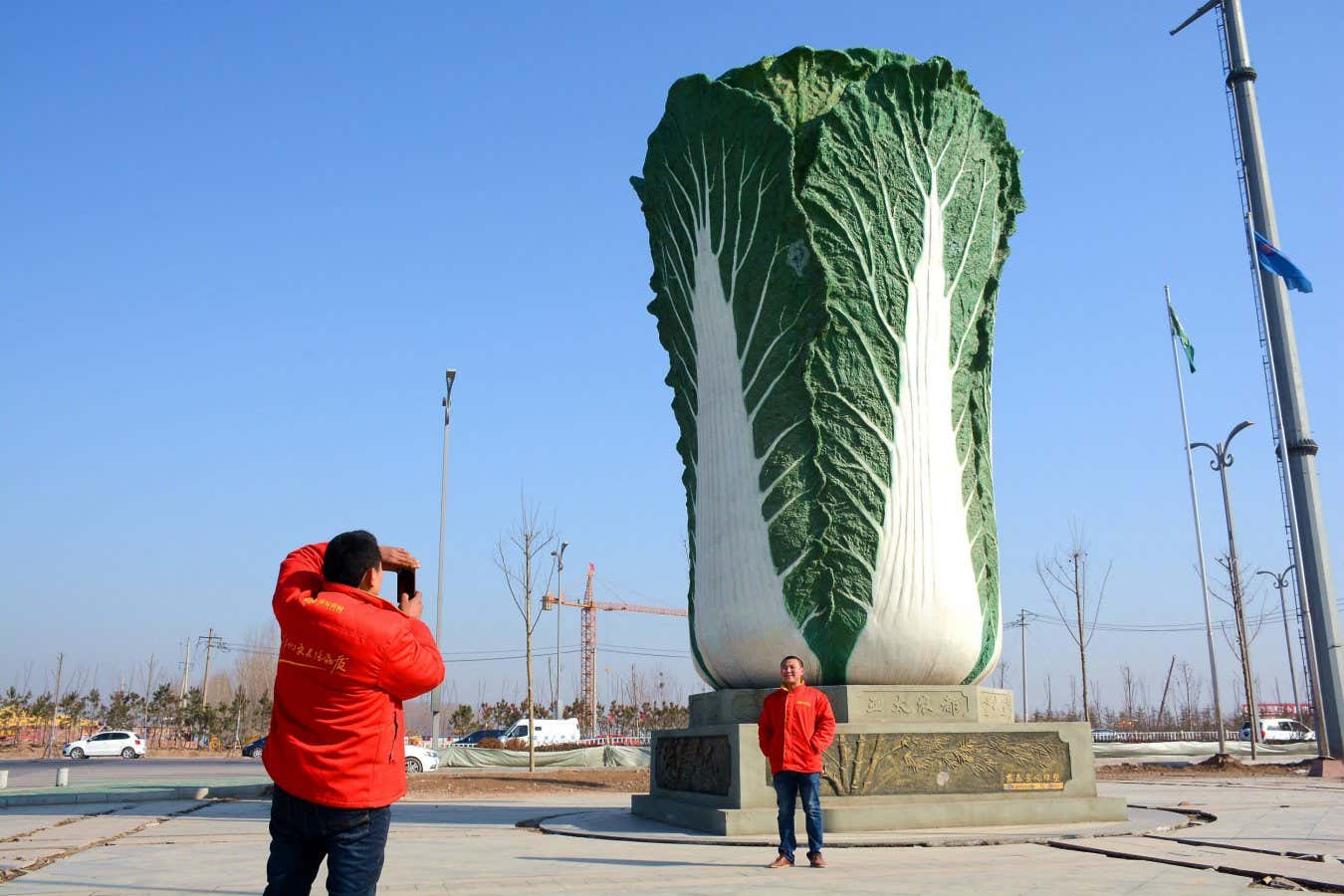
Visual China Group via Getty Images
In Roald Dahl’s novel James and the Giant Peach, magic crystals cause a withered peach tree to produce a spectacular, juicy, house-sized peach. How nice would it be, people thought, if we could grow massive fruit in real life – perhaps without also spawning giant insect pests and having to endure villainous aunties.
By the mid-2030s, botanists had figured out how. Scientists found ways to produce oversized fruits and vegetables using genetics, and improved on James’s peach: they created crops and trees that grew not just a single species, but a variety of delicious and nutritious foods.
The Fruit Salad Tree, a tree producing multiple kinds of fruit which itself sounds like something from a Roald Dahl story, was produced commercially in the early 2020s. Grafting had been used for thousands of years to produce hybrid plants, and fruit salad trees are made by grafting branches of one tree, say a russet apple, to that of another variety of apple, say a golden delicious. Other varieties can be added, so that a single tree produces a range of different apples. In 2013, one man made a tree producing 250 different varieties of apple. Similar fruit salad trees were made with citrus fruits (growing lemon, lime, oranges and grapefruit). Yet another type produced plums, peaches, nectarines and apricots.
And then there were tomtatoes – you say pomatoes – made by grafting the roots of a potato plant to the leaves and stem of a tomato plant.
In all these examples, the hybrid is built up from closely related plants. Tomatoes and potatoes, for example, belong to the same genus, Solanum, which also includes aubergines (or eggplants). Indeed, potatoes themselves evolved from a hybridisation event involving a tomato some 8 million years ago. So it is a simple matter to make a thriving hybrid of closely related plants through grafting.
With some careful gene editing and plant breeding, by the early 2030s it became possible to make a plant able to grow fruits from different families, resulting in trees growing, for example, bananas, citrus, apples and peaches. Farmers and private growers could order the combination that most suited their tastes.
Horticulturalists also turned their hand to Brassica oleracea, the species that produces, in different varieties, cabbage, kale, broccoli, cauliflower and Brussels sprouts. It was a relatively simple matter to make a hybrid that produced all these vegetables on different parts, in a sprawling hedge.
“
In homage to Roald Dahl’s story, scientists created a peach variety that grew fruit the size of large suitcases
“
Grafting was all very well, but it was time-consuming and expensive, as each individual plant had to be made to order, by hand. The real breakthrough came in the mid 2030s, when botanical geneticists were able to make hybridised superplants that could be grown from seed. That meant far more people had access to the convenience of multiple harvests from a single plant.
PolyPlants, as they became known, heralded a new way of treating crops and food trees. People became more relaxed about gene editing as they saw the benefits it could give. Fruits were engineered to produce extra nutrients and vitamins. This built on work in 2022 that had made tomatoes engineered to produce extra amounts of antioxidant pigments called anthocyanins, which have a longevity-enhancing effect. Other adjustments made by gene editing created PolyPlants better able to resist fungal disease, salt water, drought and insect attack. Engineering of the root microbiome customised the mycorrhizal fungi for each component of the crop and boosted production and growth.
Extensive gene editing became even more important as global temperatures increased and traditional crops failed. PolyPlants designed to survive climate extremes helped provide food security around the world.
Genome analysis had identified clusters of genes that contributed to the size of the edible component of food plants. A method adapted from grafting allowed the gene editing of plants that had otherwise eluded direct engineering, such as avocado, coffee and cocoa. These advances allowed the creation of plants producing oversized fruit.
In homage to Roald Dahl’s story, scientists created a peach variety that grew fruit the size of large suitcases. Traditions sprung up around the supersized fruit trees. Feast Days were held when fruit ripened and children were encouraged to gorge themselves on delicious giant peaches, cherries and strawberries.
Crops and trees that produced oversized, ultra-nutritious food weren’t just fun to feast on. They were crucial in providing vital nutrition to many parts of the world where food scarcity was a problem and food security a growing risk.
Rowan Hooper is New Scientist‘s podcast editor and the author of How to Spend a Trillion Dollars: The 10 global problems we can actually fix. Follow him on Bluesky @rowhoop.bsky.social In Future Chronicles, he explores an imagined history of inventions and developments yet to come.