

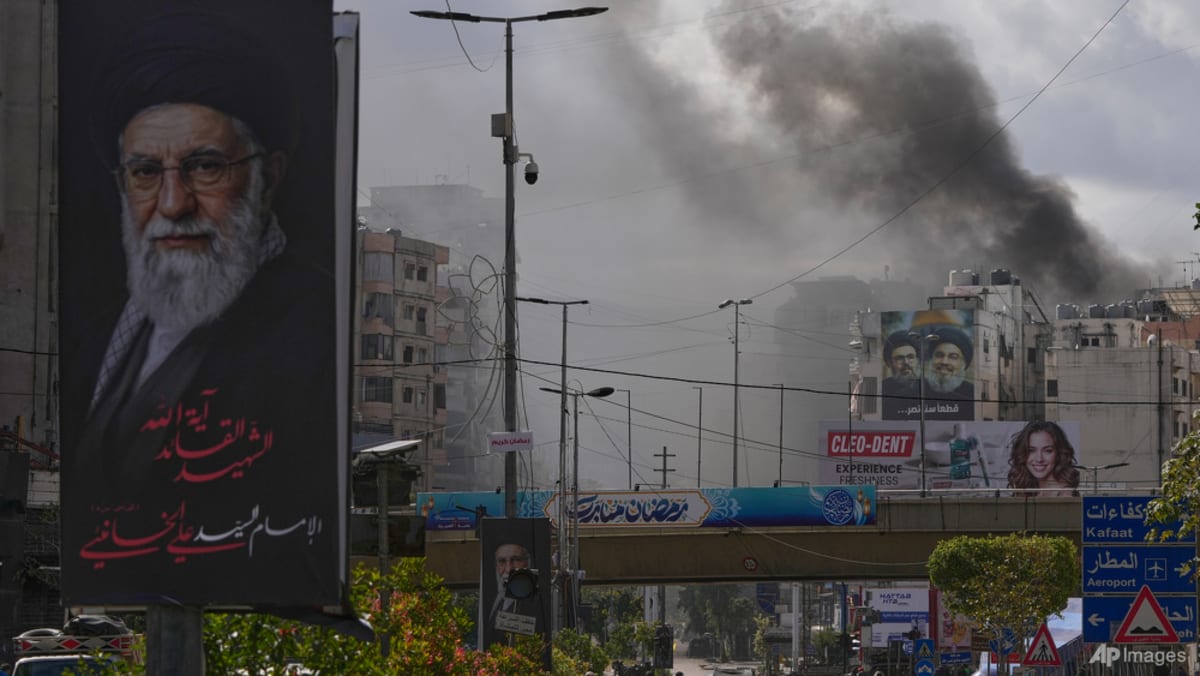
The second is that he took pains to cast the Islamic Republic as a dangerous and implacable foe of the US and Israel. He did not reference the 1979 hostage crisis, which lasted over a year, but dated the Iranian threat to the Beirut Marine barracks bombing in 1983, which killed 241 Americans, through to the October 7, 2023 Hamas attacks on Israel. He called Qassem Soleimani, the former head of the Islamic Revolutionary Guard Corps, “an evil genius, brilliant person, a horrible human being”, and said the decision to kill him – which Mr Trump took in his first term – was a “most” important one.
There was another “very” important decision he took: terminating the nuclear agreement signed by former President Barack Obama. If he did not pull out of the “terrible deal”, Mr Trump asserted, Iran would have had “a colossal arsenal of massive nuclear weapons … and would have used them”.
WALKING BACK THREATS TO ABANDON STRAIT OF HORMUZ?
Though his primary audience was the American public, there were messages for US partners too.
He threw a small concession to the Gulf countries which were ostensibly against a conflict to begin with, but are now reportedly pushing the US – by varying degrees – to finish the job. He praised Bahrain, Kuwait, Qatar, Saudi Arabia, and the United Arab Emirates, though perhaps surprisingly, he left out Oman, which has also been hit by Iranian attacks aimed at damaging the economies of the six Gulf Cooperation Council states.
He gave assurance that the US would not allow them to get hurt or fail in any way, shape or form, although the consensus view is that the various economic transformation programmes that all GCC nations have embarked on for a post-oil future have been badly shaken, if not seriously damaged, by Iran’s attacks on them.