
Close Menu
    Trending
    • Rihanna’s Return Sparks Backlash After Jay Z Concert
    • EU blasts threats against ICC as US targets court
    • FIFA World Cup: Meet Ismail Elfath, referee for England-Argentina semifinal | World Cup 2026 News
    • Brewers, Jacob Misiorowski have yet to discuss extension
    • An Olympic Gold Medalist Fell in Love With This Franchise
    • ChatGPT just proved another 50-year-old math conjecture
    • Congress Never Authorized The Iran War
    • Jelly Roll Compares Cheat Meals To Addiction: ‘Blood’
    Benjamin Franklin Institute
    Tuesday, July 14
    • Home
    • Politics
    • Business
    • Science
    • Technology
    • Arts & Entertainment
    • International
    Benjamin Franklin Institute
    Home»Science»Comet that could shine as bright as Venus set to be visible from Earth
    Science

    Comet that could shine as bright as Venus set to be visible from Earth

    Team_Benjamin Franklin InstituteBy Team_Benjamin Franklin InstituteJanuary 12, 2025No Comments3 Mins Read
    Share Facebook Twitter Pinterest Copy Link LinkedIn Tumblr Email VKontakte Telegram
    Share
    Facebook Twitter Pinterest Email Copy Link


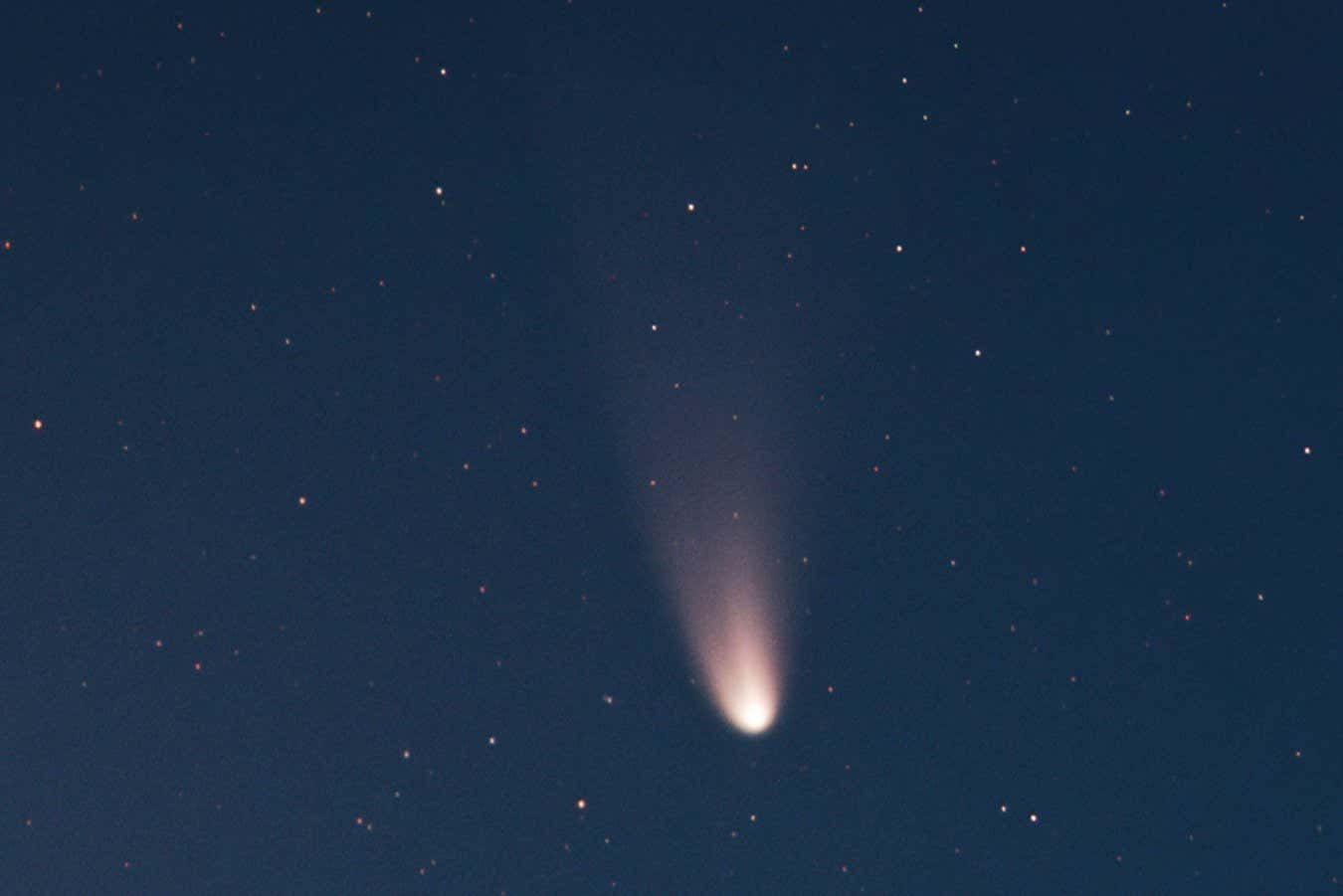
    Comet C/2024 G3 (ATLAS) captured on 31 December 2024 using a telescope in Río Hurtado, Chile

    Lionel Majzik

    A comet that has taken astronomers by surprise could shine as brightly as Venus in the night sky as it passes by Earth over the next few days.

    Comet C/2024 G3 (ATLAS) was spotted in April last year by NASA’s Asteroid Terrestrial-impact Last Alert System when it was more than 600 million kilometres from Earth. Astronomers initially assumed it wouldn’t survive its orbit close to the sun, but later observations suggested that the comet is taking a different path that will allow it to survive and perhaps even remain intact for a flyby of Earth.

    This new orbit, which takes 160,000 years for a round trip, has the comet snaking its way through our solar system in a way that makes it visible for stargazers in the southern hemisphere. But for the final part of its journey around the sun, it should be just about visible with binoculars to people in the northern hemisphere too.

    Observations since the new orbit was suggested have shown that the comet is growing brighter than expected, which could mean it is breaking up as it travels closer to the sun. However, the most recent observations have shown that the brightness has persisted and even increased, which wouldn’t be the case if the comet had disintegrated.

    If C/2024 G3 survives, it could lead to an exceptionally bright appearance in the night sky, with some astronomers predicting its brightness will match that of Venus, making it one of the most brilliant comets in decades.

    However, the comet’s exact brightness is uncertain. It could be far away enough to reflect the sun’s light and be clearly visible, or it could be washed out by the sun’s light, rendering it invisible.

    Astronomers have also floated the possibility of a phenomenon called forward scattering, where dust from the comet causes it to appear brighter than it would normally, but the chances of this are low, according to meteorologist Joe Rao at Space.com.

    If the comet does shine brightly, then it will probably reach its maximum level around the time it makes its closest approach to the sun. The Central Bureau for Astronomical Telegrams, which aggregates observations from astronomers around the world, predicts this will happen on 13 January at 10.17am GMT, with the comet’s closest approach to Earth happening a few hours later.

    This equates to a roughly three-day viewing window for those in the northern hemisphere hoping to glimpse the comet, should it be bright enough, from 12 to 14 January. For people in places like the US and Europe, the best time to see the comet will be around half an hour before sunrise on 12 January, where it should be visible with binoculars, about 5 degrees above the sun or just above the horizon. There should also be a second chance to see it around half an hour after sunset on 14 January.

    Topics:


    Source link

    Share. Facebook Twitter Pinterest LinkedIn Tumblr Email Telegram Copy Link

    Related Posts

    Science

    ChatGPT just proved another 50-year-old math conjecture

    July 14, 2026
    Science

    Scientists catch bacteria sharing proteins to survive antibiotics

    July 14, 2026
    Science

    Scientists overwhelmingly against rule change that would give political appointees say over science grants

    July 14, 2026
    Science

    Why have their been so many record-breaking heat waves this summer?

    July 14, 2026
    Science

    We finally know the name of a Maya mathematician

    July 13, 2026
    Science

    Scientists spot sugar in interstellar space for the first time ever

    July 13, 2026
    Editors Picks

    You might be stuck in TSA lines for hours. Make sure you have these travel gadgets with you 

    March 29, 2026

    The ‘Three-rushing-touchdown NFL games’ quiz

    October 21, 2025

    German prosecutors allege Ukraine ordered Nord Stream pipeline attack | News

    July 2, 2026

    How George Washington’s mistakes in Pennsylvania’s wilderness provided valuable leadership lessons

    February 15, 2026

    Ukraine urges acceleration of peace talks, says only Trump can broker deal

    February 8, 2026
    About Us
    About Us

    Welcome to Benjamin Franklin Institute, your premier destination for insightful, engaging, and diverse Political News and Opinions.

    The Benjamin Franklin Institute supports free speech, the U.S. Constitution and political candidates and organizations that promote and protect both of these important features of the American Experiment.

    We are passionate about delivering high-quality, accurate, and engaging content that resonates with our readers. Sign up for our text alerts and email newsletter to stay informed.

    Latest Posts

    Rihanna’s Return Sparks Backlash After Jay Z Concert

    July 14, 2026

    EU blasts threats against ICC as US targets court

    July 14, 2026

    FIFA World Cup: Meet Ismail Elfath, referee for England-Argentina semifinal | World Cup 2026 News

    July 14, 2026

    Subscribe for Updates

    Stay informed by signing up for our free news alerts.

    Paid for by the Benjamin Franklin Institute. Not authorized by any candidate or candidate’s committee.
    • Privacy Policy
    • About us
    • Contact us

    Type above and press Enter to search. Press Esc to cancel.