
Close Menu
    Trending
    • Beijing’s new supply chain rules deepen concerns for US firms in China
    • India denounces ‘hellhole’ remark shared by Trump | Donald Trump News
    • New photos of Mike Vrabel and Dianna Russini emerge
    • AI search demands a new audience playbook
    • How do earthquakes end? A seismic ‘stop sign’ could help predict earthquake risk
    • Trump Announces Cease-Fire Between Israel and Lebanon
    • Google Is Tracking Your Life – Photo Cloud Feeding AI System
    • Rachel Zoe Confronts Amanda Frances In ‘RHOBH’ Reunion Clip
    Benjamin Franklin Institute
    Friday, April 24
    • Home
    • Politics
    • Business
    • Science
    • Technology
    • Arts & Entertainment
    • International
    Benjamin Franklin Institute
    Home»Science»Cannibalism may explain why some orcas stay in family groups
    Science

    Cannibalism may explain why some orcas stay in family groups

    Team_Benjamin Franklin InstituteBy Team_Benjamin Franklin InstituteFebruary 24, 2026No Comments3 Mins Read
    Share Facebook Twitter Pinterest Copy Link LinkedIn Tumblr Email VKontakte Telegram
    Share
    Facebook Twitter Pinterest Email Copy Link


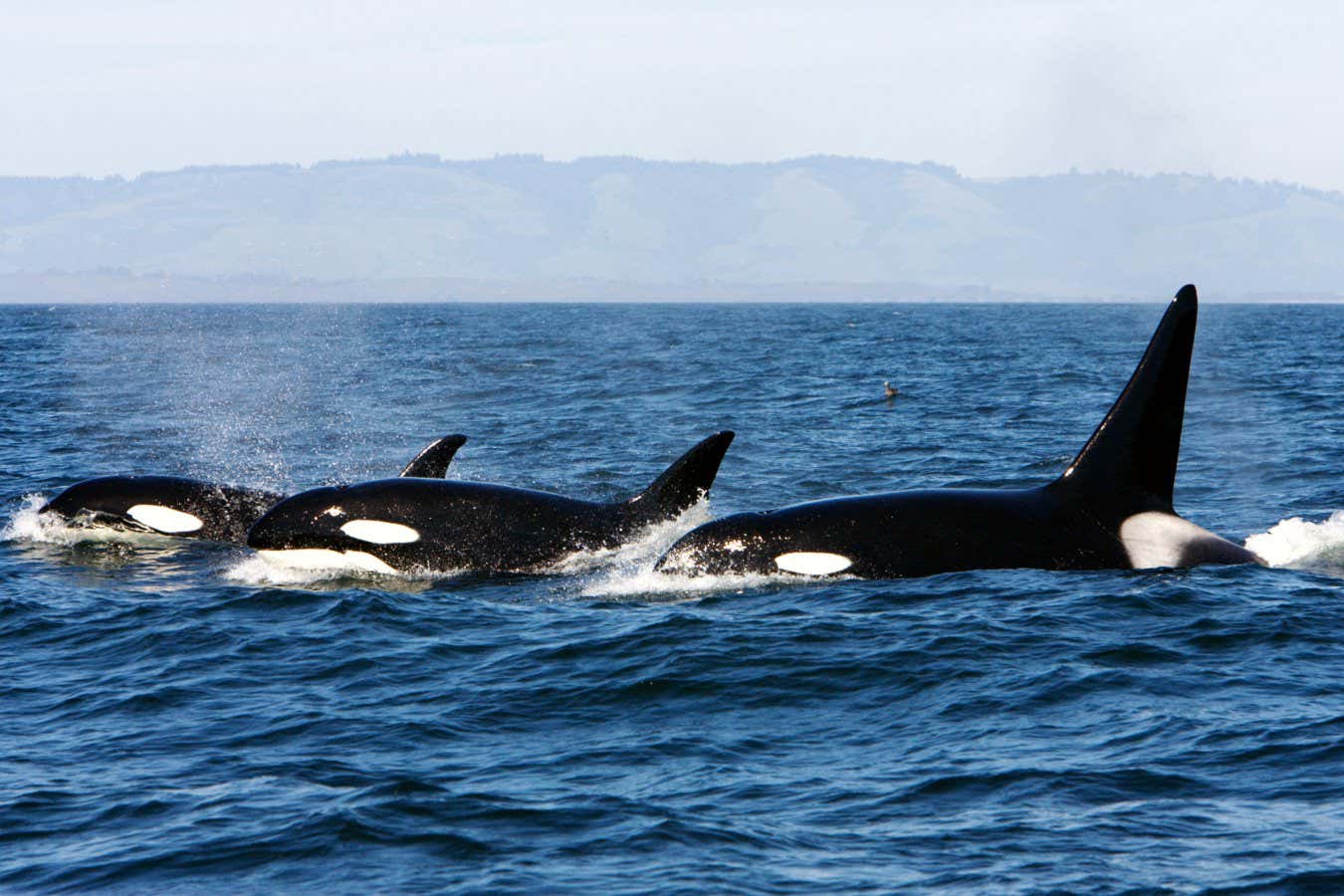
    Orcas may be at risk of predation by other orcas

    Francois Gohie/VWPics/Alamy

    Biologists have seen signs of orca-on-orca predation in the North Pacific, and such cannibalism may explain why some orcas travel in large family groups.

    Two distinct subspecies of orcas, also called killer whales (Orcinus orca), are found in the North Pacific. Transient or Bigg’s orcas, as their name suggests, are nomadic and congregate in fluid hunting pods to hunt seals, dolphins and other whales. In contrast, resident orcas live in large groups based on maternal ties, staying with the same family their whole lives. Residents will disperse and feed on fish individually and come back together again when resting or travelling.

    It’s thought that the two subspecies seldom interact, but Sergey Fomin at the Pacific Institute of Geography in Russia has seen evidence of violent encounters. While strolling along the beach on Bering Island in eastern Russia, he sometimes finds the gnawed-off dorsal fins of Baird’s beaked whales and minke whales — animals that have fallen prey to voracious orcas. In the summer of 2022, however, he was surprised to find an orca fin on the beach, bloodied and covered with tooth marks. Two years later, he found another.

    Genetic testing revealed that the fins came from southern resident orcas. Fomin and his colleagues surmise that the whales were probably eaten by Bigg’s orcas.

    Most toothed whales are organised like transient orcas, forming pods that can change over time. Why southern residents form large family groups has been a scientific conundrum. “I was wondering about the social structure for a while because it’s quite unique, and there are not that many species that have something like this,” says Olga Filatova at the University of Southern Denmark.

    Once she learned about the two dorsal fins and the likely cannibalism, it clicked: perhaps resident orcas stay in large groups for safety in numbers. Together with Fomin and her colleague Ivan Fedutin, she has published a paper outlining this idea.

    As top predators, orcas are seldom bullied, but they have been known to be chased away by mobbing groups of smaller pilot whales. And they can be aggressive towards each other: in 2016, Jared Towers at marine research firm Bay Cetology in Canada witnessed a pod of Bigg’s orcas chase down and kill a newborn. This was probably to force the mother to become sexually receptive, explains Towers, as the calf was not eaten.


    Towers agrees that the residents’ unique social structure is probably for defence, though he’s less certain the whales on Bering Island were cannibalised. Researchers can’t rule out that the fins were ripped off by sparring podmates, or that the whales died and were snacked on post-mortem. This is less likely though, as orcas sink once deceased.

    Researchers can only speculate on why orcas may turn to cannibalism, but Filatova guesses it could just be a matter of circumstance. On Bering Island, common food sources are fur seals and sea lions, but when the rookeries are empty, the whales might turn to other prey. “If they can’t find any food, and there’s a young tasty resident killer whale alone, why not?” she says.

    Topics:


    Source link

    Share. Facebook Twitter Pinterest LinkedIn Tumblr Email Telegram Copy Link

    Related Posts

    Science

    How do earthquakes end? A seismic ‘stop sign’ could help predict earthquake risk

    April 24, 2026
    Science

    ‘Kraken’ fossils show enormous, intelligent octopuses were top predators in Cretaceous seas

    April 24, 2026
    Science

    Largest ever octopus was great white shark of invertebrate predators

    April 24, 2026
    Science

    Do you need to worry about Mythos, Anthropic’s computer-hacking AI?

    April 23, 2026
    Science

    How many dachshunds would it take to get to the moon?

    April 23, 2026
    Science

    The Age Code review: Can you slow ageing with your diet? A new book gives it a go

    April 23, 2026
    Editors Picks

    How Cheap Drones Are Changing Wars Like the Ones in Ukraine and Iran

    April 18, 2026

    Aspen is finally getting a second ski base village. It’s over 10 years in the making

    February 16, 2026

    The five most important players to watch in the NFL playoffs

    January 5, 2026

    Trump’s abduction of Maduro escalates concerns over potential war with Iran | US-Venezuela Tensions News

    January 5, 2026

    CNA Explains: What’s behind the separatist push in Canada’s Alberta – and why Trump is paying attention

    January 30, 2026
    About Us
    About Us

    Welcome to Benjamin Franklin Institute, your premier destination for insightful, engaging, and diverse Political News and Opinions.

    The Benjamin Franklin Institute supports free speech, the U.S. Constitution and political candidates and organizations that promote and protect both of these important features of the American Experiment.

    We are passionate about delivering high-quality, accurate, and engaging content that resonates with our readers. Sign up for our text alerts and email newsletter to stay informed.

    Latest Posts

    Beijing’s new supply chain rules deepen concerns for US firms in China

    April 24, 2026

    India denounces ‘hellhole’ remark shared by Trump | Donald Trump News

    April 24, 2026

    New photos of Mike Vrabel and Dianna Russini emerge

    April 24, 2026

    Subscribe for Updates

    Stay informed by signing up for our free news alerts.

    Paid for by the Benjamin Franklin Institute. Not authorized by any candidate or candidate’s committee.
    • Privacy Policy
    • About us
    • Contact us

    Type above and press Enter to search. Press Esc to cancel.