
Close Menu
    Trending
    • German Intelligence Deems Watermelon Emoji Hate Speech
    • John Travolta Reveals Reason For His Viral Cannes Look
    • What do we know about the Bundibugyo strain of the Ebola virus?
    • Wembanyama scores 41 as Spurs upset Thunder in Game 1 thriller | Basketball
    • Aaron Rai’s father quit his job to support his golf career
    • What You Can and Can’t Deduct in Your Side Hustle (Most People Get Tax Deductions Wrong)
    • What is love? Even a meeting on the subject can’t find the answer
    • Planatir To Control Britain’s Health Data
    Benjamin Franklin Institute
    Tuesday, May 19
    • Home
    • Politics
    • Business
    • Science
    • Technology
    • Arts & Entertainment
    • International
    Benjamin Franklin Institute
    Home»Science»Asteroid to miss Earth by a quarter of the length from us to the moon
    Science

    Asteroid to miss Earth by a quarter of the length from us to the moon

    Team_Benjamin Franklin InstituteBy Team_Benjamin Franklin InstituteMay 14, 2026No Comments2 Mins Read
    Share Facebook Twitter Pinterest Copy Link LinkedIn Tumblr Email VKontakte Telegram
    Share
    Facebook Twitter Pinterest Email Copy Link


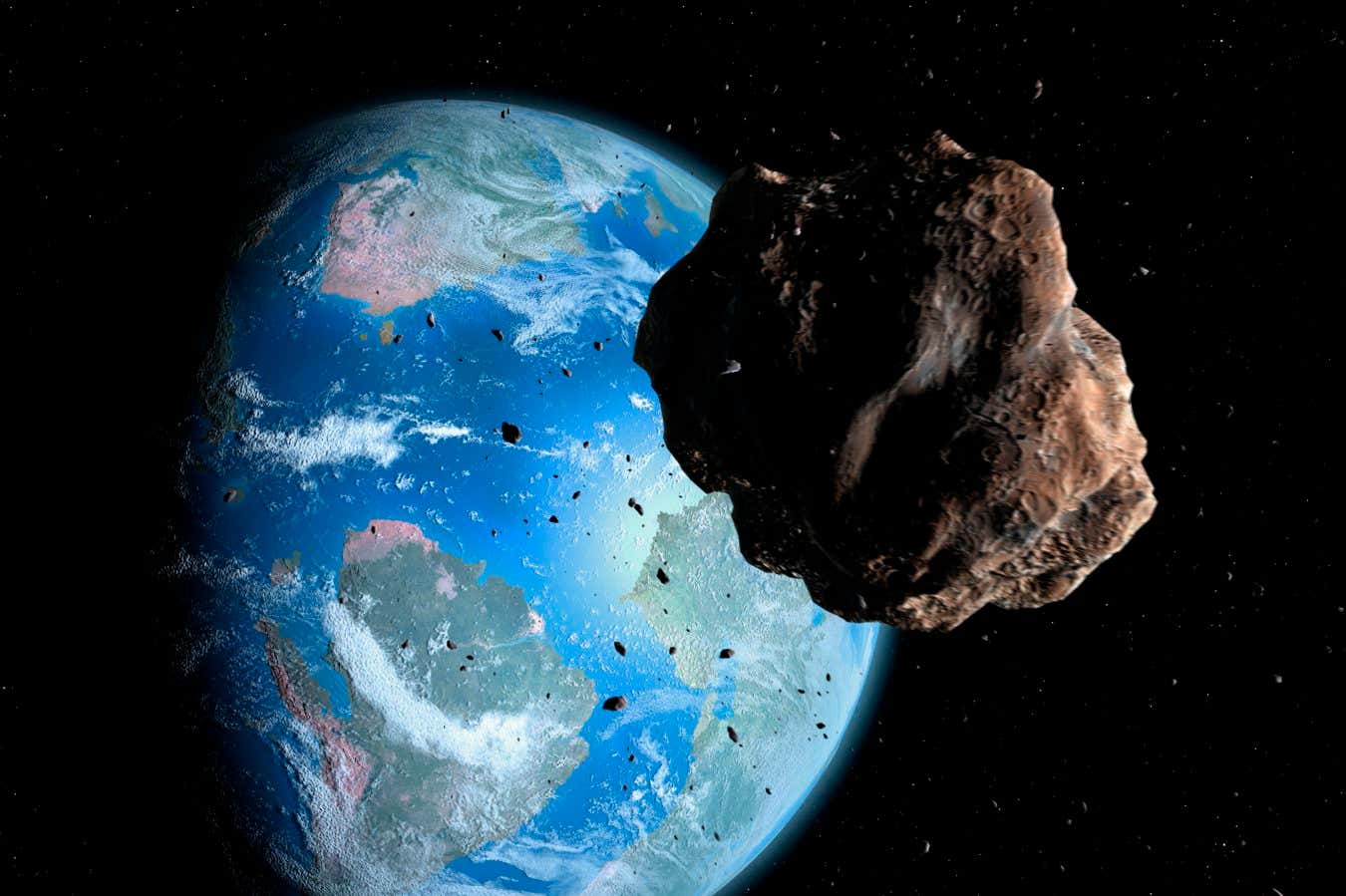
    An asteroid in our solar system will come close to Earth, but don’t worry, it won’t be that close

    MARK GARLICK/SCIENCE PHOTO LIBRARY/Getty Images

    An asteroid with the potential to ruin a city will pass Earth next week. 2026JH2, as it has been labelled by the astronomy community, is predicted to zoom by our planet at an estimated distance of 90,917 kilometres – only a quarter of the distance between us and the moon.

    “In astronomical terms, it’s as close as you can get without hitting,” says Mark Norris at the University of Lancashire, UK.

    Within the next year, there are only five known asteroids that will pass within the orbit of the moon, and only one other will come closer than 2026JH2.

    2026JH2 – which was spotted only this week by observers at the Mount Lemmon Survey in Arizona and the Farpoint Observatory in Kansas – will pass closest to Earth at 9.38pm UTC on 18 May. Norris says it will only be visible from the northern hemisphere very briefly and that even astronomers in the southern hemisphere will find it challenging to view, because its 9.17-kilometres-per-second speed relative to Earth means it will track across the sky almost as fast as artificial satellites.

    The asteroid is estimated to be between 16 and 36 metres in diameter, according to data published by the Sormano Astronomical Observatory. “It’s the kind of thing that would ruin a city quite efficiently, if it hit,” says Norris.

    Astronomers are confident that almost every asteroid in our solar system that is larger than a kilometre across has been spotted and is being tracked, and as our capability to observe them improves, our database of these objects will be expanded to include increasingly smaller bodies. But asteroids the size of 2026JH2 are still largely unknown. Relatively small rocks like 2026JH2 are hard to see, says Mark Burchell at the University of Kent, UK. “They don’t reflect enough light.”

    Richard Moissl, who leads the European Space Agency’s Planetary Defence Office, says that if 2026JH2 did strike Earth, it would cause an event comparable to the Chelyabinsk meteor in 2013, which had around 30 times more kinetic energy than was released by the Hiroshima bomb in 1945.

    Topics:


    Source link

    Share. Facebook Twitter Pinterest LinkedIn Tumblr Email Telegram Copy Link

    Related Posts

    Science

    What is love? Even a meeting on the subject can’t find the answer

    May 19, 2026
    Science

    Mystery of the ancient giant stone jars of Laos may have been solved

    May 19, 2026
    Science

    Floatation tanks deployed to combat PTSD after devastating wildfires

    May 18, 2026
    Science

    The Ebola emergency shines a light on the urgent need for new vaccines

    May 18, 2026
    Science

    The 3 things you need to know about protein, according to an expert

    May 18, 2026
    Science

    Human heads have changed shape a lot in the past 100 years

    May 18, 2026
    Editors Picks

    CBB weekend winners, losers: Unbeatens falter, Miami (Ohio) makes magic

    January 19, 2026

    Google to pay $68m to settle lawsuit claiming it recorded private conversations

    January 26, 2026

    Kirill Kaprizov, Quinn Hughes are reason Wild have real chance at Stanley Cup

    May 1, 2026

    America’s ‘Laser Dome’ starts here

    April 19, 2026

    These common beliefs are holding leaders back

    December 29, 2025
    About Us
    About Us

    Welcome to Benjamin Franklin Institute, your premier destination for insightful, engaging, and diverse Political News and Opinions.

    The Benjamin Franklin Institute supports free speech, the U.S. Constitution and political candidates and organizations that promote and protect both of these important features of the American Experiment.

    We are passionate about delivering high-quality, accurate, and engaging content that resonates with our readers. Sign up for our text alerts and email newsletter to stay informed.

    Latest Posts

    German Intelligence Deems Watermelon Emoji Hate Speech

    May 19, 2026

    John Travolta Reveals Reason For His Viral Cannes Look

    May 19, 2026

    What do we know about the Bundibugyo strain of the Ebola virus?

    May 19, 2026

    Subscribe for Updates

    Stay informed by signing up for our free news alerts.

    Paid for by the Benjamin Franklin Institute. Not authorized by any candidate or candidate’s committee.
    • Privacy Policy
    • About us
    • Contact us

    Type above and press Enter to search. Press Esc to cancel.