

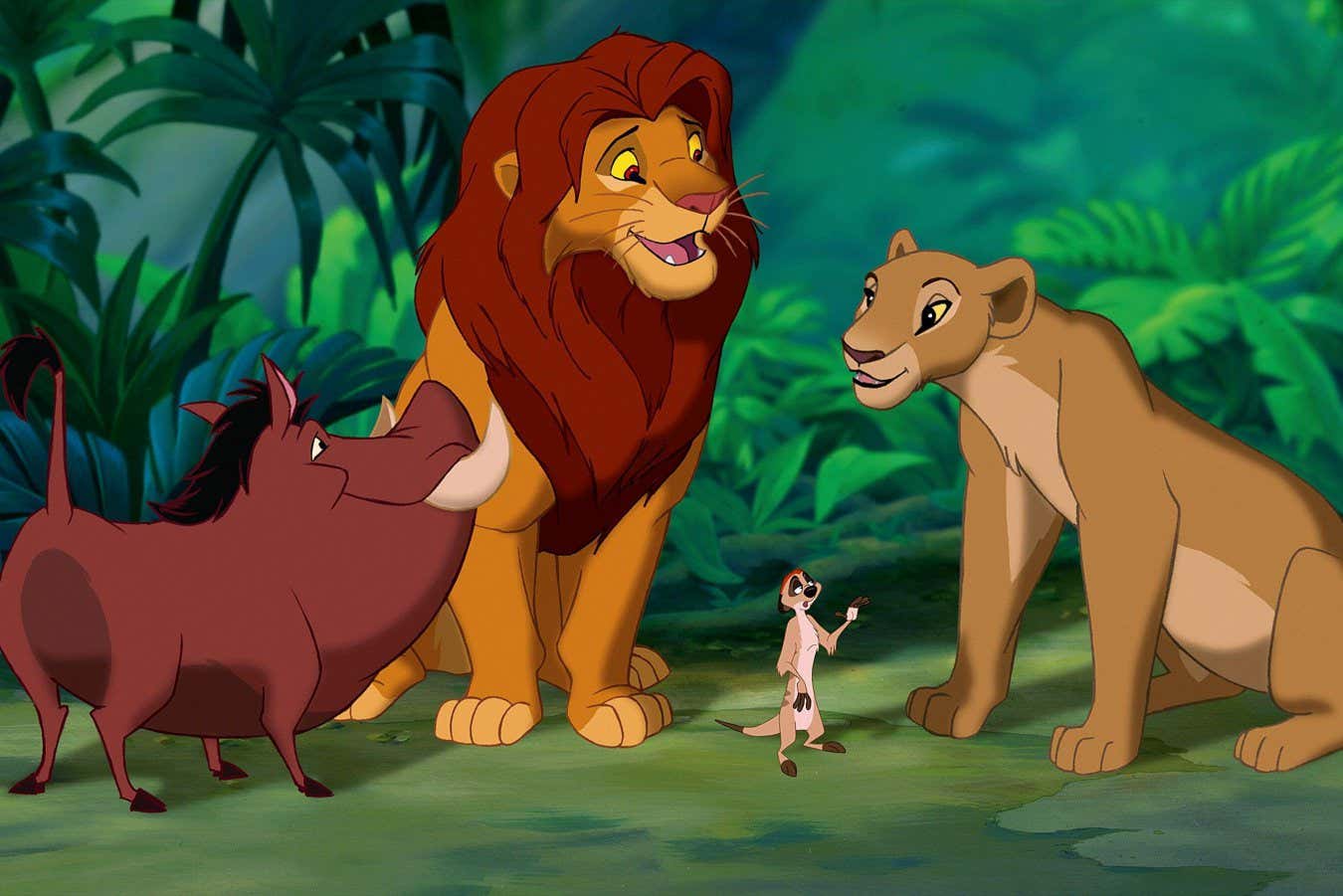
Disney alleged that AI image generator Midjourney was trained on films like The Lion King
Maximum Film/Alamy
The three years since the release of ChatGPT, OpenAI’s generative AI chatbot, have seen huge changes in every part of our lives. But one area that hasn’t changed – or at least, is still trying to maintain pre-AI norms – is the upholding of copyright law.
It is no secret that leading AI firms built their models by hoovering up data, including copyrighted material, from the internet without asking for permission first. This year, major copyright holders struck back, buffeting AI companies were with a range of lawsuits alleging copyright infringement.
The most high-profile case was filed by Disney and Universal in June, both of whom alleged in a lawsuit that AI image generator Midjourney had been trained on their intellectual property, allowing users to create images that “blatantly incorporate and copy Disney’s and Universal’s famous characters”.
That case is still ongoing, with Midjourney responding in August that “the limited monopoly granted by copyright must give way to fair use”, which would allow AI companies to train their models on copyrighted works because the outcomes are transformative.
Midjourney’s fighting words highlight how the copyright argument isn’t as simple as it may seem at first. “Many people thought that copyright would be the silver bullet that killed AI, but it is not turning out that way,” says Andres Guadamuz at the University of Sussex in the UK. Guadamuz says he’s surprised at how little of a dent copyright is making on AI companies’ progress.
That’s despite some governments stepping into the debate. In October, the Japanese government formally asked OpenAI, the company behind the Sora 2 AI video generator, to respect the intellectual property rights of its culture, including manga and popular video games such as those published by Nintendo.
Sora 2 has faced further controversy due to its ability to create lifelike footage of real people. OpenAI strengthened limitations on depicting Martin Luther King, Jr. after representatives of his estate complained that the civil rights campaigner was being depicted in pastiches of his famous “I have a dream” speech, including one where he made monkey noises.
“While there are strong free speech interests in depicting historical figures, OpenAI believes public figures and their families should ultimately have control over how their likeness is used,” OpenAI said in a statement. The climbdown was only partial: celebrities or public figures have to opt out of their images being used in Sora 2, which some still see as overly permissive. “No one should have to tell OpenAI if they don’t want themselves or their families to be deepfaked,” says Ed Newton-Rex, a former AI executive and founder of Fairly Trained, a campaign group.
In some instances, AI companies have faced legal actions for their activities, as seen in one of the biggest putative lawsuits of the past year. In September, three authors alleged that Anthropic – the company behind the Claude chatbot – had knowingly downloaded more than seven million pirated books in order to train its AI models.
A judge assessing the case deemed that, if the firm had used this material to train its AI, it wouldn’t have inherently breached copyright, since training these models would have been a sufficiently “transformative” use. The allegation of piracy, however, was deemed serious enough that it could go to trial. Rather than doing so, Anthropic chose to settle the case for a minimum of $1.5 billion.
“The takeaway is that AI firms appear to have made their calculations and will probably end up paying a combination of settlements and strategic licensing agreements,” says Guadamuz. “Only a handful of companies will go out of business as a result of copyright infringement lawsuits,” he says. “AI is here to stay, even if many of the existing companies do not make it due to lawsuits or because of the bubble.”
Topics: