
Close Menu
    Trending
    • The ‘Last first-round QB by NFL team’ quiz
    • The Top 10 Franchises in Every Industry in 2026
    • Less nostalgia, more pain: scientists study 1763 Eurovision songs
    • Taiwan Is Becoming The Trigger Point For A US-China Confrontation
    • ‘Brady Bunch’ Star Reveals Sad Truth About Rerun Money
    • Chinese alleged hacking ringleader, whose victims include BTS megastar Jungkook, extradited to South Korea
    • At least eight killed in Israeli drone strikes on Lebanon highway | Israel attacks Lebanon News
    • Jets’ Hall makes big prediction after signing big-money contract
    Benjamin Franklin Institute
    Wednesday, May 13
    • Home
    • Politics
    • Business
    • Science
    • Technology
    • Arts & Entertainment
    • International
    Benjamin Franklin Institute
    Home»Science»A new tectonic plate boundary could be forming in southern Africa
    Science

    A new tectonic plate boundary could be forming in southern Africa

    Team_Benjamin Franklin InstituteBy Team_Benjamin Franklin InstituteMay 12, 2026No Comments3 Mins Read
    Share Facebook Twitter Pinterest Copy Link LinkedIn Tumblr Email VKontakte Telegram
    Share
    Facebook Twitter Pinterest Email Copy Link


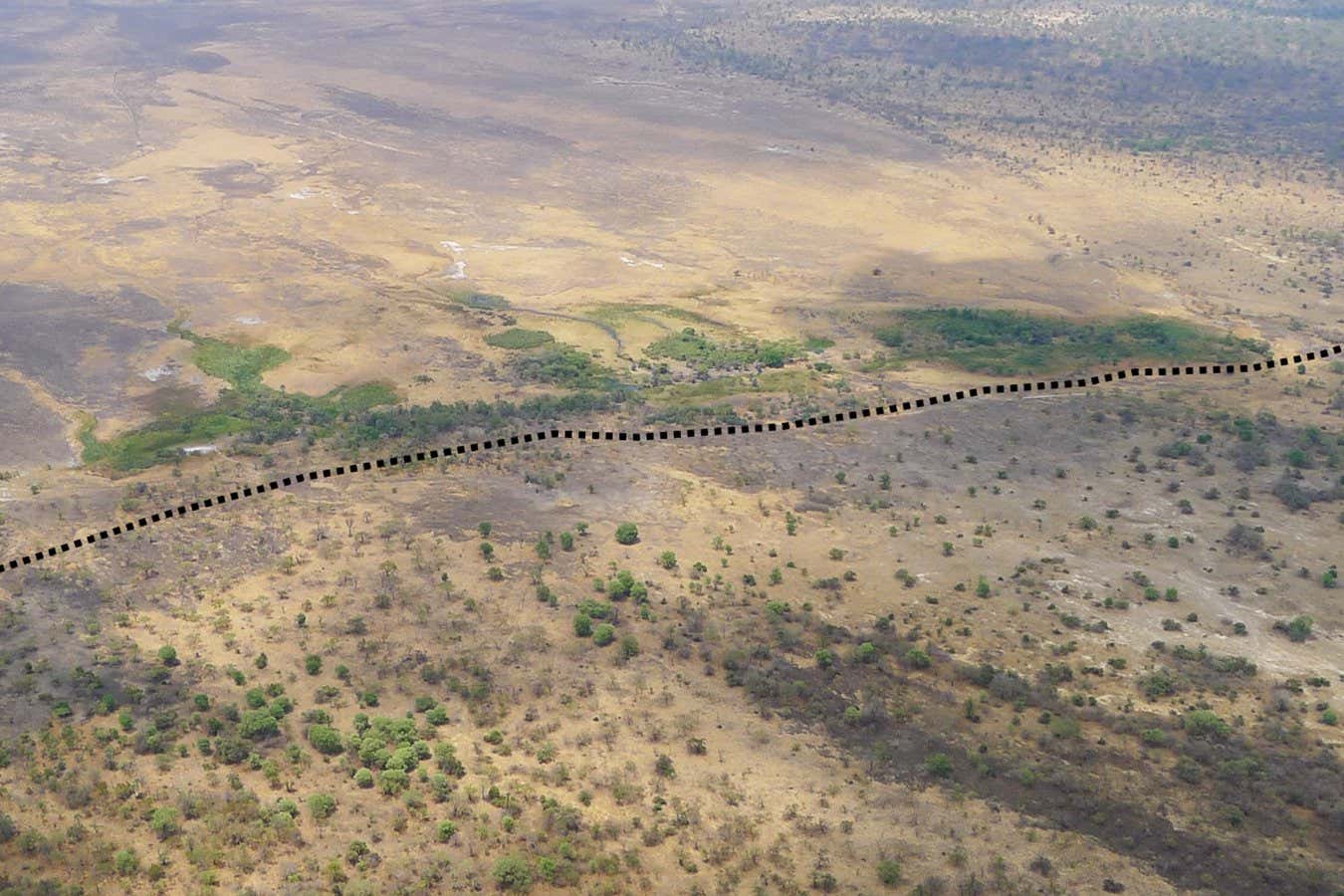
    Aerial view of the Kafue Rift southern boundary fault zone. The hot springs where researchers sampled gases lie in the green thickets

    Michael Daly

    The African continent may have begun tearing itself apart in a new location. Gases emerging from an arc of hot springs in Zambia appear to be coming from deep below Earth’s crust, in a sign that a new tectonic plate boundary could be opening up.

    There are many rift valleys around the world where continents have been pulling apart for tens of millions of years, including the East African Rift valley, which runs from the Red Sea to Mozambique. Over millions of years, rifting can lead to a tectonic plate splitting in two, but it is unusual to find a site where this process may be just beginning, says Rūta Karolytė at the University of Oxford.

    The Kafue Rift in Zambia is part of a 2500-kilometre-long rift zone stretching from Tanzania to Namibia and possibly out into the Atlantic Ocean. Geologists think the area may be showing signs of being in the early stages of forming a new boundary between continental plates, because of the geography, low-gravity anomalies, high sub-surface temperatures and low-level seismicity. But, until now, there has been no geochemical evidence.

    Karolytė and her colleagues have now analysed gas samples collected from five hot springs and three geothermal wells in central Zambia. The team found that helium and carbon isotope ratios in the gases are the same as those that exist deep beneath Earth’s crust, suggesting that fluids from the mantle, up to 190 kilometres below the springs, are making their way to the surface. This implies a tear in the region’s tectonic plates.

    “What our data confirms is that this system is currently ‘awake’ and geologically active,” says Karolytė. “Having an active rift developing doesn’t necessarily mean that in 100 million years you’re going to have an ocean there. But it is a possibility.”

    The earliest stages of continental rifting release gases that have accumulated in the rocks for millions of years. Among these is helium, a critical resource for high-tech industry and medicine. In the Kafue Rift, this process has created concentrations of helium of up to 2.3 per cent in the fluids reaching the surface – high enough that the region is already attracting interest from industry.

    “It’s hard to find these tectonic conditions that are just right to concentrate and release helium in a way that it can be captured,” says Karolytė.

    Patrice Rey at the University of Sydney, Australia, says, despite the absence of active volcanoes and significant seismicity, he agrees there are many signs in the region that the landscape is tectonically active.

    The new geochemical evidence from the hot springs reveals that the Kafue Rift is an early-stage continental rift where mantle fluids rich in primordial helium-3 are rising through faults, he says. “It is reasonable to think that the Kafue Rift may evolve into a plate boundary sometime in the future.”

    Topics:


    Source link

    Share. Facebook Twitter Pinterest LinkedIn Tumblr Email Telegram Copy Link

    Related Posts

    Science

    Less nostalgia, more pain: scientists study 1763 Eurovision songs

    May 13, 2026
    Science

    New Scientist recommends Attenborough documentary Making Life on Earth

    May 13, 2026
    Science

    There has been a sudden increase in the rate of sea level rise

    May 13, 2026
    Science

    Why do particle physicists like spending time in fields?

    May 13, 2026
    Science

    Carbon credits are flawed, but they can still help save forests

    May 12, 2026
    Science

    Can cloud seeding save us from water bankruptcy?

    May 12, 2026
    Editors Picks

    Saudi Arabia, UAE launched covert attacks on Iran as regional war widened: Reports

    May 13, 2026

    The ‘NFL tackle leaders by season’ quiz

    April 18, 2026

    The war on Iran will likely end in American retreat | US-Israel war on Iran

    May 9, 2026

    Videos: Multitasking Robots, Skiing Bipedal Bots, More

    January 31, 2026

    The hidden costs of becoming an expat

    February 15, 2026
    About Us
    About Us

    Welcome to Benjamin Franklin Institute, your premier destination for insightful, engaging, and diverse Political News and Opinions.

    The Benjamin Franklin Institute supports free speech, the U.S. Constitution and political candidates and organizations that promote and protect both of these important features of the American Experiment.

    We are passionate about delivering high-quality, accurate, and engaging content that resonates with our readers. Sign up for our text alerts and email newsletter to stay informed.

    Latest Posts

    The ‘Last first-round QB by NFL team’ quiz

    May 13, 2026

    The Top 10 Franchises in Every Industry in 2026

    May 13, 2026

    Less nostalgia, more pain: scientists study 1763 Eurovision songs

    May 13, 2026

    Subscribe for Updates

    Stay informed by signing up for our free news alerts.

    Paid for by the Benjamin Franklin Institute. Not authorized by any candidate or candidate’s committee.
    • Privacy Policy
    • About us
    • Contact us

    Type above and press Enter to search. Press Esc to cancel.