

Hello readers, I’ve returned from my first tranche of book leave and eager to wade back into the Swamp with you. As my partner, I’m lucky to have with me Jonathan Barth, a senior adviser at the Cambridge Institute for Sustainability Leadership, co-founder of ZOE Institute for Future-Fit Economies and a Brussels expert with a particularly interesting view on Europe today.
The United States celebrated its birthday last week, but my thoughts these days are on Europe. A couple of weeks ago, I attended a CEO conference in Italy, and I was struck (yet again) by how eager investors are to diversify away from the dollar and into euros. That’s not to say they are doing it yet, but we are, I think, at a tipping point moment where this may change.
As Currency Research Associates noted in a recent paper: “Not only are the dollar exposures of [global] pension funds and insurance companies large and excessive at 50 per cent or more, but aggregate country exposures are frightening large,” with Taiwan holding more than 90 per cent of its GDP in dollars, followed by Japan at 60 per cent and Australia and South Korea at 30 per cent.
Diversification at this moment would make a ton of sense, even if Donald Trump weren’t upending the global trading system and calling into question the independence of the US Federal Reserve, which is, I think, the one risk issue that market participants can’t afford to overlook. Without a free Fed, US markets would very quickly correct.
You can of course make the counter case. Last week’s strong US jobs report bolstered the narrative of American exceptionalism and dynamism amid political chaos. And yes, stocks rose off the passing of the “big, beautiful bill,” because equity markets always love tax cuts. But the truth is that serious investors are also very worried about the longer-term debt and deficit picture for the US, as well as political risk and populism.
For all these reasons, the euro has seen some long-term momentum relative to the dollar and may see more if Europe can get its act together and really integrate its capital markets. So far, gold is the world’s second largest reserve asset after the dollar. But, at the CEO conference, I asked 29 global leaders whether they’d rather invest in Eurobonds (if they existed) rather than the US bond market right now, and 18 said yes. To me, this indicates that if Europe could truly recommit to integration, fix its capital markets, and offer investors the scale that they need to diversify, the euro would soar.
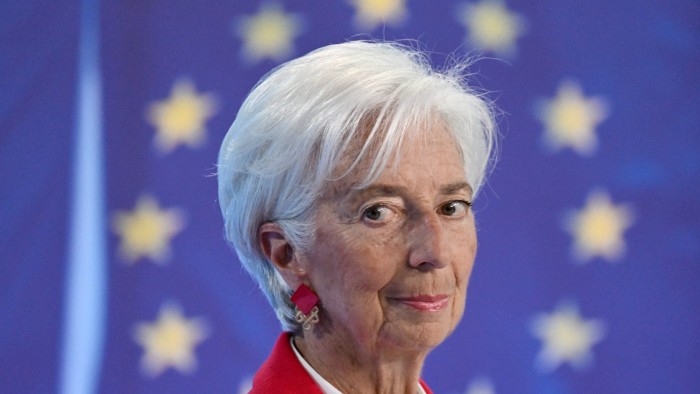
European Central Bank president Christine Lagarde wrote a piece in the FT recently, calling for a “global euro” moment. And European Commission president Ursula von der Leyen has made capital markets integration a key priority in her second term.
So what are the obstacles to making this happen? Politics as usual, of course, inertia, and the normal technocratic hurdles of pulling together 27 member states with 27 different legal and regulatory systems. But Jonathan, you’ve made the case that there is something deeper and more psychological at work here. So tell us, what does Europe need to do to craft a new and better future at what seems to be a very opportune moment?
Recommended reading
-
I thought Ruchir Sharma made some good points about why the US markets have yet to reflect global reality.
-
This very good piece in the Wall Street Journal looks at how deportations in the US rustbelt may kill the economic revival there. Migrants (including my own family) are so much a part of the Midwest’s success — this just guts me.
-
And have a look at my Monday column on why global markets are suffering from a “Rashomon effect” in which investors can interpret the same information in very different ways.
Jonathan Barth replies
Thank you, Rana. Indeed, Europe feels stuck in paralysis clinging desperately to the old mantras of the market-liberal playbook — unfettered free trade, restrictive fiscal policy and a strictly limited approach to industrial strategy. Neither the Draghi report, nor the US Inflation Reduction Act, nor the return of geopolitics and not even the looming second China shock have been able to change that.
Commentators have made sense of today’s paralysis by referring to Antonio Gramsci’s concept of an interregnum — that in-between, where the old world shaped by economic liberalism is dead, but the new one struggles to be born. That particularly applies to Europe today.
The problem with the notion of the interregnum is that — as descriptive as it may be — it offers little guidance for finding a way out of paralysis. When I searched for alternatives, I came across the psychology of grief. Interestingly, our personal experiences of mourning can offer orientation for navigating the interregnum we find ourselves in. I am currently working on a book that explores this in more depth.
In the psychology of grief, there’s the well-known Kübler-Ross model. It divides grieving into five stages: denial, anger, bargaining, depression, and acceptance. I argue there is a sixth: reimagination — a stage we reach once we have let go of the old and begin to shape the new.
Europe is still in the thick of the grieving process — in contrast to the US, where I sense a touch of reimagination. That is because we’re a decade behind you in the US. Europe never experienced a China shock on the same scale. Nor has it undergone a full-scale rightward shift comparable to the one that followed that shock in the US. (On this, I recommend Sander Tordoir and Brad Setser’s recent paper on the second China shock.)
As a result, Europe remains stuck in the early stages of grief: denial, anger and bargaining. I still meet colleagues who deny that economic liberalism has failed to deliver on its promises. Just last week at a conference in Berlin I had to defend industrial policy against the charges of hubris and idealism.
I still hear people say: “if we get cheap solar panels or EVs from China, isn’t that good for consumers?” Concerns about economic security and dependence, the fact that people are not just consumers but workers who find identity and belonging in jobs — all ideas that feel like common sense in the US — are far from constituting a consensus among the leaders of Europe’s democratic centre.
Meanwhile, what Europe is left with is anger. Anger at political elites who broke the market-liberal promise of everlasting material progress. It’s an anger the right knows all too well how to exploit.
Because they’re stuck in denial, Europe’s leaders hesitate to escape anger by stepping into the liberating stage of grief. This would mean acceptance. Acceptance that wealth concentration, financial capital and Ricardian ideas of trade specialisation all make democracies susceptible to blackmail. Acceptance that the flexibility markets demand — retraining, relocating, reinventing your identity — stands in stark contrast to people’s longing for stability and security.
Instead, Europe’s political class remain trapped in halfhearted compromises that fail to do justice to today’s new order, and instead cling to the ideas of the market-liberal past — in what, in the language of grief, is called bargaining. Yes, the discussions you mention — the capital markets union or deeper single market integration — may be progressing. But Europe’s survival depends on the interplay of capital markets with fiscal and industrial policy. (See, for example, ZOE Institute’s private finance toolbox.) And here we mustn’t fool ourselves. Most of what we see is symbolic politics rooted in market orthodoxy.
Take Germany’s new fiscal laxity with its €1tn investment package. From the outside it looks like a paradigm shift. But if we look closer it targets infrastructure and defence, not industrial renewal. And Germany is an outlier. European fiscal rules are still restrictive for investment. Relaxations of fiscal spending are limited to defence. In consequence, industrial initiatives like the European Clean Industrial Deal lack fiscal backing. Even Europe’s new state aid rules from last month change little.
My hope? That rising pressures — the looming China shock and the continued surge of the right — will finally force leaders from both left and right to recognise that this cannot go on. And that they don’t then get stuck in resignation — a form of the fourth stage of grief, depression. Political leaders should remember that Europe has successfully navigated paradigm shifts before, and that changes aren’t a threat, but an opportunity to learn and do better.
Then, perhaps, Europe will at last be ready. Ready to respond to this epochal rupture with a true capital markets union, with industrial policy and co-ordinated monetary and fiscal strategy, and its own geopolitical vision; ready to pull in the capital that you are talking about using the post-neoliberal playbook. But first it must complete the five stages of grieving for economic liberalism, before it can start to reimagine.
Your feedback
We’d love to hear from you. You can email the team on swampnotes@ft.com, contact Rana on rana.foroohar@ft.com, and follow her on X at @RanaForoohar. We may feature an excerpt of your response in the next newsletter