
Close Menu
    Trending
    • Here’s What It Really Takes to Support Other Entrepreneurs
    • Resuscitated human retinas respond to light 10 hours after death
    • Map: 3.5-Magnitude Earthquake Shakes Central California
    • Ukraine & Zelensky’s Ultimate Corruption
    • John Stamos Reveals Why He Will ‘Never’ Be On ‘DWTS’
    • Nominations open in the contest to be UK leader, with Andy Burnham likely the only candidate
    • Former US Olympian pleads not guilty in DC reflecting pool vandalism case | Donald Trump News
    • Insider reveals LeBron James’ potential decision date
    Benjamin Franklin Institute
    Thursday, July 9
    • Home
    • Politics
    • Business
    • Science
    • Technology
    • Arts & Entertainment
    • International
    Benjamin Franklin Institute
    Home»Science»A worm that lived half a billion years ago preferred turning right
    Science

    A worm that lived half a billion years ago preferred turning right

    Team_Benjamin Franklin InstituteBy Team_Benjamin Franklin InstituteJuly 9, 2026No Comments3 Mins Read
    Share Facebook Twitter Pinterest Copy Link LinkedIn Tumblr Email VKontakte Telegram
    Share
    Facebook Twitter Pinterest Email Copy Link


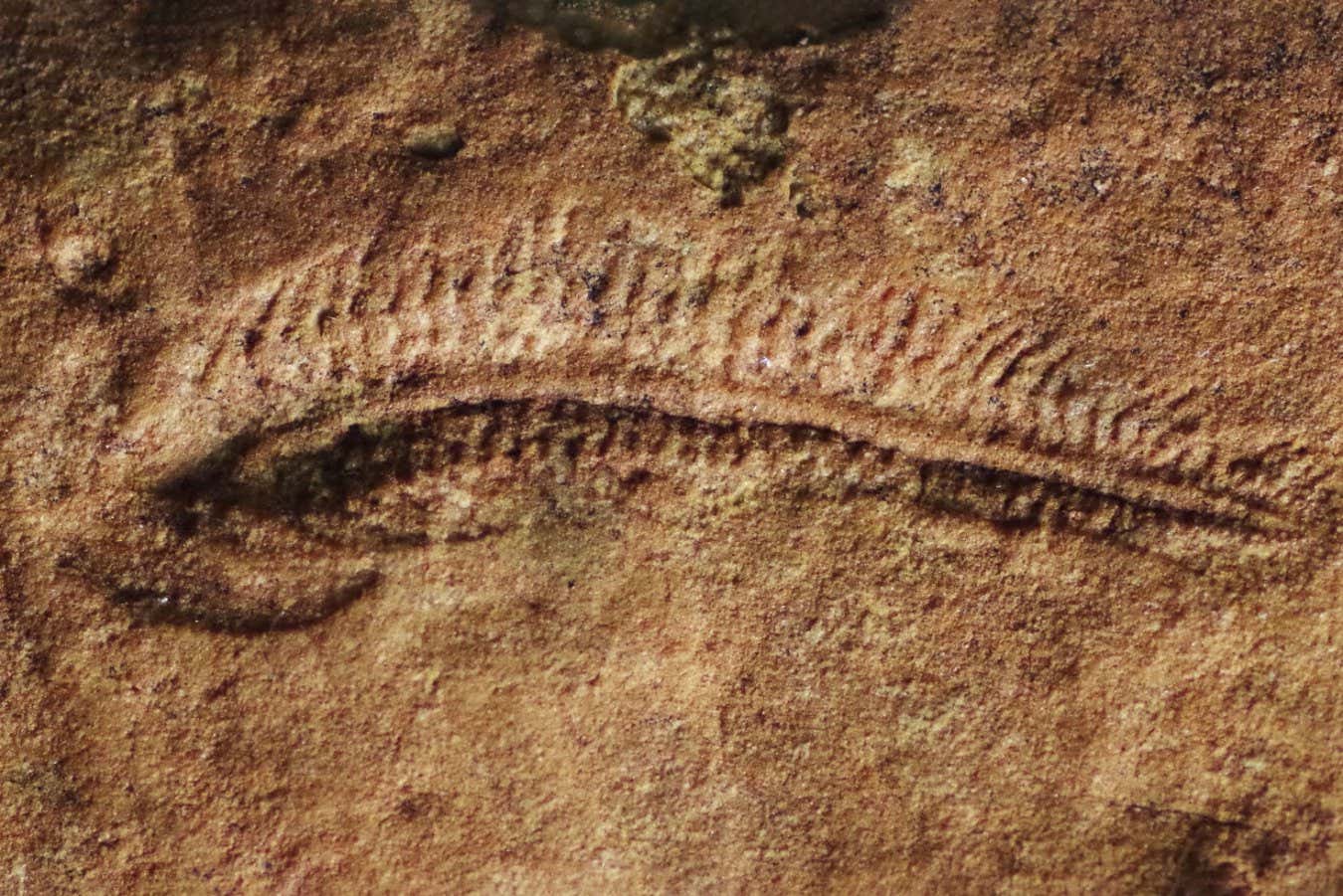
    Spriggina floundersi worms that bent to the right are preserved as fossils that bend to the left

    Scott Evans/AMNH

    A 555-million-year-old worm had a predilection for turning right, possibly indicating the oldest known example of handedness.

    Although these worms lacked limbs and so couldn’t be considered left- or right-handed in the way that we understand, the development of a tendency to favour one side over another is evidence of an advanced nervous system.

    It remains a feature of free-living mobile life today, but until this discovery, it wasn’t thought to have emerged until the Cambrian Period, which began around 541 million years ago.

    Scott Evans at the American Museum of Natural History in New York and his colleagues analysed 100 fossil specimens of a small flatworm-like creature, Spriggina floundersi, collected in South Australia over recent decades.

    These animals lived during the Ediacaran Period, when multicellular life first became widespread. It preceded the Cambrian explosion, when animal life diversified dramatically and many groups of animals first appeared.

    Spriggina lived in what was, half a billion years ago, a shallow ocean and is thought to have foraged on or close to the seafloor, moving by wriggling to the left or right.

    “We have around 50 specimens of Spriggina that are clearly bent,” says Evans. Twice as many of the fossilised worms are bent to the left than to the right, he says. This means the creature itself bent to the right, as the specimens are mirror-image impressions of the animals, made when storms buried them in sand.

    “This appears to be statistically significant and matches what biologists find when they study handedness in different animals today,” says Evans. “Some specimens have multiple bends to both the right and left, suggesting that they all could bend both ways, which makes sense if you don’t want to be stuck moving in a circle.”

    While the majority seem to demonstrate right-handedness, it is hard to tell if any were left-handed, he says. “I imagine it’s like taking a picture of 100 people waving with one hand today. You would likely be able to count that more people are waving with their right hand, but you wouldn’t be able to tell who is right- or left-handed.”

    Discoveries like this demonstrate that many foundational characteristics that are common to a variety of animals today, such as the ability to move around, bilateral symmetry and handedness, evolved in the Ediacaran, says Evans.

    In the Cambrian, organisms built on that foundation to become more complex, for example adding legs to move more efficiently, becoming “less alien and more like the major groups of animals we know today”, says Evans. “This is cool because it suggests that, while the Cambrian was an amazing time in animal evolution, those organisms didn’t just come out of nowhere: they built on the foundations established in the Ediacaran.”

    “The presence of handedness in any kind of functional asymmetry, really deep into the fossil record, gives us important and interesting information about how these behaviours have evolved and how deeply in time they emerged,” says Russell Bicknell at Flinders University in Adelaide, Australia.

    Topics:


    Source link

    Share. Facebook Twitter Pinterest LinkedIn Tumblr Email Telegram Copy Link

    Related Posts

    Science

    Resuscitated human retinas respond to light 10 hours after death

    July 9, 2026
    Science

    The 4 best science-fiction shows of 2026 so far

    July 9, 2026
    Science

    A surprisingly detailed look at the physics of a lugworm’s poop

    July 9, 2026
    Science

    The allergy culprit histamine also boosts our memory

    July 9, 2026
    Science

    Does time come from the entire universe running computations?

    July 9, 2026
    Science

    Seeding clouds with seawater could prevent a super El Niño

    July 8, 2026
    Editors Picks

    Don’t Risk Your $2,000 Laptop—Travel With This $324 MacBook Pro Instead

    July 3, 2025

    Early humans may have begun butchering elephants 1.8 million years ago

    January 7, 2026

    Who is Mojtaba Khamenei, a contender for Iran’s leadership amid war? | Israel-Iran conflict News

    March 4, 2026

    Over 400,000 Russians killed, wounded for 0.8 percent of Ukraine in 2025 | Russia-Ukraine war News

    January 2, 2026

    US says BYD, Baidu, Alibaba and other tech giants are aiding China’s military

    June 9, 2026
    About Us
    About Us

    Welcome to Benjamin Franklin Institute, your premier destination for insightful, engaging, and diverse Political News and Opinions.

    The Benjamin Franklin Institute supports free speech, the U.S. Constitution and political candidates and organizations that promote and protect both of these important features of the American Experiment.

    We are passionate about delivering high-quality, accurate, and engaging content that resonates with our readers. Sign up for our text alerts and email newsletter to stay informed.

    Latest Posts

    Here’s What It Really Takes to Support Other Entrepreneurs

    July 9, 2026

    Resuscitated human retinas respond to light 10 hours after death

    July 9, 2026

    Map: 3.5-Magnitude Earthquake Shakes Central California

    July 9, 2026

    Subscribe for Updates

    Stay informed by signing up for our free news alerts.

    Paid for by the Benjamin Franklin Institute. Not authorized by any candidate or candidate’s committee.
    • Privacy Policy
    • About us
    • Contact us

    Type above and press Enter to search. Press Esc to cancel.