

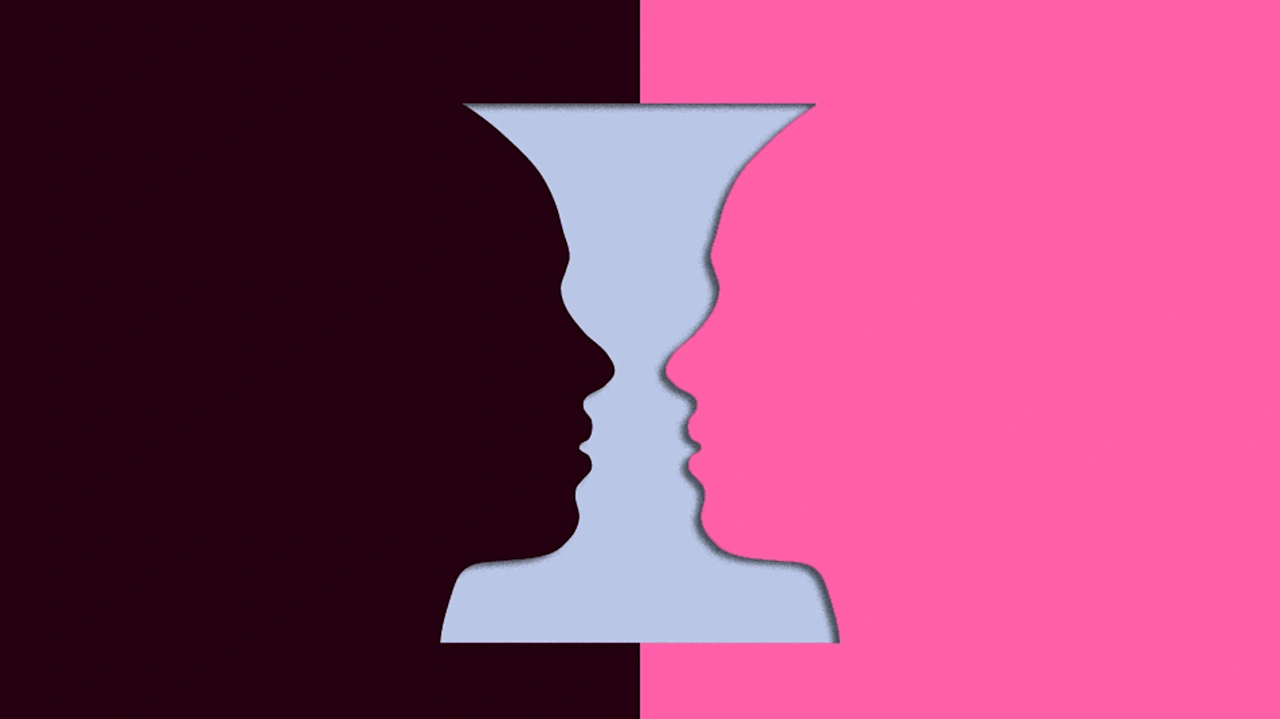
Below, J. Eric Oliver shares five key insights from his new book, How To Know Your Self: The Art & Science of Discovering Who You Really Are.
Eric has been teaching at the University of Chicago for 20 years as a professor of political science. He has published six books and numerous scholarly articles on topics ranging from the “obesity epidemic” to the sources of conspiratorial thinking in American politics. He is also the host of the Knowing podcast.
What’s the big idea?
We suffer because we mistake the fluid process of being for a fixed identity. Flourishing begins when we learn to bring into alignment and balance the forces that shape the self.
Listen to the audio version of this Book Bite—read by Eric himself—in the Next Big Idea App.
1. You are not a noun. You are a verb.
For most of my life, I thought of myself as a fixed entity: This is me. These are my traits. This is who I am. I assumed I was essentially that same person who loved sugary cereal at age 8, fried chicken at 12, and tequila at 21, and who still loves those things now, even if my stomach disagrees. But this is an illusion. Neuroscience, physics, and Buddhism all agree: There is nothing fixed about us—not even close.
Instead, we are processes. We are an ever-shifting swirl of molecules, emotions, passing thoughts, and the lingering echo of every person we’ve ever loved, disliked, or wanted to impress. The self is a process. More specifically, your self is all the ways the energies that animate you as a living being negotiate with reality.
Unfortunately, like most negotiations in my life, I accepted the contract without reading the fine print. And so, much of myself is caught up in painful and unproductive feeling states. But the good news is that once you see yourself as a verb, not a noun, everything changes. You realize you are not stuck, even if your mind insists you are. Instead, you are continually unfolding and can be redirected in more positive ways. We are not broken things, but misaligned processes.
2. Our purpose in life is balance.
When people ask about my “purpose,” I usually mumble something about being a better parent, writing a good book, or trying to make the world a better place. But the reality is that none of these activities really defines my life. They are disguises of what my life’s true purpose is: Optimizing this self.
This notion is not as shallow or narcissistic as it first sounds. It starts with a key fact: At our core, we are living energy systems. Everything that we know as ourselves—our identities, thoughts, emotions, and so on—are ways this living energy system within keeps going. The self is what keeps the flame of life alight, preferably without burning the house down in the process.
This means balancing two basic imperatives of the self:
- Order: all the structures that organize our lives, from our cells to habits to calendars.
- Vitality: the energy that animates us—what compels us to sing and dance or eat that second slice of cake.
This is where balance becomes vital. A self with too much order is stifled and diminished, but a self with too much vitality is wasteful and incoherent.
The secret to living well is finding the right balance between Order and Vitality at all layers of your being. Your moods, thoughts, and “good” or “bad” days all emerge from this balancing act. To optimize your life, you need to see and fix the things that throw you out of alignment.
3. Thoughts do not define you.
I used to believe that my thoughts were everything. Every anxious rumination. Every petty judgment. Every catastrophic prediction about the future—all hard truths.
But this was a delusion. Thoughts are more like mental weather that rolls in and rolls out. Your thoughts are not you. They are mental emissions—quick guesses that your brain makes to keep you eating better or stop you from walking into traffic.
“When you step back and watch your thoughts without always believing them, you gain a bit of freedom.”
Once I realized this, life became a lot lighter. I learned to ask myself, “Is this thought helping anything?” And a lot of the time, the answer was no. Sure, I might still wake up at 3 a.m., but I’m no longer convinced that the world was ending because I hadn’t replied to an email.
When you step back and watch your thoughts without always believing them, you gain a bit of freedom. A little spaciousness. A moment of, “Oh, look. There’s my anxiety talking again. How cute.” It’s surprisingly life-changing.
4. We are social beings—down to our cells.
Inside each of your cells live many tiny creatures called mitochondria. Technically, they are not the same species as you. They moved into our cells a billion years ago and never left. They also reveal a profound truth: We are not a singular person, but a collection of living beings.
Our very essence is a social phenomenon. We live because of cooperation. We flourish because of connection. Our selves are not built in isolation. They grow in language, in culture, in relationships, and especially in the messy ones that involve stressful holidays, unmet expectations, or the occasional handwritten apology.
I used to think I could solve myself privately, through solitary contemplation and discipline. Now I know better. The way I really grow as a person is through my relationships with others. It’s where I find my sticking points, meaning the places where my self-processes are misaligned.
“As a social being, love is not optional.”
If you want to thrive, you must do it in community, whatever that means for you. As a social being, love is not optional. Friendship is not optional. Intimacy is not optional. Even conflict, when done kindly, can be a tool for growth.
This is humbling, but also oddly comforting. We don’t have to figure everything out alone. In fact, we shouldn’t even try to. Balance is something we figure out together.
5. Living well means recognizing your imbalances, and letting them go.
Most of us secretly believe in a moment of transcendence:
- If I get the perfect job …
- If the kitchen remodel ever finishes …
- If my partner would just load the dishwasher correctly …
… then I will be calm, wise, and fulfilled. But transcendence doesn’t work like that. Living well is both simpler and more difficult than we usually believe.
First, you have to see your imbalances—the places where you are rigid, afraid, lonely, or exhausted. Recognizing them can be difficult because your mind will keep insisting that these reactions are essential to your survival. But most of the time, they are not. They are merely habits that we keep around even if they aren’t serving us well. Once we can see our thoughts and feelings this way, they no longer dominate us.
But then comes the harder part: letting them go. Not by force, but by curiosity, courage, and care.
Three things help:
- Tend to your basics.
Sleep, relationships, food, and meaningful work are all essential. You can’t build a thriving self on a collapsing foundation. To find your optimal balance, you first need to locate the right footing. This means taking care of your body’s basic needs.
- Direct your attention.
Wherever your attention goes, your experience follows. We need to find ways to control our minds better. Meditation, journaling, and yoga are useful tools for doing this. They all reveal our mental machinery and help cultivate mindfulness.
- Engage your emotions with gentleness.
Our emotions aren’t verdicts. They’re signals. If we treat them as teachers instead of emergencies, they lose their power to dominate us. When you can sit with your feelings and muster some calm detachment, a radical change happens. What emerges is not a flawless, transcendent self, but a softer, wiser relationship with the person you already are.
Enjoy our full library of Book Bites—read by the authors!—in the Next Big Idea app.
This article originally appeared in Next Big Idea Club magazine and is reprinted with permission.