

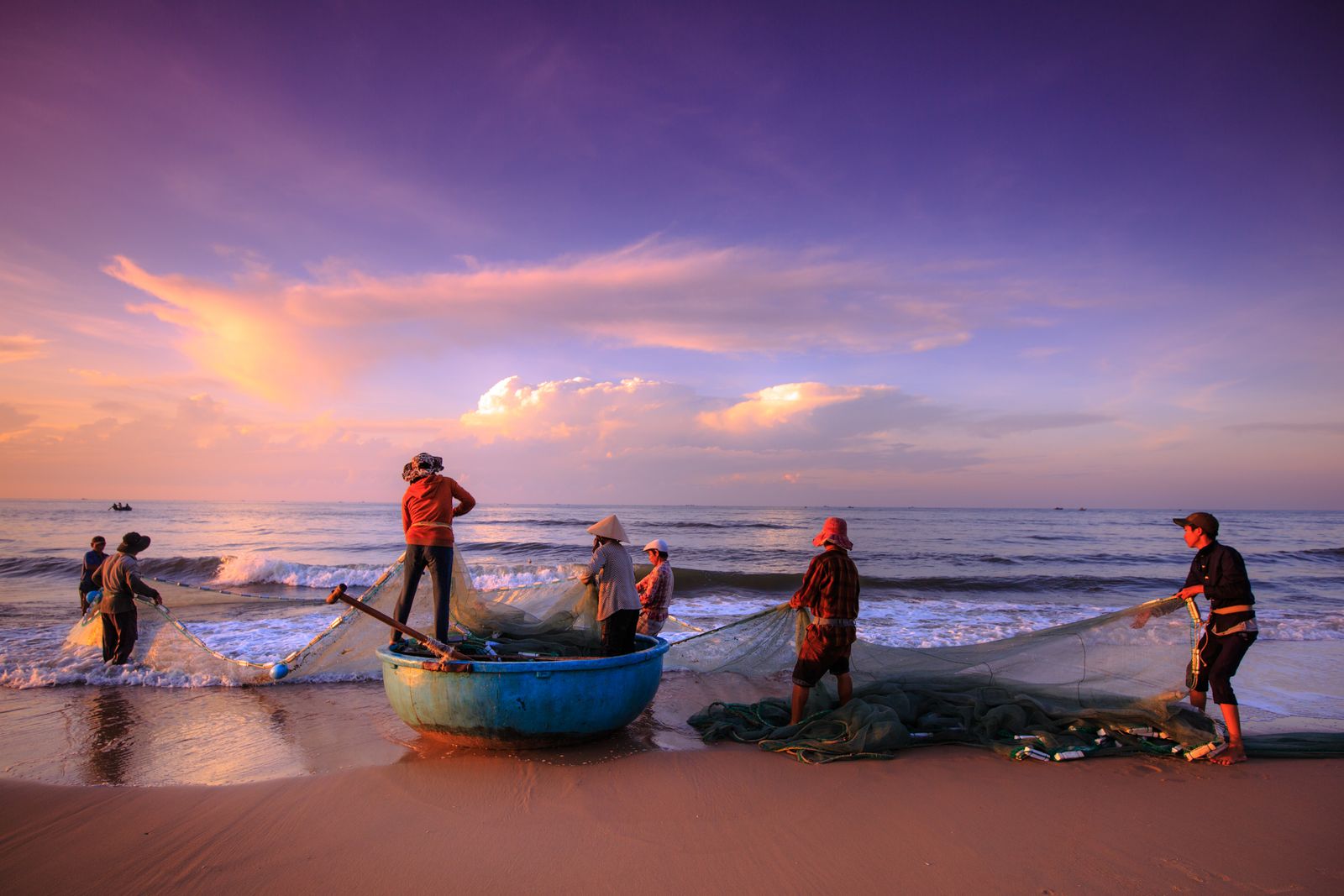
The United Nations Environment Programme has introduced a framework intended to solve one of the most persistent problems in ocean policy: the government departments responsible for fisheries, tourism, shipping, energy, finance, pollution, and coastal development often operate as though they are managing separate worlds.
They are not.
A fishing policy can affect food security, tourism, biodiversity, and port activity. An offshore wind project can alter marine habitats, shipping routes, coastal employment, and access to traditional fishing grounds. Pollution produced far inland can eventually determine whether a reef, beach, or fishery remains economically viable.
UNEP’s new Sustainable Blue Economy Transition Framework is an attempt to make governments treat those connections as the starting point rather than an afterthought.
The problem is fragmentation
Ocean policy is frequently divided between ministries and agencies with different mandates. Fisheries officials manage catch limits and fishing licenses. Energy departments oversee offshore projects. Transport authorities handle ports and shipping. Tourism agencies promote coastal development. Environment ministries are often left to manage the ecological consequences.
UNEP identifies that fragmentation as a central obstacle to building a sustainable blue economy. Separate departments can produce overlapping or conflicting policies, especially when economic development plans are created without accounting for the health of the ecosystems on which those plans depend.
The framework therefore promotes a whole-of-government approach to ocean, coastal, and inland water systems. Its purpose is not to hand every country the same policy package. It is to help governments examine their existing institutions, identify gaps, agree on shared goals, and coordinate decisions that would otherwise be made in isolation.
What the framework actually contains
UNEP describes four broad goals: protecting and restoring ecosystems, promoting equity and inclusion, strengthening climate resilience, and reducing pollution and waste through more circular economic systems.
Those goals are deliberately broad. The framework is not a binding treaty, a global investment fund, or a detailed set of rules for fisheries and energy developers. It is a planning tool that countries can adapt to their own economies, institutions, and environmental conditions.
One of its practical components is a Rapid Readiness Assessment. Governments can use the assessment to examine the condition of ecosystems, the structure of the local ocean economy, the communities that depend on it, and the policies already in place.
That initial diagnosis is meant to answer basic but politically difficult questions. Which ecosystems are deteriorating? Which industries benefit from ocean resources? Who carries the environmental cost? Which communities have a voice in decisions, and which are routinely excluded?
Why fisheries and offshore energy end up in the same conversation
The framework does not prescribe a universal fisheries policy or a standard offshore energy contract. Its significance lies in asking governments to examine how those sectors interact.
Offshore renewable energy can support the transition away from fossil fuels, but turbines, cables, ports, and service zones also occupy marine space. Fisheries depend on access to many of the same waters. Tourism may rely on the landscapes and wildlife that industrial development could alter. Coastal communities may welcome new jobs while resisting projects that restrict traditional livelihoods.
Under a fragmented system, each decision may appear reasonable within the boundaries of one department. The combined result can still be environmentally destructive or socially unfair.
UNEP argues that countries should instead use tools such as marine spatial planning, coastal management, monitoring systems, and shared investment strategies to evaluate those trade-offs before projects are approved.
The economic argument is central
The framework does not treat ecosystem protection as separate from economic policy. Its premise is that healthy marine and coastal ecosystems are productive assets that support food security, employment, tourism, climate resilience, and long-term public revenue.
That framing matters particularly for developing coastal states and small island economies. Many possess valuable fisheries, reefs, beaches, ports, and renewable energy potential while lacking the institutional capacity or investment needed to manage them sustainably.
A World Bank assessment of Comoros, for example, found substantial potential in fisheries and marine tourism but also identified weak infrastructure, limited market access, outdated practices, and governance constraints.
That is the kind of development problem the UNEP framework is designed to help governments map. Marine wealth does not automatically become broad-based prosperity. Without capable institutions, it can instead produce depleted stocks, poorly planned construction, unequal access, and revenue that leaves coastal communities without lasting benefits.
Finance has to follow the plan
UNEP also argues that ocean finance is fragmented. International funds, public budgets, development institutions, philanthropic organizations, and private investors may support individual projects without working toward a shared national strategy.
The framework encourages countries to connect policy planning with investment planning. The goal is to direct public and private capital toward projects that strengthen ecosystems and improve social outcomes rather than financing economic activity that quietly undermines the resource base on which it relies.
That can include nature-based projects such as mangrove, wetland, and coral reef restoration. These ecosystems can support biodiversity, reduce disaster risk, protect coastlines, and sustain food and tourism economies at the same time.
UNEP’s broader sustainable blue economy initiative also connects the framework with finance principles intended to help banks, insurers, and investors evaluate ocean-related activity more consistently.
Equity is not an optional extra
Another important feature is the emphasis on who participates in decision-making and who receives the benefits.
Women, Indigenous Peoples, small-scale fishers, local communities, and other groups whose livelihoods are directly tied to marine ecosystems are often underrepresented when governments approve large infrastructure, tourism, conservation, or energy projects.
The framework asks countries to build inclusion and benefit-sharing into their planning rather than attempting to address opposition after decisions have already been made.
That requirement may be one of the hardest parts to implement. Coordinating ministries is difficult enough. Redistributing influence between government agencies, investors, industrial operators, and coastal communities is a more politically demanding task.
What the framework cannot do
The document cannot force governments to cooperate. It cannot guarantee that ministries will share data, that investors will accept stricter environmental conditions, or that politically connected industries will surrender privileged access to marine resources.
It also cannot remove the physical pressure created by warming seas, acidification, pollution, and biodiversity loss. Better planning may reduce damage and improve resilience, but it cannot preserve every reef, wetland, fish stock, or coastline under worsening climate conditions.
The framework is therefore best understood as institutional infrastructure. It gives governments a method for assessing where they are, deciding where they want to go, and coordinating the agencies and investments needed to move in that direction.
The real test comes after the assessment
UNEP says the framework is intended to support tailored national and regional pathways rather than impose a single global model. That flexibility makes it usable across very different economies, but it also allows governments to adopt the language of coordination without making difficult policy changes.
The measure of success will not be how many countries publish blue economy strategies. It will be whether fisheries departments, energy regulators, finance ministries, tourism authorities, scientists, investors, and coastal communities actually make decisions from the same map.
The ocean connects their choices whether governments acknowledge those connections or not. The framework’s central argument is that public institutions should finally begin behaving as though they do.