

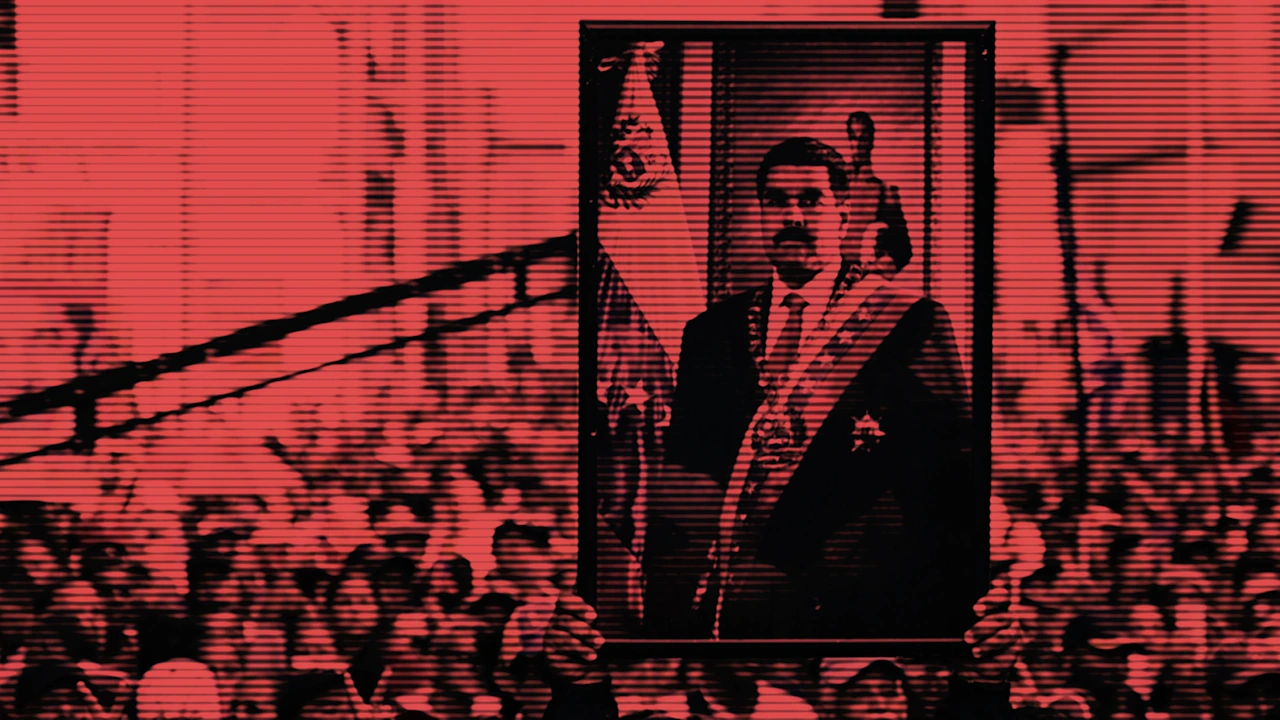
In moments of political chaos, deepfakes and AI-generated content can thrive. Case in point: the online reaction to the US government’s shocking operation in Venezuela over the weekend, which included multiple airstrikes and a clandestine mission that ended with the capture of the country’s president, Nicolás Maduro, and his wife. They were soon charged with narcoterrorism, along with other crimes, and they’re currently being held at a federal prison in New York.
Right now, the facts of the extraordinary operation are still coming to light, and the future of Venezuela is incredibly unclear. President Donald Trump says the U.S. government plans to “run” the country. Secretary of State Marco Rubio has indicated that, no, America isn’t going to do that, and that the now-sworn-in former vice president, Delcy Rodriguez will lead instead. Others are still calling for opposition leaders María Corina Machado and Edmundo Gonalzez to take charge.
It’s in moments like this that deepfakes, disinformation campaigns, and even AI-generated memes, can pick up traction. When the truth, or the future, isn’t yet obvious, generative artificial intelligence allows people to render content that answers the as-yet-unanswered questions, filling in the blanks with what they might want to be true.
We’ve already seen AI videos about what’s going on in Venezuela. Some are meme-y depictions of Maduro handcuffed on a military plane, but some could be confused for actual footage. While a large number of Venezuelans did come out to celebrate Maduro’s capture, videos displaying AI-generated crowds have also popped up, including one that apparently tricked X CEO Elon Musk.
At least anecdotally, deepfake content related to Venezuela has spiked in recent days, says Ben Colman, the cofounder and CEO of Reality Defender, a firm that tracks deepfakes. Those narratives aren’t tied to any movement and “run the gamut from nationalist to anti-government, pro-Venezuela, pro-US, pro-unity, anti-globalization, and everything in between,” he says.
“The difference between this event and events from even a few months ago is that image models have gotten so good in recent days that the most astute fact-checkers, media verification experts, and experts in our field are unable to manually verify many of them by pointing to specific aspects of the image as an indicator for validity or lack thereof,” Colman explains. “That battle (of manual, visual verification) is pretty much lost.”
OpenAI told Fast Company that it’s monitoring how Venezuela is playing out across its products and says it will take action where it sees violations of its usage policies.
The State Department’s Global Engagement Center, a federal outfit established to monitor disinformation campaigns aboard, would have previously tracked the situation, a former employee says.
For instance, within the Russian war in Ukraine, the State Department saw deepfakes of leaders trying to convince soldiers to lay down their arms, and fake narratives about additional entrants into the war. During political chaos, it’s common for online actors to try to disincentivize opposing factions, the person adds. That center was later shut down, after Republicans accused the outfit of censoring Americans.
The State Department did not respond to a request for comment by time of publication.
‘Accelerants’
Political deepfakes and AI-generated content are now commonplace. A few years ago, AI-generated TV anchors spreading pro-government talking points, seemingly intended to promote the idea that Venezuela’s economy and security were generally good went viral across the country. In 2024, a party affiliated with former president of South Africa, Jacob Zuma, shared a deepfake video featuring an AI-generated Donald Trump endorsing their platform (that was far from the only example in the country). As even the recent New York City mayoral election showed, AI is often deployed during tense campaign seasons.
The Knight First Amendment Institute, which analyzed the use of AI in elections back in 2024, found that many deployments of AI, especially during election time, aren’t necessarily meant to deceive—and that misinformation isn’t always created from AI. The problem isn’t just that it’s easy to make disinformation with AI, but that people are open to ingesting disinformation. In other words, there’s demand for this kind of content.
“Deepfakes in this context aren’t just misinformation, they are accelerants,” Emmanuelle Saliba, chief investigative officer at GetReal Security, another firm that tracks deepfakes, told Fast Company. “While some of the fabricated content we’ve seen circulating is created to feed meme culture, some of it has been created and disseminated to confuse and destabilize people during an already volatile climate. Trust is hanging by a thread.”