
Close Menu
    Trending
    • When is London Marathon 2026? Start time and how to watch race for FREE
    • Pentagon Requests $54 Billion For AI War
    • Clavicular Hit With New YouTube Crackdown
    • Beijing’s new supply chain rules deepen concerns for US firms in China
    • India denounces ‘hellhole’ remark shared by Trump | Donald Trump News
    • New photos of Mike Vrabel and Dianna Russini emerge
    • AI search demands a new audience playbook
    • How do earthquakes end? A seismic ‘stop sign’ could help predict earthquake risk
    Benjamin Franklin Institute
    Friday, April 24
    • Home
    • Politics
    • Business
    • Science
    • Technology
    • Arts & Entertainment
    • International
    Benjamin Franklin Institute
    Home»Science»The most stunning pictures from Artemis II’s flyby of the moon
    Science

    The most stunning pictures from Artemis II’s flyby of the moon

    Team_Benjamin Franklin InstituteBy Team_Benjamin Franklin InstituteApril 8, 2026No Comments3 Mins Read
    Share Facebook Twitter Pinterest Copy Link LinkedIn Tumblr Email VKontakte Telegram
    Share
    Facebook Twitter Pinterest Email Copy Link


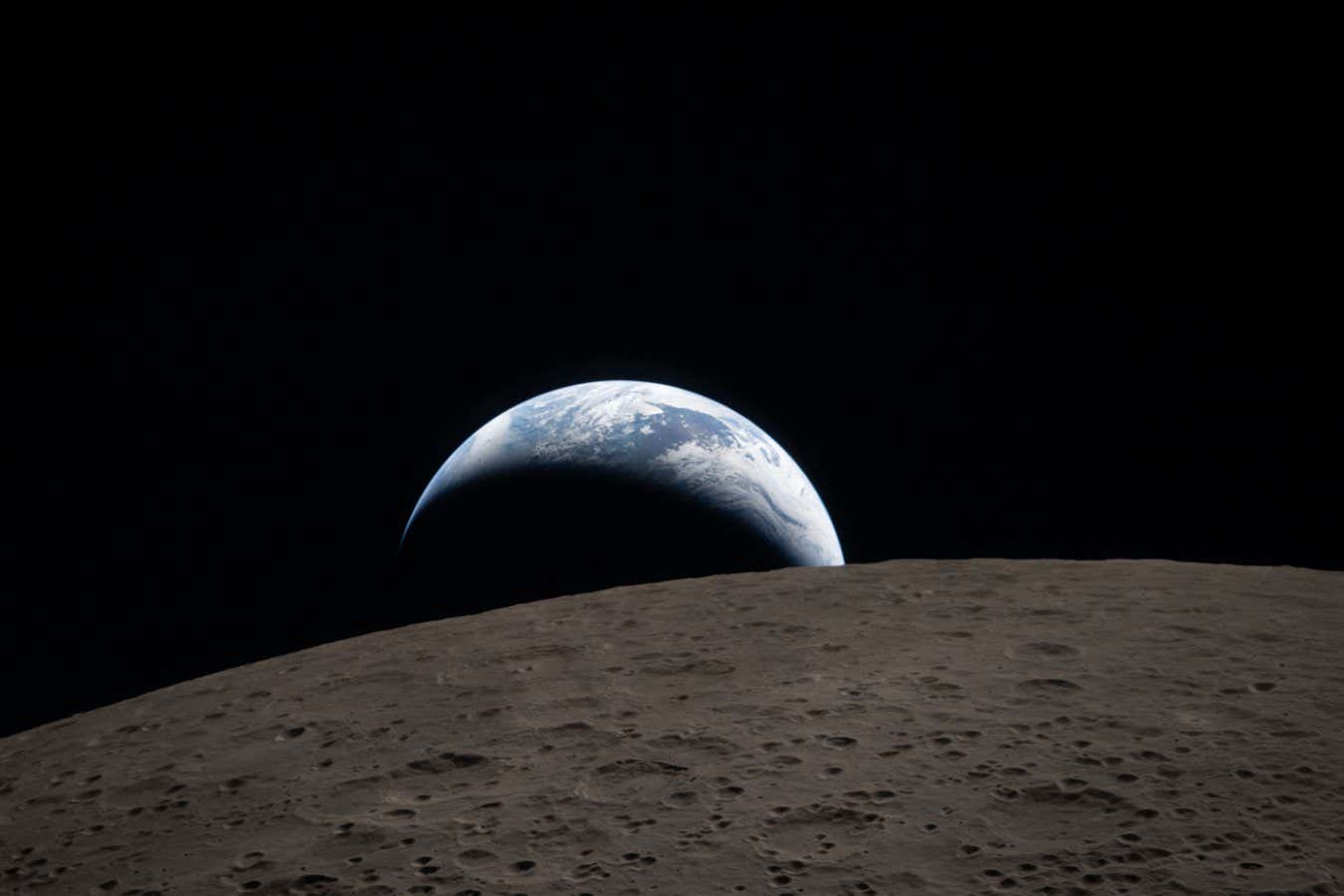
    On 6 April, the astronauts of NASA’s Artemis II mission flew in a loop around the far side of the moon. They travelled more than 406,700 kilometres from Earth, further than any humans have travelled before.

    The four crew members – Reid Wiseman, Christina Koch, Victor Glover and Jeremy Hansen – alternated shifts at the Orion capsule’s windows looking out at Earth and the moon (above). The reflection of sunlight off Earth’s surface, called earthshine, was so bright that they covered one of the windows with a spare shirt.

    As they passed behind the moon, the astronauts were treated to a view of areas that had never before been seen by human eyes, such as the entirety of a crater called Orientale basin (below). The dark patch at the centre of the crater is dried lava from an eruptions billions of years ago. The astronauts proposed new names for two smaller craters near Orientale: Integrity, after their spacecraft, and Carroll, after Wiseman’s late wife.

    Over the course of the mission, the phases of both Earth and the moon changed rapidly from the perspective of the spacecraft. “The moon is a gibbous and the Earth is a crescent,” Hansen said at one point. When Orion started to circle to the moon’s far side, the crescent Earth set behind the moon (below).

    Glover expressed a particular fascination with the moon’s terminator, the line between day and night. At that line, the sunlight hits the ground at an acute angle that casts long shadows, accentuating the terrain and revealing details that wouldn’t be visible under full illumination (below). “There is just so much magic in the terminator – the islands of light, the valleys that look like black holes [where] you’d fall straight to the centre of the moon if you stepped in some of those. It’s just so visually captivating,” he said.

    While on the far side, the astronauts could not communicate with mission control on Earth, but they continued taking pictures and dictating notes into voice recorders. At one point, they witnessed a unique solar eclipse that lasted nearly an hour (below). The sun was hidden entirely behind the moon, while the side of the moon facing Earth remained illuminated by earthshine.

    Now, their flyby a success, the astronauts are on their way back to Earth. They are expected to arrive on 10 April, when Orion will splash down off the coast of California.

    Topics:


    Source link

    Share. Facebook Twitter Pinterest LinkedIn Tumblr Email Telegram Copy Link

    Related Posts

    Science

    How do earthquakes end? A seismic ‘stop sign’ could help predict earthquake risk

    April 24, 2026
    Science

    ‘Kraken’ fossils show enormous, intelligent octopuses were top predators in Cretaceous seas

    April 24, 2026
    Science

    Largest ever octopus was great white shark of invertebrate predators

    April 24, 2026
    Science

    Do you need to worry about Mythos, Anthropic’s computer-hacking AI?

    April 23, 2026
    Science

    How many dachshunds would it take to get to the moon?

    April 23, 2026
    Science

    The Age Code review: Can you slow ageing with your diet? A new book gives it a go

    April 23, 2026
    Editors Picks

    Ole Miss doesn’t need Lane Kiffin to win as Rebels stun Georgia

    January 2, 2026

    What is a galaxy? That’s a surprisingly difficult question to answer

    March 15, 2026

    Trump vows tariffs on eight European nations over Greenland

    January 18, 2026

    Wanted: Human experts to help train AI

    January 13, 2026

    Understanding Domestic Vs Global – The Perfect Storm

    January 25, 2026
    About Us
    About Us

    Welcome to Benjamin Franklin Institute, your premier destination for insightful, engaging, and diverse Political News and Opinions.

    The Benjamin Franklin Institute supports free speech, the U.S. Constitution and political candidates and organizations that promote and protect both of these important features of the American Experiment.

    We are passionate about delivering high-quality, accurate, and engaging content that resonates with our readers. Sign up for our text alerts and email newsletter to stay informed.

    Latest Posts

    When is London Marathon 2026? Start time and how to watch race for FREE

    April 24, 2026

    Pentagon Requests $54 Billion For AI War

    April 24, 2026

    Clavicular Hit With New YouTube Crackdown

    April 24, 2026

    Subscribe for Updates

    Stay informed by signing up for our free news alerts.

    Paid for by the Benjamin Franklin Institute. Not authorized by any candidate or candidate’s committee.
    • Privacy Policy
    • About us
    • Contact us

    Type above and press Enter to search. Press Esc to cancel.