
Close Menu
    Trending
    • No young women have died of cervical cancer in England for years
    • Clinton Blames Biden For Trump Presidency
    • Mike Myers Sparks ‘Austin Powers 4’ Buzz With One Word
    • Modi reports ‘significant progress’ in US-India trade talks after Trump meeting
    • Trump’s MoU with Iran draws backlash from some Republicans | US-Israel war on Iran News
    • Why this West team makes the most sense for Trae Young
    • Panera Bread stores that closed in a franchise dispute are reopening under new ownership: See a list of locations
    • Ancient monument may have been an early Stonehenge prototype
    Benjamin Franklin Institute
    Thursday, June 18
    • Home
    • Politics
    • Business
    • Science
    • Technology
    • Arts & Entertainment
    • International
    Benjamin Franklin Institute
    Home»Science»The cassette tape made a comeback in 2025 thanks to a DNA upgrade
    Science

    The cassette tape made a comeback in 2025 thanks to a DNA upgrade

    Team_Benjamin Franklin InstituteBy Team_Benjamin Franklin InstituteDecember 30, 2025No Comments2 Mins Read
    Share Facebook Twitter Pinterest Copy Link LinkedIn Tumblr Email VKontakte Telegram
    Share
    Facebook Twitter Pinterest Email Copy Link


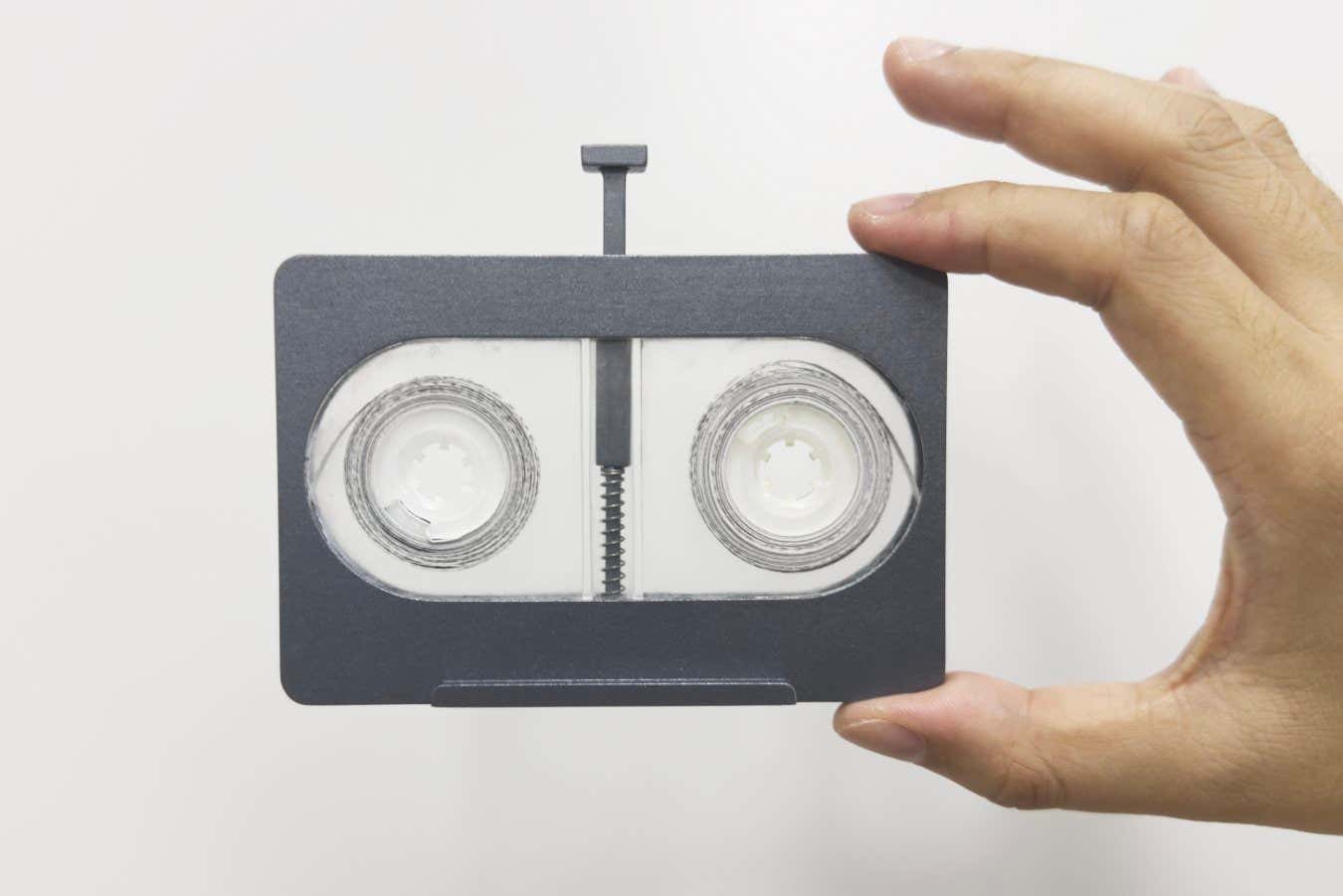
    The DNA tape can store vastly more information than a standard cassette

    Jiankai Li et al. 2025

    In a new take on a technology from the 1960s, this year, researchers created a cassette tape that uses DNA instead of iron oxide to encode information on a plastic tape.

    It can hold a phenomenal amount of information: while a traditional cassette tape stores around 12 songs on each side, the DNA tape can hold every song ever recorded.

    At 10 megabytes a song, 100 metres of the DNA cassette tape can hold more than 3 billion pieces of music. The total data storage capacity is 36 petabytes of data – equivalent to 36,000 terabyte hard drives.

    Xingyu Jiang at the Southern University of Science and Technology in Guangdong, China, and his colleagues created the cassette by printing synthetic DNA molecules onto a plastic tape. “We can design its sequence so that the order of the DNA bases (A, T, C, G) represents digital information, just like 0s and 1s in a computer,” he told New Scientist in September. This means it can store any type of digital file, whether text, image, audio or video.

    The team was overwhelmed by the response to its DNA cassette after it was reported by New Scientist. “One of the most unexpected outcomes was the wide range of reactions – not just from scientists, but from artists, engineers and educators,” says Jiang. “Many people wrote to us saying the work inspired them to think about data, biology and technology in new ways. That was incredibly rewarding.”

    The next step for the researchers is developing a new head for the DNA cassette, similar in concept to the read-write head in a traditional magnetic tape drive. “In our system, this ‘head’ precisely positions and presses a selected section of the DNA tape into a small reaction chamber, where chemical or biochemical processes – such as releasing, reading or rewriting DNA – can take place,” says Jiang.

    They hope to have the DNA cassette on the market within five years. “For us, the DNA cassette tape project was always about more than just storage capacity. It’s about reimagining how information can live in physical, even biological, forms,” says Jiang.

    Topics:


    Source link

    Share. Facebook Twitter Pinterest LinkedIn Tumblr Email Telegram Copy Link

    Related Posts

    Science

    No young women have died of cervical cancer in England for years

    June 18, 2026
    Science

    Ancient monument may have been an early Stonehenge prototype

    June 18, 2026
    Science

    Chilling the body with drugs could limit brain damage from stroke

    June 17, 2026
    Science

    Oldest known plague outbreak killed hunter-gatherer children

    June 17, 2026
    Science

    Could this ancient burial site be the oldest lethal plague outbreak?

    June 17, 2026
    Science

    Watch sharks use manta rays to scratch unreachable itches

    June 17, 2026
    Editors Picks

    US immigration judge rejects Trump bid to deport Columbia student Mahdawi | Donald Trump News

    February 17, 2026

    Japan to restart world’s biggest nuclear plant after 15-year shutdown | Nuclear Energy News

    January 21, 2026

    Mike Vrabel makes huge draft decision after Dianna Russini scandal

    April 23, 2026

    Top three winners and losers in the college football transfer portal

    January 12, 2026

    Britney Spears’ Former Lawyer ‘Will Always Be Proud’ Amid DUI Arrest

    March 17, 2026
    About Us
    About Us

    Welcome to Benjamin Franklin Institute, your premier destination for insightful, engaging, and diverse Political News and Opinions.

    The Benjamin Franklin Institute supports free speech, the U.S. Constitution and political candidates and organizations that promote and protect both of these important features of the American Experiment.

    We are passionate about delivering high-quality, accurate, and engaging content that resonates with our readers. Sign up for our text alerts and email newsletter to stay informed.

    Latest Posts

    No young women have died of cervical cancer in England for years

    June 18, 2026

    Clinton Blames Biden For Trump Presidency

    June 18, 2026

    Mike Myers Sparks ‘Austin Powers 4’ Buzz With One Word

    June 18, 2026

    Subscribe for Updates

    Stay informed by signing up for our free news alerts.

    Paid for by the Benjamin Franklin Institute. Not authorized by any candidate or candidate’s committee.
    • Privacy Policy
    • About us
    • Contact us

    Type above and press Enter to search. Press Esc to cancel.