

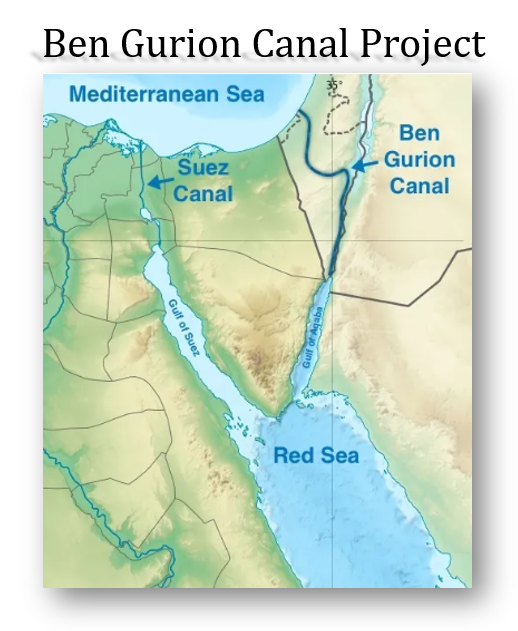
Many people are looking at the conflicts in Gaza and Iran strictly through the lens of religion, terrorism, or regional politics. But history has shown that wars are rarely about what the headlines claim. Beneath the surface lies economics and control of trade routes. One project that has quietly resurfaced in strategic discussions is the Ben Gurion Canal, an alternative shipping route connecting the Red Sea to the Mediterranean that would rival the Suez Canal. The proposal dates back to the 1960s and would run from the port of Eilat through Israel and eventually connect to the Mediterranean near Gaza, providing a strategic bypass of Egypt’s Suez Canal.
Declassified U.S. documents revealed that planners studied using hundreds of underground nuclear explosions in the Negev Desert to carve the canal. The proposal noted that such a route would be a “strategically valuable alternative” to the Suez Canal and could transform regional trade. Around 20% of global trade moves through the Suez Canal today, giving Egypt enormous influence over global supply chains. Any disruption, whether political or accidental, has massive economic consequences.
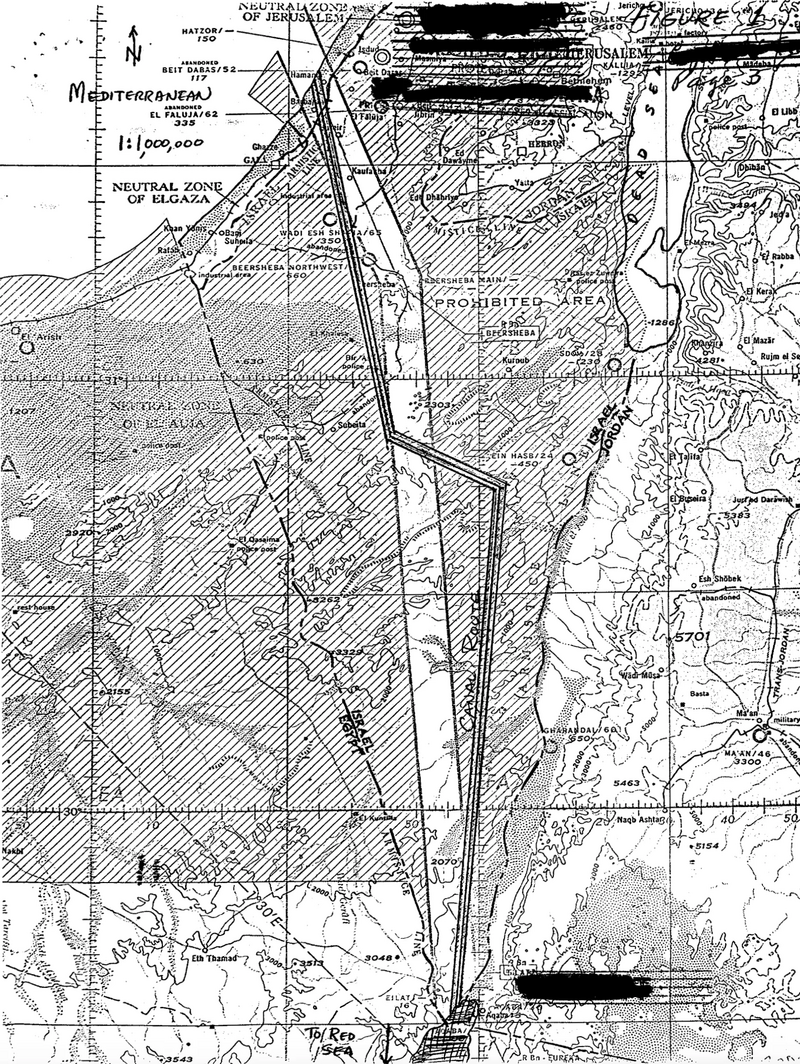
This is where the geopolitical puzzle begins to fit together. The proposed canal route runs extremely close to the Gaza Strip and, in some versions, could even pass through territory adjacent to it. From a purely strategic perspective, no major global shipping route could run alongside an area capable of launching rockets or drones. Control and stability in Gaza, therefore, are prerequisites for any such infrastructure project. Analysts have noted that renewed interest in the canal has coincided with Israel’s war against Hamas, raising questions about whether the long-standing project could become viable again if the region is brought under full military control.
Now look at this through the lens of the Economic Confidence Model. The ECM has consistently shown that 2026 is a geopolitical turning point, leading to rising tensions toward the 2027 Panic Cycle and ultimately the 2028 Panic Cycle. These shifts historically coincide with wars, trade disruptions, and major changes to the global economic order. When the confidence wave turns downward, governments seek strategic advantage in infrastructure, energy routes, and trade chokepoints. The Suez Canal itself has repeatedly triggered geopolitical crises from Nasser’s nationalization in 1956 to modern blockages that froze billions of dollars in trade overnight.
The second layer of the strategy involves the Strait of Hormuz. A large percentage of the world’s oil flows through that narrow passage between Iran and the Arabian Peninsula. Any conflict with Iran threatens that chokepoint and exposes how fragile global energy transport really is. If Hormuz becomes unstable while Suez remains under Egyptian control, the West’s supply lines become vulnerable. A new canal controlled by Israel and its allies would provide an alternative strategic corridor linking the Red Sea and Mediterranean without relying on Egypt or risking disruption from regional adversaries.
When you step back, the sequence begins to look less like random events and more like long-term geopolitical positioning. The war in Gaza removes a security obstacle along the proposed canal route. Escalation with Iran highlights the dangers of relying on existing trade chokepoints such as the Strait of Hormuz and the Suez Canal. Meanwhile, the ECM shows that this entire period sits within a cycle of rising geopolitical tension leading into a Panic Cycle phase. History teaches us that major infrastructure projects that control global trade rarely emerge during peaceful periods. They appear during times of crisis when nations reposition themselves for the next economic order.