

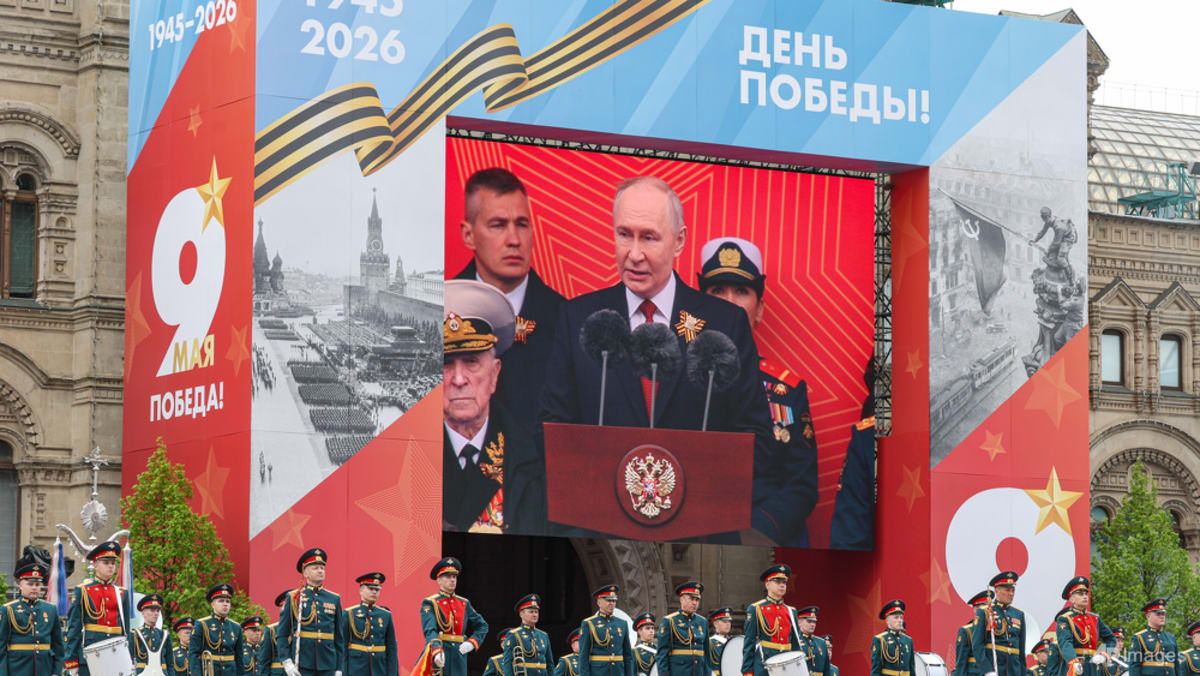
This year Russia’s president was surrounded not by powerful world leaders but by elderly war veterans placed around him in the viewing stand. In this company, Putin looked like just another old man, dreaming of glory days long behind him.
The sharp reduction in the number – and status – of foreign leaders that the Russians were able to attract to Moscow this year reflects changes in the international political climate that are not in Russia’s favour.
In 2025, the Slovakian prime minister, Robert Fico, attended the parade – an indication of rifts within the European Union over the war and support for Ukraine.
In 2026 Fico was again in Moscow – but didn’t attend the parade. Last year Venezuelan President Nicholas Maduro sat in the viewing stands – this year he sits in a US jail having been removed from power in an American raid.
WAR-WEARINESS IN RUSSIA
Putin’s Victory Day speech this year was another indication of a change in Russia’s fortunes, striking a far less confident tone than in previous years.
In 2023, the Russian president compensated for that year’s scaled-back parade with defiant rhetoric, claiming Russia was under threat of attack from the west and styling the conflict as “the people’s war”. In 2024, Putin responded to a suggestion from French president, Emmanuel Macron, that western troops might be deployed to Ukraine with thinly veiled threats that Russia might use nuclear weapons to reassert its dominance.