
Close Menu
    Trending
    • Panama Canal reaffirms ‘neutrality’ amid Mideast war
    • How the Iran war is hitting the UK | US-Israel war on Iran News
    • Why Steelers made unexpected Aaron Rodgers decision
    • ‘I almost become paranoid’: Why anxiety is so much worse in the middle of the night
    • NASA chief Jared Isaacman hints at campaign to make Pluto a planet again
    • Energy War Breaks OPEC: UAE Walks Away As Oil Supply Collapses
    • Justin Baldoni Denies Role In Blake Lively’s Career Downfall
    • US, allies release joint statement supporting Panama’s sovereignty
    Benjamin Franklin Institute
    Wednesday, April 29
    • Home
    • Politics
    • Business
    • Science
    • Technology
    • Arts & Entertainment
    • International
    Benjamin Franklin Institute
    Home»Science»Striking photo essay examines deadly spread of dengue fever in Nepal
    Science

    Striking photo essay examines deadly spread of dengue fever in Nepal

    Team_Benjamin Franklin InstituteBy Team_Benjamin Franklin InstituteApril 28, 2026No Comments3 Mins Read
    Share Facebook Twitter Pinterest Copy Link LinkedIn Tumblr Email VKontakte Telegram
    Share
    Facebook Twitter Pinterest Email Copy Link


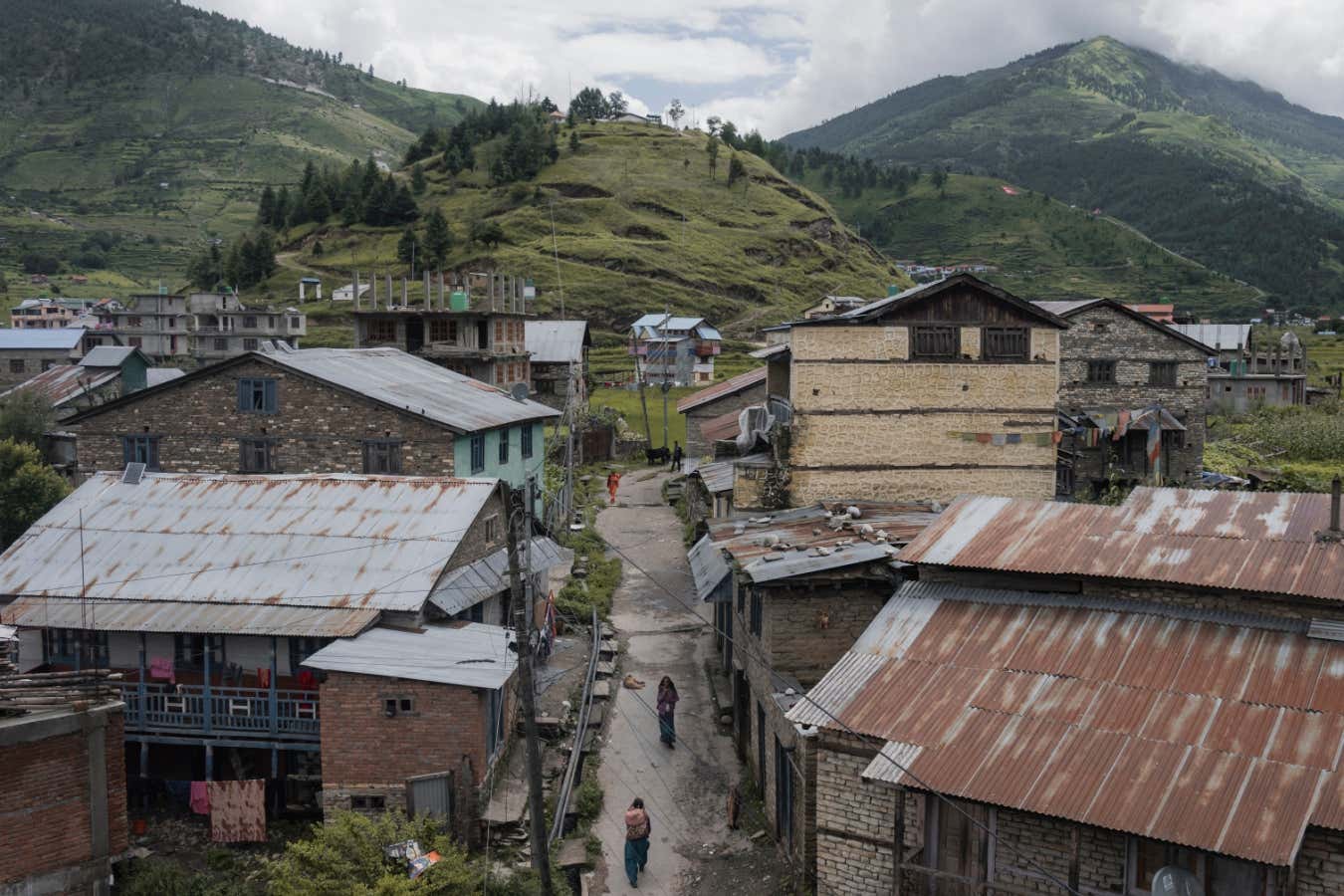
    Researchers have found Aedes aegypti and Aedes albopictus mosquitoes and their larvae in Chandannath, Nepal, a high-altitude area

    Yuri Segalerba

    These striking photographs tell a deadly story about climate change and dengue fever, generally considered the world’s fastest-spreading mosquito-borne disease.

    Photographer Yuri Segalerba’s photo essay The Ascent of Temperatures explores how dengue has spread to Nepal’s Himalayan districts, including Chandannath, which, at 2438 metres above sea level, is one of the highest towns where Aedes aegypti and Aedes albopictus mosquitoes and their larvae have been discovered. Previously, these mosquitoes, which transmit dengue and other diseases, had been observed only at elevations of up to 2100 metres, according to the photographer.

    Segalerba has been exploring “how traditional knowledge systems respond to external pressures”, and was investigating the spread of dengue into high-altitude areas in the Peruvian Andes when he learned of what was happening in Nepal. “It turned out to be the clearest setting for that question: a millennia-old medical tradition with its own framework for understanding illness, suddenly facing a disease it had never encountered before,” he says.

    Recently, dengue has spread across most of Nepal, fuelled by climate change as well as increasing travel. According to Kathmandu News, at least six people died of dengue in 2025 and around 9000 were infected, with the virus now having spread to 76 out of the country’s 77 districts.

    New Scientist. Science news and long reads from expert journalists, covering developments in science, technology, health and the environment on the website and the magazine.

    A female Aedes aegypti mosquito seen close up

    Yuri Segalerba

    Above, a female Aedes aegypti mosquito is shown in detail under a microscope. The Nepal Health Research Council (NHRC), working with the Institute of Tropical Medicine in Antwerp, Belgium, examines larvae and adult mosquitoes for changes in colour or shape that show they are becoming resistant to insecticides or adapting to different altitudes.

    Below, Ishan Gautam, associate professor and chief of the Natural History Museum at Tribhuvan University in Kathmandu, shows Aedes larvae to students at Geetamata Secondary School, also in Kathmandu. The university organises awareness campaigns where local people are shown live Aedes mosquito larvae, and learn about their breeding habits and the importance of removing potential breeding sites like stagnant water.

    New Scientist. Science news and long reads from expert journalists, covering developments in science, technology, health and the environment on the website and the magazine.

    Students examine Aedes larvae during an awareness campaign organised by Tribhuvan University

    Yuri Segalerba

    In the image below, Amchi Khedup Loden Gurung packs traditional Sowa Rigpa (Tibetan) medicines in a clinic in Jomsom, northern Nepal.

    New Scientist. Science news and long reads from expert journalists, covering developments in science, technology, health and the environment on the website and the magazine.

    Traditional Tibetan healer Amchi Khedup Loden Gurung prepares medicines in a clinic in Jomsom, Nepal

    Mosquito nets are being encouraged around Chandannath: below, local resident Devi Kannya Katayata breastfeeds her son Nehan Budha under a net at home.

    New Scientist. Science news and long reads from expert journalists, covering developments in science, technology, health and the environment on the website and the magazine.

    People are being encouraged to use mosquito nets in Chandannath, Nepal, following an unprecedented spread of the dengue virus in areas 2400 metres or more above sea level

    Yuri Segalerba

    In the image below, Sunita Baral, a PhD student at the NHRC, examines a mosquito inside a rearing cage. The council studies larvae and adult specimens from many habitats to discover more about the dengue-carrying mosquitoes circulating across Nepal.

    New Scientist. Science news and long reads from expert journalists, covering developments in science, technology, health and the environment on the website and the magazine.

    A mosquito is captured in a rearing cage at the Nepal Health Research Council laboratories

    Yuri Segalerba

    Below, sheets are seen drying in the sun in the courtyard of Pokhara Hospital. Pokhara is the main gateway to the high-altitude region of Mustang, where Segalerba says dengue cases have recently been reported. Experts fear reported cases are a small fraction of the true infection level, he says, because around 90 per cent of infected people are asymptomatic, and many cases and deaths may go unreported.

    New Scientist. Science news and long reads from expert journalists, covering developments in science, technology, health and the environment on the website and the magazine.

    Sheets dry in the courtyard of Pokhara Hospital, Nepal

    Yuri Segalerba

    Topics:


    Source link

    Share. Facebook Twitter Pinterest LinkedIn Tumblr Email Telegram Copy Link

    Related Posts

    Science

    NASA chief Jared Isaacman hints at campaign to make Pluto a planet again

    April 29, 2026
    Science

    Cancer is increasing in young people and we still don’t know why

    April 29, 2026
    Science

    People are betting on measles outbreaks – and that might be useful

    April 29, 2026
    Science

    Watch Astrobotic’s latest record-breaking ‘ring of fire’ rocket engine test

    April 28, 2026
    Science

    How I pay almost nothing to power my house and electric car

    April 28, 2026
    Science

    War in Iran spotlights the risk to drinking water for millions in the Persian Gulf

    April 28, 2026
    Editors Picks

    Zendaya Reveals What ‘Pisses’ Her Off About Tom Holland

    March 30, 2026

    Israeli strike kills two Palestinians in a car in Gaza, medics say

    March 8, 2026

    Browns’ latest stance on a Myles Garrett trade emerges

    March 27, 2026

    Pakistan’s oldest brewery wins rare approval to export alcohol after decades-long ban

    February 18, 2026

    NFL could be bringing back disastrous ‘replacement refs’

    March 19, 2026
    About Us
    About Us

    Welcome to Benjamin Franklin Institute, your premier destination for insightful, engaging, and diverse Political News and Opinions.

    The Benjamin Franklin Institute supports free speech, the U.S. Constitution and political candidates and organizations that promote and protect both of these important features of the American Experiment.

    We are passionate about delivering high-quality, accurate, and engaging content that resonates with our readers. Sign up for our text alerts and email newsletter to stay informed.

    Latest Posts

    Panama Canal reaffirms ‘neutrality’ amid Mideast war

    April 29, 2026

    How the Iran war is hitting the UK | US-Israel war on Iran News

    April 29, 2026

    Why Steelers made unexpected Aaron Rodgers decision

    April 29, 2026

    Subscribe for Updates

    Stay informed by signing up for our free news alerts.

    Paid for by the Benjamin Franklin Institute. Not authorized by any candidate or candidate’s committee.
    • Privacy Policy
    • About us
    • Contact us

    Type above and press Enter to search. Press Esc to cancel.