
Close Menu
    Trending
    • AI search demands a new audience playbook
    • How do earthquakes end? A seismic ‘stop sign’ could help predict earthquake risk
    • Trump Announces Cease-Fire Between Israel and Lebanon
    • Google Is Tracking Your Life – Photo Cloud Feeding AI System
    • Rachel Zoe Confronts Amanda Frances In ‘RHOBH’ Reunion Clip
    • China’s DeepSeek says it released long-awaited new AI model
    • China’s DeepSeek unveils latest models a year after upending global tech | Technology News
    • Malik Nabers’ reaction to Cowboys drafting Caleb Downs should thrill Dallas fans
    Benjamin Franklin Institute
    Friday, April 24
    • Home
    • Politics
    • Business
    • Science
    • Technology
    • Arts & Entertainment
    • International
    Benjamin Franklin Institute
    Home»Science»Strange lemon-shaped exoplanet defies the rules of planet formation
    Science

    Strange lemon-shaped exoplanet defies the rules of planet formation

    Team_Benjamin Franklin InstituteBy Team_Benjamin Franklin InstituteDecember 23, 2025No Comments2 Mins Read
    Share Facebook Twitter Pinterest Copy Link LinkedIn Tumblr Email VKontakte Telegram
    Share
    Facebook Twitter Pinterest Email Copy Link


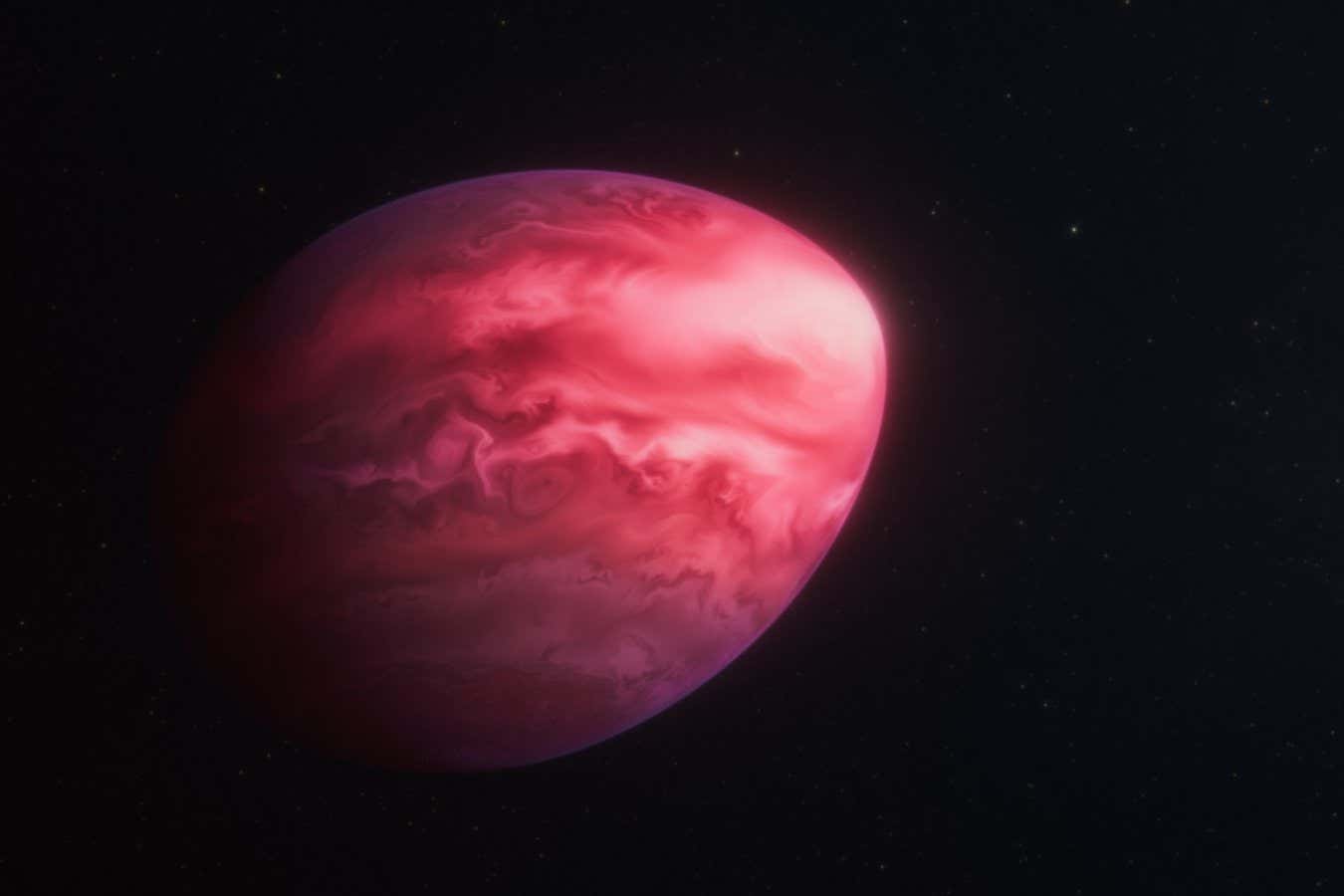
    An artist’s impression of PSR J2322-2650b

    NASA, ESA, CSA, Ralf Crawford (STScI)

    Astronomers have found what appears to be one of the strangest known worlds in the universe. It orbits a type of rapidly spinning neutron star called a pulsar – this in itself is unusual, but it is far from the weirdest thing about the exoplanet PSR J2322-2650b.

    Michael Zhang at the University of Chicago and his colleagues spotted the odd planet, which is more than 2000 light years away from Earth, via the James Webb Space Telescope, and immediately noticed that something about it was unusual. The spectrum of light they measured coming from it didn’t show the usual water and carbon dioxide we would expect to find on a Jupiter-mass world like this one, but instead molecules of carbon.

    We have never seen molecular carbon in the atmosphere of any exoplanet before, because any carbon in a planet’s atmosphere is far more likely to bind to other atoms than to itself. “In order to have molecular carbon in the atmosphere, you have to get rid of pretty much everything else, all of the oxygen, all of the nitrogen, and we just don’t know how to do that,” says Zhang. “We don’t know of any other planetary atmosphere that looks anything like this.”

    The planet is so close to its host star, and the host star is so massive, that it is thought to have been pulled by the pulsar’s gravity into an oblong, lemon-like shape. A full year there lasts only 7.8 hours, and even the coldest points on the planet are about 650°C (1202°F). Unlike most other giant planets, the winds there blow in the opposite direction to the planet’s rotation. “You can imagine that this planet would look deep red, with clouds of graphite in the atmosphere”, like a sort of evil lemon, Zhang says. “I would say it’s definitely the weirdest exoplanet.”

    All of these oddities make it difficult to explain how PSR J2322-2650b could have possibly formed – it seems to defy the established models of planet formation. For now, this utterly strange, distant world is a total mystery.

    Jodrell Bank with Lovell telescope

    Mysteries of the universe: Cheshire, England

    Spend a weekend with some of the brightest minds in science, as you explore the mysteries of the universe in an exciting programme that includes an excursion to see the iconic Lovell Telescope.

    Topics:


    Source link

    Share. Facebook Twitter Pinterest LinkedIn Tumblr Email Telegram Copy Link

    Related Posts

    Science

    How do earthquakes end? A seismic ‘stop sign’ could help predict earthquake risk

    April 24, 2026
    Science

    ‘Kraken’ fossils show enormous, intelligent octopuses were top predators in Cretaceous seas

    April 24, 2026
    Science

    Largest ever octopus was great white shark of invertebrate predators

    April 24, 2026
    Science

    Do you need to worry about Mythos, Anthropic’s computer-hacking AI?

    April 23, 2026
    Science

    How many dachshunds would it take to get to the moon?

    April 23, 2026
    Science

    The Age Code review: Can you slow ageing with your diet? A new book gives it a go

    April 23, 2026
    Editors Picks

    Syrian troops sweep northern towns as Kurdish fighters withdraw

    January 18, 2026

    Bethenny Frankel Shares Crazy Theory About Missing Nancy Guthrie

    February 13, 2026

    Netanyahu’s Relentless Quest for War

    April 10, 2026

    How Jerome Powell could stay at the Federal Reserve until 2028

    January 16, 2026

    The ‘2025 leading receiver by team’ quiz

    January 8, 2026
    About Us
    About Us

    Welcome to Benjamin Franklin Institute, your premier destination for insightful, engaging, and diverse Political News and Opinions.

    The Benjamin Franklin Institute supports free speech, the U.S. Constitution and political candidates and organizations that promote and protect both of these important features of the American Experiment.

    We are passionate about delivering high-quality, accurate, and engaging content that resonates with our readers. Sign up for our text alerts and email newsletter to stay informed.

    Latest Posts

    AI search demands a new audience playbook

    April 24, 2026

    How do earthquakes end? A seismic ‘stop sign’ could help predict earthquake risk

    April 24, 2026

    Trump Announces Cease-Fire Between Israel and Lebanon

    April 24, 2026

    Subscribe for Updates

    Stay informed by signing up for our free news alerts.

    Paid for by the Benjamin Franklin Institute. Not authorized by any candidate or candidate’s committee.
    • Privacy Policy
    • About us
    • Contact us

    Type above and press Enter to search. Press Esc to cancel.