
Close Menu
    Trending
    • AI search demands a new audience playbook
    • How do earthquakes end? A seismic ‘stop sign’ could help predict earthquake risk
    • Trump Announces Cease-Fire Between Israel and Lebanon
    • Google Is Tracking Your Life – Photo Cloud Feeding AI System
    • Rachel Zoe Confronts Amanda Frances In ‘RHOBH’ Reunion Clip
    • China’s DeepSeek says it released long-awaited new AI model
    • China’s DeepSeek unveils latest models a year after upending global tech | Technology News
    • Malik Nabers’ reaction to Cowboys drafting Caleb Downs should thrill Dallas fans
    Benjamin Franklin Institute
    Friday, April 24
    • Home
    • Politics
    • Business
    • Science
    • Technology
    • Arts & Entertainment
    • International
    Benjamin Franklin Institute
    Home»Science»Some Arctic warming ‘irreversible’ even if we cut atmospheric CO2
    Science

    Some Arctic warming ‘irreversible’ even if we cut atmospheric CO2

    Team_Benjamin Franklin InstituteBy Team_Benjamin Franklin InstituteDecember 13, 2025No Comments3 Mins Read
    Share Facebook Twitter Pinterest Copy Link LinkedIn Tumblr Email VKontakte Telegram
    Share
    Facebook Twitter Pinterest Email Copy Link


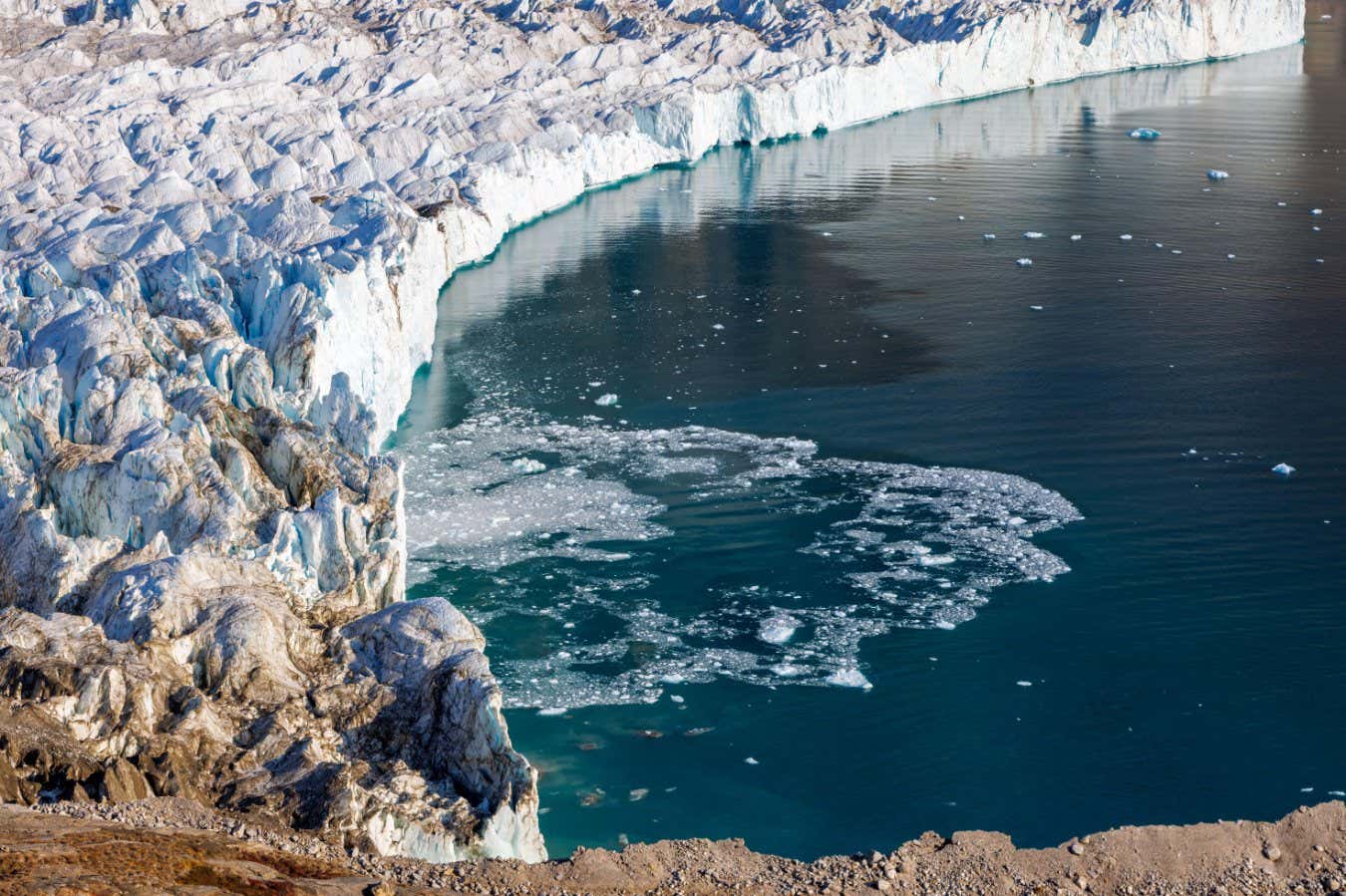
    A glacier meets the sea in Dickson Fjord, Greenland

    Jane Rix/Alamy

    The Arctic will retain about 1.5°C of warming even if the carbon dioxide in the atmosphere returns to pre-industrial levels and the planet as a whole cools.

    The region is also predicted to retain about 0.1 millimetres per day of excess precipitation, regardless of whether we deploy large-scale carbon dioxide removal (CDR) projects.

    “These findings highlight the irreversible nature of Arctic climate change even under aggressive CDR scenarios,” the researchers wrote in the study.

    Atmospheric CO2 levels are currently about 1.5 times as high as they were in the pre-industrial era, and the Arctic has warmed by more than 3°C. A study published in March found that average sea ice extent would remain 1 million square kilometres smaller even if excess CO2 was removed.

    In the new study, Xiao Dong at the Institute of Atmospheric Physics in Beijing and his colleagues predicted the Arctic’s potential to retain warming using 11 independent climate models. In a first, it suggests that precipitation will also stay elevated, says Michael Meredith at the British Antarctic Survey, who wasn’t involved in the study.

    The main reason is because the ocean, which has absorbed 90 per cent of the heat from global warming, will continue heating the Arctic for centuries even if the atmosphere cools down. This could be compounded by feedback loops like the loss of sea ice allowing open water to heat the air.

    “Even if you get the atmosphere cooling, the ocean will be lagging behind that and pushing against that,” says Meredith.

    Because of the financial and energy costs involved, many are sceptical that CDR, which ranges from planting trees to sucking CO2 out of the air with fans and chemical filters, will be able to significantly reduce CO2 in the atmosphere, a process that would otherwise take thousands of years.

    Dong and his colleagues analysed an abstract scenario in which atmospheric CO2 quadruples from pre-industrial levels over 140 years, declines for 140 years and remains at pre-industrial levels for another 60 years.

    They also analysed a potential real-world climate scenario in which humanity immediately slashes emissions, as well as one in which we continue high emissions but then quickly ramp up CDR starting in 2070. In these two scenarios, they found the Arctic is about 1.5°C warmer and would continue to receive an additional 0.1 millimetres of precipitation per day in 2100, just as in the abstract scenario.

    The models predict that, unlike in the rest of the far north, temperature and precipitation will decrease over a swath of ocean just south of Greenland and Iceland. This suggests that the Atlantic Meridional Overturning Circulation (AMOC) will be transporting less warm surface water from the tropics to this area. Research suggests this current, which is driven by temperature and density differences in ocean waters, is already slowing down as the global ocean warms, a trend that could eventually bring much colder winters to Europe.

    Climate effects like thawing of permafrost and melting of the Greenland ice sheet would also probably continue, although the study didn’t model them.

    “You’re going to expect that the Greenland ice sheet will behave as we observe it to, which is that it will be continuing to lose mass and contributing to sea level rise,” says Mark Serreze at the US National Snow and Ice Data Center.

    While this study shows the Arctic will remain warmer for several centuries, over many additional centuries or millennia it should eventually cool, he adds.

    Topics:

    • climate change/
    • the Arctic


    Source link

    Share. Facebook Twitter Pinterest LinkedIn Tumblr Email Telegram Copy Link

    Related Posts

    Science

    How do earthquakes end? A seismic ‘stop sign’ could help predict earthquake risk

    April 24, 2026
    Science

    ‘Kraken’ fossils show enormous, intelligent octopuses were top predators in Cretaceous seas

    April 24, 2026
    Science

    Largest ever octopus was great white shark of invertebrate predators

    April 24, 2026
    Science

    Do you need to worry about Mythos, Anthropic’s computer-hacking AI?

    April 23, 2026
    Science

    How many dachshunds would it take to get to the moon?

    April 23, 2026
    Science

    The Age Code review: Can you slow ageing with your diet? A new book gives it a go

    April 23, 2026
    Editors Picks

    Iran says peace talks would be ‘unreasonable’ following Israeli strikes on Lebanon

    April 9, 2026

    Bioplastic habitats on Mars could be built from algae

    July 3, 2025

    Monzo bank says issue affecting its mobile app resolved

    January 13, 2026

    Kremlin rejects claim it poisoned Navalny with dart frog toxin, widow says truth is out

    February 16, 2026

    US labels Muslim Brotherhood in Egypt, Lebanon, Jordan as ‘terrorists’ | News

    January 13, 2026
    About Us
    About Us

    Welcome to Benjamin Franklin Institute, your premier destination for insightful, engaging, and diverse Political News and Opinions.

    The Benjamin Franklin Institute supports free speech, the U.S. Constitution and political candidates and organizations that promote and protect both of these important features of the American Experiment.

    We are passionate about delivering high-quality, accurate, and engaging content that resonates with our readers. Sign up for our text alerts and email newsletter to stay informed.

    Latest Posts

    AI search demands a new audience playbook

    April 24, 2026

    How do earthquakes end? A seismic ‘stop sign’ could help predict earthquake risk

    April 24, 2026

    Trump Announces Cease-Fire Between Israel and Lebanon

    April 24, 2026

    Subscribe for Updates

    Stay informed by signing up for our free news alerts.

    Paid for by the Benjamin Franklin Institute. Not authorized by any candidate or candidate’s committee.
    • Privacy Policy
    • About us
    • Contact us

    Type above and press Enter to search. Press Esc to cancel.